Agrivoltaics & Dual-Use Solar
Keep Farming the Land While Producing Solar Energy
Putting solar on farmland doesn’t always have to mean taking that land out of agricultural production.
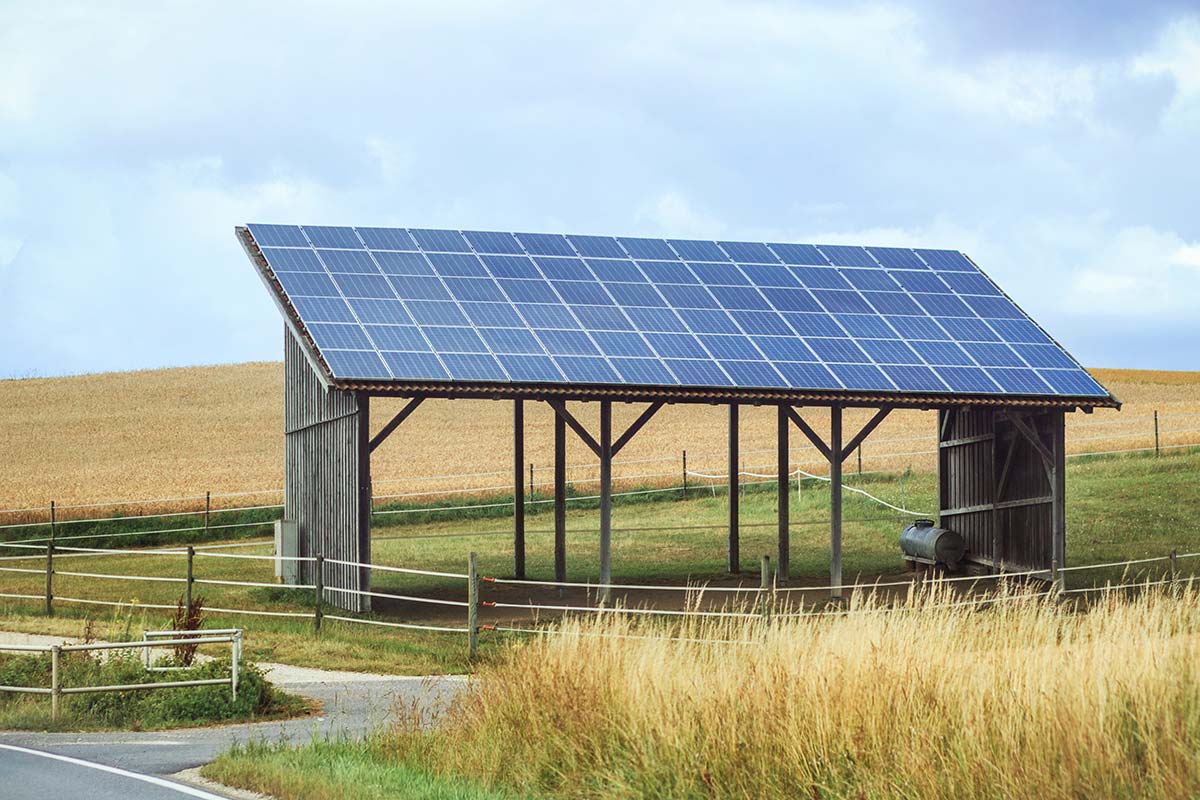
Agrivoltaics, also called dual-use solar, is designed around doing both. Solar panels share the land with crops or livestock, allowing a working farm to produce electricity while continuing to use the ground beneath and around the array.
For farms in Western Massachusetts, it opens up another possibility when productive land matters just as much as producing energy.
What If the Land Needs to Keep Working?
A conventional ground-mount solar array and a dual-use agricultural system aren’t the same thing.
If keeping land in production is important to your farm, agrivoltaics may be worth exploring.
What Is Agrivoltaics?
Agrivoltaics brings solar generation and agriculture together on the same piece of land.
Instead of designing an array solely around producing electricity, panel height, spacing, access, and other parts of the system are considered alongside what needs to happen agriculturally beneath and around it.
That can mean very different things from one farm to another.
Conventional Ground-Mount or Dual-Use?
A conventional ground-mounted solar system may still be a good option for a farm.
If you have an area that isn’t important for crops or grazing, there may be little reason to make the solar system more complicated than it needs to be. A modest ground-mount can provide another place for solar when barn roofs aren’t suitable or don’t offer enough room.
Dual-use becomes a different conversation.
If the land within the solar footprint needs to remain part of the agricultural operation, the system has to be designed around both jobs.
Grazing Under Solar
For a livestock farm, dual-use can be relatively straightforward in concept: keep grazing your own animals on your own land while producing solar energy there too.
Sheep are particularly well suited to grazing around solar because of their size and grazing habits. There are already small-farm examples here in Massachusetts, including a father-daughter operation that began grazing roughly 21 ewes across two solar arrays.
This is very different from utility-scale solar developments that hire outside grazing operations simply to control vegetation. Our interest here is the working farm that wants its own land to continue supporting its own agricultural operation.
Growing Crops Around and Beneath Solar
Crop-based agrivoltaics can be more involved.
Panels may need additional height or spacing to accommodate crops, equipment, sunlight, and access. Different crops respond differently to partial shade, and the agricultural plan needs to influence the solar design from the beginning.
There can be benefits in the right setting. Solar panels can alter conditions beneath an array, including shade, temperature, and moisture. But agrivoltaics isn’t based on the assumption that every crop will perform better beneath solar.
It’s about finding out whether the combined agricultural and energy use of the land works for the farm.
Start With the Farm
Before talking about panel count, we want to understand what happens on the land.
Is it used for grazing? Vegetables? Hay? An orchard? Does equipment need to pass through it? How does that use change through the seasons? And what does the farm need from the land five or ten years from now?
Those answers help determine whether dual-use deserves a closer look, or whether solar belongs somewhere else on the property.
Some of the Country's Agrivoltaics Work Is Happening Right Here
Western Massachusetts has an unusual connection to the development of dual-use solar.
UMass Amherst’s Clean Energy Extension conducts agrivoltaics research here in the Pioneer Valley, studying how agriculture and solar generation can share the same land. UMass also plays a formal role in Massachusetts’ process for qualifying agricultural dual-use solar projects.
That local connection matters because a true dual-use project isn’t simply a solar array raised a little higher off the ground. The agricultural use of the property is part of the project from the beginning.
For Current Energy, based in Bernardston and working throughout Western Massachusetts, that means we’re operating in a region where farmers, researchers, agricultural agencies, and the solar industry are actively working through what dual-use can look like on New England farms.
Understanding the Possibilities
A dual-use project brings together questions about agriculture, solar design, electricity, land, and long-term farm plans. In Massachusetts, there is also a specific state process for projects seeking formal agricultural dual-use status.
Define the Agricultural Use
What needs to continue happening within the solar area?
Grazing and crop production create different design requirements. Equipment access matters. So do planting, harvesting, fencing, water, soil conditions, and the way the farm operates throughout the year.
The agricultural use can’t simply be added after the solar system has been designed.
Look at the Farm's Electricity Use
The land is only half of the equation.
We also want to understand how the farm uses electricity and when it uses it. Barns, refrigeration, pumps, greenhouses, workshops, farm stores, sugaring equipment, and other loads can create very different energy profiles.
The aim doesn’t have to be eliminating an electric bill. A better question is where producing electricity on the farm can have the most value for the operation.
Consider the Entire Property
Dual-use may be interesting, but it isn’t automatically the best place to start.
A barn roof might offer a simpler solar opportunity. Another part of the property may support a conventional ground-mount without affecting productive acreage.
Looking at the whole farm lets us compare those possibilities before adding complexity to land that is already doing an important job.
Massachusetts Has a Specific Dual-Use Path
Massachusetts has established a formal category for qualifying agricultural dual-use solar projects, known as an Agricultural Solar Tariff Generation Unit, or ASTGU.
The process involves an agricultural plan, consultation with UMass Amherst, and review through Massachusetts agricultural and energy agencies. Qualifying projects also have ongoing agricultural-production requirements.
The details matter, and the rules have continued to evolve. We would verify the current requirements for a particular project rather than treating today’s program details as permanent.
What About APR Land?
Land protected through an Agricultural Preservation Restriction requires additional attention.
Massachusetts places specific limitations on solar development on APR land, so the property’s status needs to be identified early in the conversation.
Having protected farmland doesn’t necessarily answer the solar question by itself, but it changes the path.
Design Solar Around Agriculture, Not Around It
A crop-based dual-use system may need greater panel height, wider spacing, different row arrangements, or additional room for agricultural equipment.
A grazing system brings its own considerations, including fencing, animal access, water, vegetation, and equipment.
This is where agrivoltaics departs most clearly from ordinary ground-mount solar. The array has to accommodate the agricultural work that will continue for years after the panels are installed.
Understand the Economics
Dual-use systems can cost more to build than conventional ground-mounted solar because the agricultural requirements can affect racking, spacing, foundations, and construction.
Massachusetts has developed incentives intended to recognize that additional complexity, but incentive programs and requirements change.
We can help identify what is worth investigating for a particular property. Farmers should also work with their financial and tax advisors when evaluating grants, tax benefits, financing, and the larger economics of a project.
Think Beyond the Next Growing Season
Solar is a long-term addition to a farm.
That makes questions about succession, future crops, changing livestock, new buildings, and the next generation important now. A system that fits today’s operation but gets in the way of where the farm is headed isn’t a good solution.
The best project should leave room for the farm to remain a farm.
Frequently Asked Questions
What is the difference between agrivoltaics and regular ground-mounted solar?
A conventional ground-mount primarily uses the site to produce electricity. Agrivoltaics is designed so agricultural production continues within the solar footprint. That can require different panel heights, spacing, access, and management of the land.
Can animals graze under solar panels?
Yes, grazing is one form of agrivoltaics. Sheep are particularly common because they can graze around solar equipment without requiring the clearance larger livestock may need. The array still needs to be designed around the animals, fencing, water, access, and farm operation.
Can I grow crops underneath solar panels?
Potentially. Crop compatibility depends on the crop, solar design, available sunlight, equipment access, and other site conditions. Massachusetts dual-use projects include an agricultural planning and review process intended to address these questions.
Does agrivoltaics make sense for a small farm?
It can, but scale alone doesn’t determine that. A smaller farm may have a very practical reason for wanting to preserve productive acreage while generating electricity. In other cases, solar on a barn or a conventional ground-mount elsewhere on the property may be simpler.
Can I put dual-use solar on APR land?
APR land is subject to additional Massachusetts requirements and limitations. The status of the property should be established early so the current rules can be reviewed before pursuing a design.
Start With the Land You Want to Keep Farming
Dual-use isn’t right for every property.
The first question isn’t how many panels will fit. It’s whether solar and agriculture can share the land in a way that works for the farm.
Tell Us About Your Farm and Your Land
You don’t need to decide between agrivoltaics, a conventional ground-mount, or solar on a barn before you contact us.
Tell us how your farm uses electricity, what happens on the land, which parts of the property need to remain in production, and what you’re hoping solar might accomplish.
We’ll start with the farm and work from there.
"*" indicates required fields