
Commercial & Industrial Solar
Solar Designed Around the Way Your Business Uses Energy
Commercial solar starts with more than available roof space. How and when your business uses electricity, the building’s electrical infrastructure, utility requirements, and plans for the property all affect the right approach.
Current Energy designs and installs commercial solar systems for businesses and properties throughout Western Massachusetts, southern Vermont, and southwestern New Hampshire.
Start With the Business, Not the Panels
A warehouse, office building, retail property, manufacturing facility, and self-storage complex don’t use electricity the same way.
Before designing the solar system, we need to understand the property and what happens there every day.
What Makes a Commercial Solar Project Different?
A larger solar array isn’t simply a bigger version of a residential system.
Commercial properties can bring different electrical services, utility rate structures, roof systems, structural requirements, permitting, and interconnection requirements into the project.
Then there’s the business itself. When electricity is being used, how much is being used at one time, and what may change over the next several years can all affect the system we design.
Start With Your Electricity Use
Commercial utility bills can tell us quite a bit about the opportunity for solar.
A business that uses substantial electricity throughout the day may be able to use much of its solar production as it’s generated. A property with a different operating schedule or load profile may call for a different approach.
Looking at utility history alongside the way the business operates gives us a better starting point than simply filling every available square foot with panels.
Look at the Whole Property
Commercial solar doesn’t have to mean panels on a single roof.
A property may have a large rooftop, several buildings, open land suitable for a ground-mounted array, or parking areas that could support a solar canopy.
Roof condition and structure matter. So do shade, orientation, electrical access, equipment already on the roof, and the way the property is used.
Sometimes the best solar design becomes clear only after looking beyond the most obvious location.
Bring the Electrical System Into the Conversation Early
Every commercial solar system eventually has to connect to the building and the grid.
The existing electrical service, available capacity, switchgear, voltage, proposed system size, and point of interconnection can all influence the design. Larger projects may also involve additional utility review and engineering coordination.
Those aren’t details to sort out after the array has been designed. They belong in the conversation from the beginning.
Think About What's Coming Next
The electrical demands on a commercial property can change.
A company may be considering fleet EV charging, new manufacturing equipment, additional refrigeration, building expansion, battery storage, or some other major electrical load.
We don’t need to make today’s solar project larger than it needs to be. But knowing what’s likely to happen next can help us avoid designing today’s system in a way that complicates tomorrow’s plans.
Commercial Solar Across Four Buildings
618 solar panels · 4 buildings · approximately 435 kW
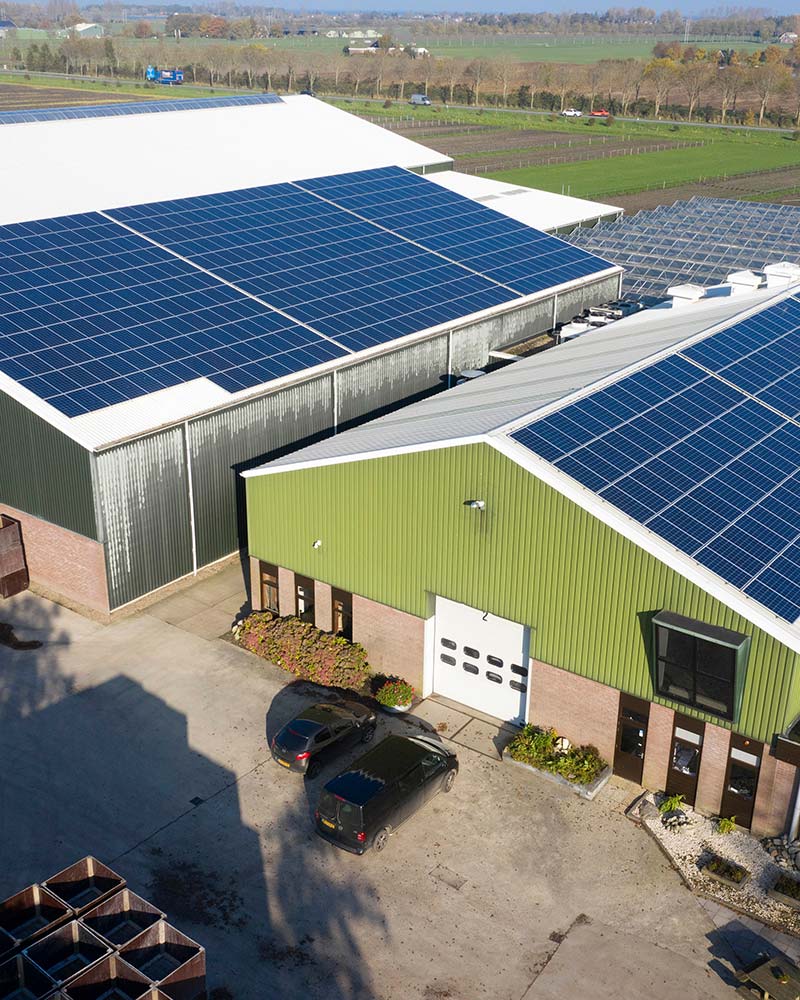
This solar project by Current Energy is a multi-building installation for a self-storage property, with 618 panels distributed across four buildings and approximately 435 kW of solar capacity.
It’s a good example of why commercial solar needs to be considered at the property level. A project may involve multiple buildings and a much larger electrical and utility picture than a single rooftop suggests.
Commercial Solar Is an Electrical Project, Too
The panels get most of the attention, but they’re only one part of a commercial solar system.
The array has to work with the building’s existing electrical infrastructure and connect successfully to the utility. On a commercial property, that can introduce questions about service equipment, system capacity, interconnection, engineering, and other electrical loads on the site.
It becomes even more important when solar is being considered alongside battery storage, EV charging, new equipment, or future expansion.
Current Energy approaches commercial solar with that larger electrical picture in mind, so the project isn’t planned as an isolated collection of panels.
Building the Right Commercial Solar Project
There isn’t a universal formula for determining whether commercial solar is worthwhile.
A business with heavy daytime electrical use presents a different opportunity from a lightly occupied building. A large roof may look ideal until structural or electrical considerations enter the picture. Open land may create an entirely different option.
The financial side is just as individual. Electricity rates, operating schedules, system production, available incentives, tax treatment, and project cost all affect the numbers.
Understand What You're Paying for Electricity
Commercial electric bills can include charges that don’t appear on a typical residential bill.
Depending on the utility and rate structure, a business may pay for both the amount of electricity it uses and periods of high electrical demand. Understanding the bill and the facility’s load profile helps establish what solar can realistically address.
For some businesses, battery storage may also be worth evaluating alongside solar, particularly where peak demand or resilience is an important concern.
Decide Where Solar Belongs
Commercial rooftops can provide substantial room for solar without taking additional land out of use. Ground-mounted systems offer another option for businesses with available property.
Some sites may have several usable buildings. Others may eventually make sense for a solar canopy over parking.
The answer doesn’t have to be the same from one commercial property to another. What matters is finding the configuration that works with the site and the business.
Work Through the Utility Requirements
Commercial solar projects can face a more involved interconnection process than smaller residential systems.
Depending on the system size and serving utility, the process may involve additional documentation, engineering review, system-impact studies, interconnection agreements, or other utility requirements.
That makes the interconnection process part of project planning rather than something to think about at the end.
Look at Incentives in the Context of the Project
Federal and state incentives can have a significant effect on commercial solar economics, but the rules are more complicated than a single percentage on a proposal.
Businesses may have access to federal clean-energy tax incentives, depreciation benefits, and state programs such as Massachusetts SMART. Eligibility and value depend on the project, ownership structure, system characteristics, tax situation, and rules in effect when the project moves forward.
Current Energy can help identify the energy and project considerations involved. Your accountant or tax advisor should determine how federal or state tax provisions apply to your business.
The Numbers Have to Work
Commercial solar isn’t just an energy decision. It’s a business investment.
The right project needs to make sense for the property, its electricity use, and the organization paying for it.
Considering Commercial Solar? The Timeline Matters.
Federal incentives remain available for qualifying commercial solar projects, but recent changes have made project timing more important.
For solar projects beginning construction now, current federal rules generally require the system to be placed in service by December 31, 2027 to qualify for the Clean Electricity Investment Credit.
If commercial solar is already under consideration, it makes sense to look at feasibility and timing now rather than waiting until late in 2027.
Federal tax rules and eligibility vary by project and can change. Businesses should confirm current requirements and tax benefits with their tax advisor.
Commercial Solar FAQs
How do you determine the right size for a commercial solar system?
Electricity use is an important starting point, but system sizing also depends on when the business uses electricity, available roof or land area, site conditions, electrical infrastructure, utility requirements, and the goals for the project.
Can commercial solar be installed on a flat roof?
Many commercial solar systems are installed on flat and low-slope roofs. The roof structure, roofing material, condition, drainage, existing equipment, wind loads, access requirements, and proposed mounting system all need to be considered as part of the design.
Can a business use a ground-mounted solar system instead?
Yes. Properties with suitable open land may be good candidates for commercial ground-mount solar. In some cases, the available land offers better solar exposure or fewer constraints than the building itself.
Can battery storage be added to commercial solar?
Yes. Commercial solar and battery storage can be designed together, and storage can also be considered for properties with existing solar. Whether it makes financial or operational sense depends on the facility’s load profile, utility rate structure, resilience goals, and other project factors.
Can commercial solar be combined with EV charging?
Yes. Businesses considering employee, customer, tenant, or fleet EV charging can plan charging alongside solar. Because EV charging can add significant electrical demand, looking at both projects together can help identify electrical capacity and infrastructure needs earlier.
What incentives are available for commercial solar?
Federal tax incentives and state programs may be available depending on the project and when it is completed. Massachusetts also operates the SMART solar incentive program. Because program rules and tax treatment change, current eligibility should be confirmed for the specific project, and tax questions should be reviewed with a qualified tax professional.
Plan for Design, Permitting, and Installation
Once the project is defined, there is still a path from a good idea to an operating solar system.
Final design, engineering where required, permitting, utility coordination, equipment procurement, installation, inspection, and commissioning all have to come together.
For a commercial project, keeping those pieces coordinated can be every bit as important as the work happening on the roof or in the field.
Let's Take a Look at Your Commercial Solar Project
You don’t need to know how large the system should be or exactly where the panels belong before contacting us.
Tell us about the property, how your business uses electricity, and what you’re hoping solar can accomplish. If you have recent utility bills, those can give us a useful place to start.
We’ll look at the property, the energy picture, and the larger project to help determine what is worth pursuing.
"*" indicates required fields