Commercial Solar
Energy Solutions Built Around Your Property and Your Business
Commercial energy projects don’t start with a panel count. They start with the property, how it uses electricity, and what the business or organization wants to accomplish.
Current Energy works with businesses, municipalities, and commercial property owners throughout Western Massachusetts, southern Vermont, and southwestern New Hampshire on solar, battery storage, EV charging, and the electrical infrastructure behind them.
Whether you’re looking at a rooftop, open land, a parking lot, or an existing electrical system, we’ll help you figure out what belongs on the property and what doesn’t.
A Commercial Energy Project Is a Property-Level Decision
A commercial property can offer more possibilities than a single rooftop suggests.
There may be several buildings. Open land may provide another location for solar. A parking lot could support a solar canopy or EV charging. Battery storage may be worth evaluating alongside current or future electrical loads.
The electrical system connects all of it.
That’s why we start by understanding the property as a whole. Energy use, available space, existing electrical infrastructure, utility requirements, business operations, and future plans all help determine which options are worth pursuing.
Different Properties Call for Different Solutions
A Main Street business has different energy needs from a manufacturing facility. A town has different considerations from a privately owned commercial property.
Start with the type of property or the project you’re considering.
Commercial & Industrial Solar
Small Business Solar
Municipal & Town Solar
Solar Canopies & Carports
Commercial Battery Storage
Commercial EV Charging
It All Comes Back to the Electrical System
Solar can add generation. Battery storage can change when energy is available. EV charging adds a new electrical load. A canopy can turn the parking lot into another place to produce electricity.
But none of those systems sits apart from the property.
They connect to electrical service, panels and equipment, utility infrastructure, and the loads already inside the building. Changes planned for the business can affect those decisions too.
Current Energy’s solar and electrical experience allows us to look beyond a single piece of equipment and consider how the different parts of the property need to work together.
From an Energy Question to a Practical Project
Commercial projects can get complicated quickly. Starting with a clear picture of the property helps us sort through the possibilities before getting too far into a particular solution.
Understand How the Property Uses Electricity
Recent utility bills give us a place to begin.
For some projects, the timing of that electricity use matters too. Operating hours, seasonal changes, equipment, heating and cooling, manufacturing processes, refrigeration, and future electrical loads can all affect what deserves a closer look.
Look at the Site
Roof area is only one possibility.
Depending on the property, solar might belong on one or several rooftops, on open land, or above a parking area. Existing electrical equipment, shade, roof condition, traffic patterns, and plans for the property can change the options.
Sometimes the first idea is the right one. Sometimes looking at the whole site points somewhere else.
Bring the Electrical Infrastructure Into the Conversation
Commercial solar, battery storage, and EV charging eventually connect to an electrical system that is already doing a job.
Understanding the existing service and equipment early can help identify limitations, necessary upgrades, and opportunities before the project gets too far along.
Work Through the Utility Requirements
Commercial energy projects can require utility coordination and interconnection review.
The requirements vary with the project, equipment, utility, and electrical configuration. That process needs to be considered alongside design rather than treated as paperwork that comes at the end.
Look at the Economics Without Starting With the Incentive
Federal, state, and utility programs can have a meaningful effect on a commercial energy project. They also change.
We’d rather understand the underlying project first and then determine which current programs may apply than build the entire case around an incentive that could change before construction begins.
Businesses should work with their own tax advisors when evaluating federal tax benefits.
Think About What's Coming Next
The property may use electricity differently in five years.
A business might add equipment. Employees or customers may need EV charging. A municipality may electrify vehicles. A building may expand. Battery storage could become useful as loads change.
Not every future project needs to be built today. But knowing what’s coming can influence what gets designed now.
Start With the Property and the Business Behind It
You don’t need to know how large the solar system should be, which battery you need, or how many EV chargers the electrical service can support.
Tell us about the property and what you’re trying to accomplish. We’ll start there.
Commercial Solar Across Four Buildings
618 solar panels · 4 buildings · approximately 435 kW
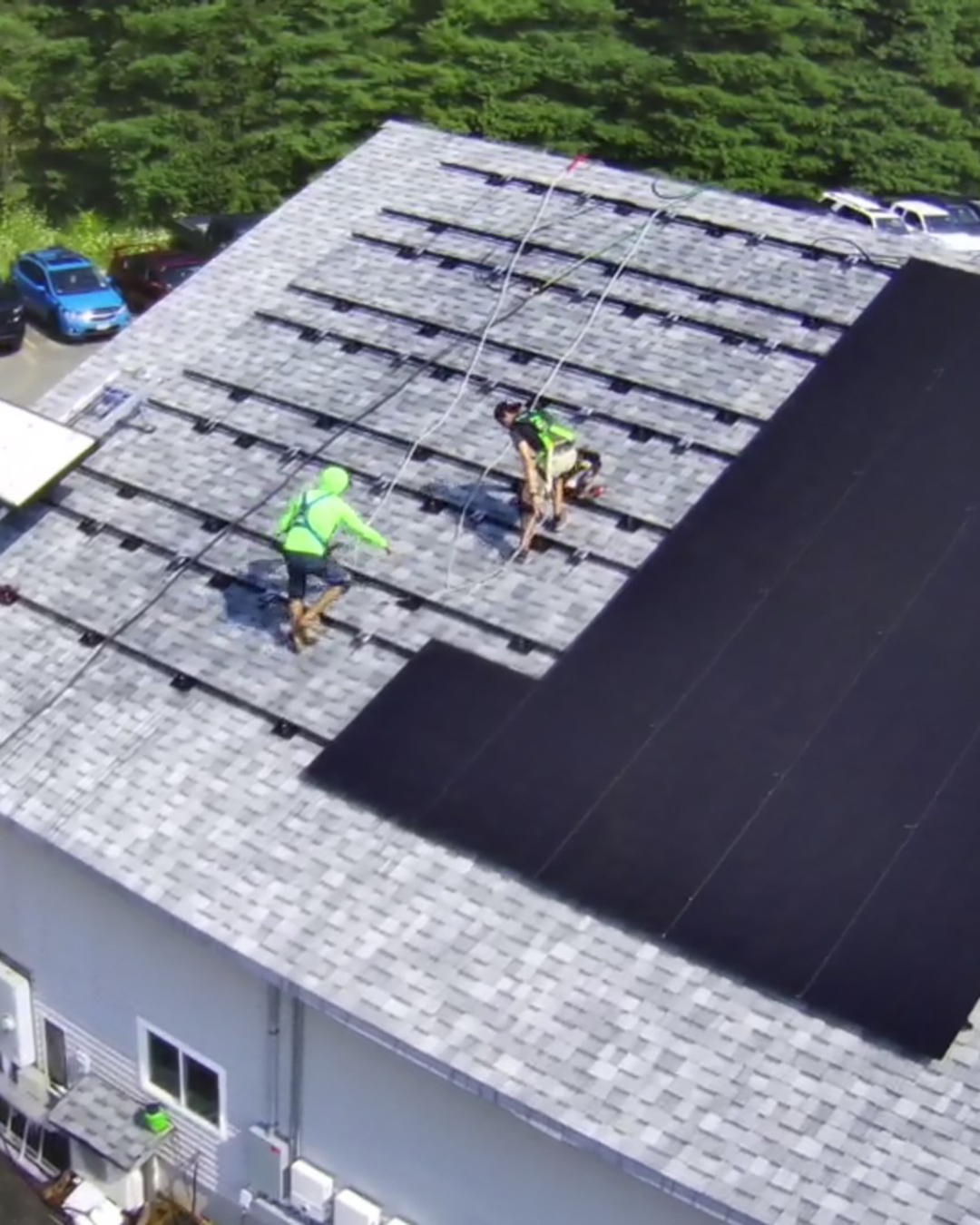
This solar project by Current Energy is a multi-building installation for a self-storage property, with 618 panels distributed across four buildings and approximately 435 kW of solar capacity.
It’s a good example of why commercial solar needs to be considered at the property level. A project may involve multiple buildings and a much larger electrical and utility picture than a single rooftop suggests.
Commercial Energy Projects Across Our Region
Current Energy is based in Bernardston, Massachusetts, near the Vermont and New Hampshire borders.
We work with businesses, organizations, municipalities, and commercial property owners throughout Western Massachusetts, southern Vermont, and southwestern New Hampshire.
That includes properties across Franklin County and the Pioneer Valley, along with communities north and east of the Massachusetts border.
The buildings and sites vary considerably across this region, from older Main Street properties and municipal facilities to larger commercial buildings, open land, and multi-building properties.
We start with the property in front of us.
Tell Us What You're Considering for Your Property
Maybe you’re ready to look at commercial solar. Maybe EV charging is creating a new electrical need. You may be considering battery storage, wondering what to do with a large parking area, or simply trying to understand your options.
You don’t need to have the project figured out before contacting us.
Tell us about the property, your electricity use, and what you’re trying to accomplish. We’ll help you determine what deserves a closer look.
"*" indicates required fields