Ground-Mount Solar for Farms
Sometimes the Best Place for Farm Solar Isn't on a Building
A barn roof may seem like the natural place for solar, but it isn’t always the right one. The roof may be aging, shaded, poorly oriented, structurally complicated, or simply too small for the amount of electricity the farm uses.
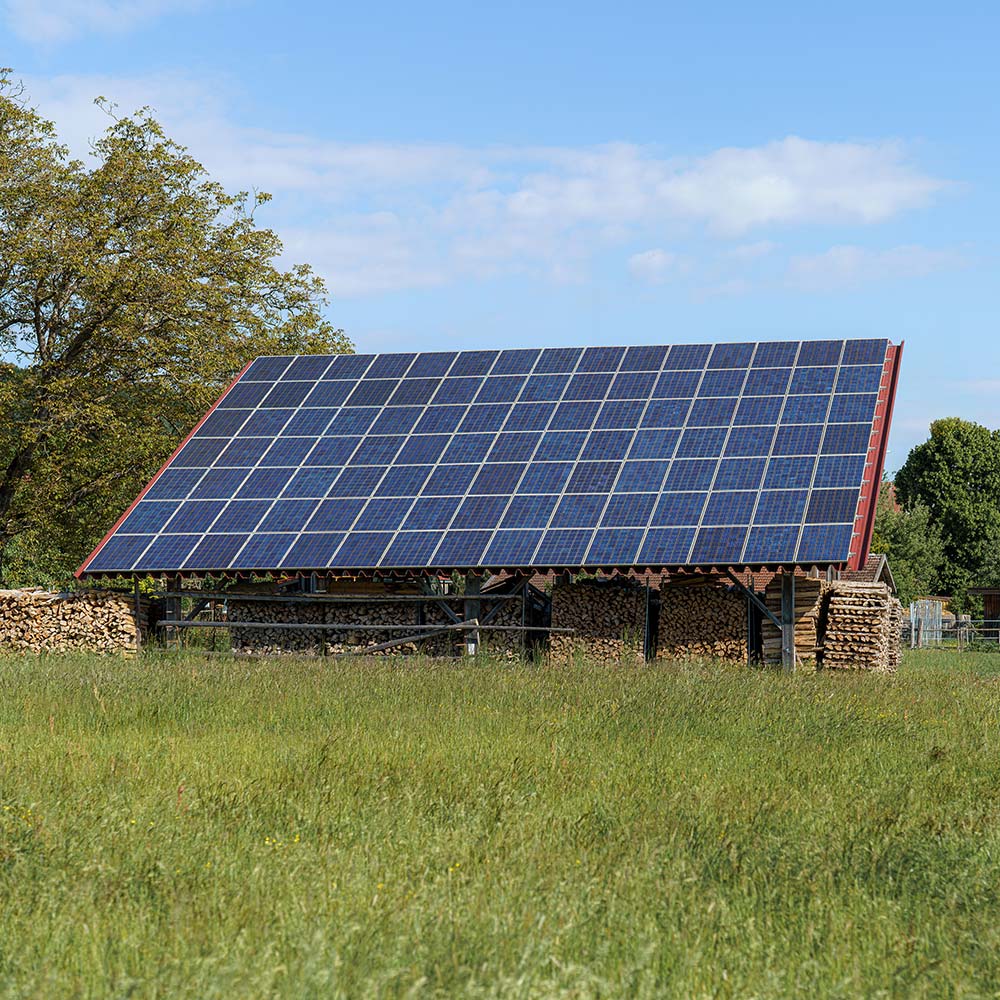
A ground-mounted solar array gives farms another option. The question is where it can go without getting in the way of the land, buildings, equipment, and agricultural work happening around it.
The Open Field Isn't Automatically the Right Spot
A farm has land for a reason.
Before putting solar on the ground, we need to understand how that part of the property is used today and how the farm may need it tomorrow.
Start With the Farm Before Choosing the Array Location
Ground-mounted solar gives us more freedom than a rooftop, but more choices don’t automatically make the decision easier.
A good location needs solar exposure and workable access, but it also has to make sense as part of the farm.
When the Barn Isn't the Best Place for Solar
An agricultural building may have plenty of roof area and still be a poor solar candidate.
The roof may need replacement before the solar system reaches the end of its useful life. Structural questions may need to be resolved. Nearby trees can create too much shade. The roof orientation may limit production, or the building simply may not offer enough usable space.
Moving the array to the ground can separate the solar decision from those building limitations.
Look for Land That Isn't Doing More Important Work
The best ground-mount location isn’t necessarily the largest open field.
An area near a building, along the edge of the developed farmstead, or on another suitable part of the property may provide enough room without taking productive acreage out of agricultural use.
That’s an important distinction on a working farm. Solar should fit the property rather than force the farm to reorganize around the solar.
Orientation Becomes More Flexible
A roof determines the direction and angle available for panels. A ground-mounted system gives us more control over how the array is positioned.
That can be particularly useful when the farm’s buildings don’t provide a strong solar location.
Think About Access Around the Array
Farm properties need room to work.
Equipment moves between buildings and fields. Trucks make deliveries. Snow needs somewhere to go. Animals may use nearby areas. Future buildings or changes to the operation may also affect how the property is used.
The array shouldn’t create an obstacle in a place the farm depends on.
Distance From the Electrical Service Matters
A sunny location isn’t the only consideration.
Ground-mounted solar still has to connect back to the farm’s electrical system. Longer distances can mean trenching, longer electrical runs, and additional design considerations.
That makes the electrical connection part of choosing the location, not something to figure out after the array has been placed.
Conventional Ground-Mount or Agrivoltaics?
They solve different problems.
A conventional ground-mounted array is appropriate when a suitable part of the property can be dedicated primarily to solar.
Agrivoltaics is intended for situations where agricultural production needs to continue on the same land as the solar array. Panels may be spaced or elevated differently to accommodate grazing or crop production.
Not every farm needs the added complexity of a dual-use system. Sometimes a straightforward ground-mount on an appropriate part of the property is the better answer.
The Electrical System Still Has to Bring That Power Back to the Farm
Moving solar off the roof doesn’t separate it from the farm’s electrical system.
The array still needs to connect back to the appropriate service and equipment. The distance between the array and the buildings, the route across the property, existing electrical infrastructure, and the farm’s energy use all become part of the design.
That’s one reason Current Energy looks at the solar and electrical sides of the project together.
From an Open Piece of Ground to a Practical Solar Plan
Every farm gives us a different set of choices. Before settling on a location, we want to understand the land, buildings, electrical system, and the way the property operates.
Understand How the Land Is Used
An area that looks unused during one visit may serve a seasonal purpose.
It may be used for hay, grazing, equipment access, snow storage, future crops, or another part of the operation that isn’t immediately obvious.
The people running the farm know those patterns. They belong in the solar conversation.
Compare the Ground With the Buildings
Choosing ground-mount solar doesn’t have to begin with the assumption that the roofs won’t work.
There may be several reasonable options on the same farm.
One building might offer an excellent solar roof while another doesn’t. A modest ground-mounted array might supplement available roof space. In other cases, keeping the entire system on the ground may be simpler.
The comparison is more useful than starting with a predetermined answer.
Look at Sun, Shade, and Terrain
A ground-mount needs dependable solar exposure, but the character of the site matters too.
Trees, slopes, drainage, soils, stone, and other property conditions can influence whether a location is practical.
A site that looks perfect from across the field may become less attractive once the details are considered.
Plan the Electrical Route
Where does the solar power need to go?
The answer affects trenching, conduit, wiring, equipment locations, and the connection to the farm’s electrical system.
A slightly different array location may create a much more practical electrical route, which is why the solar layout and electrical planning should happen together.
Consider What Might Change
Farms evolve.
A new barn, greenhouse, farm store, refrigeration equipment, electric vehicle, or other future load may change how electricity is used. The farm may also need land that doesn’t seem important today.
We don’t need to predict every future decision, but known plans should be part of today’s design.
Decide Whether Battery Backup Belongs in the Conversation
Some farms are also looking at battery storage because outages can affect water, refrigeration, controls, livestock equipment, or other critical loads.
A ground-mounted solar system and a battery serve different purposes, but planning them together can help establish how the farm’s larger energy system should be arranged.
Frequently Asked Questions
Is ground-mount solar better than putting panels on a barn?
Not necessarily. It depends on the barn, the available land, solar exposure, electrical infrastructure, and how the farm uses the property. In some cases the roof is the simplest answer. In others, a ground-mount provides a better location.
Does a ground-mounted solar array take farmland out of production?
A conventional ground-mount generally dedicates its immediate footprint primarily to the solar installation, which is why location matters on a working farm. If agricultural production needs to continue on the same land, agrivoltaics or another dual-use approach may be worth considering.
Can we put solar on the ground if the farm has plenty of roof space?
Potentially. Available roof area is only one consideration. Roof condition, orientation, shading, structure, electrical routing, and future building plans can all affect the decision.
How close does a ground-mount need to be to the farm buildings?
There isn’t one distance that works for every property. Longer electrical runs can affect design and installation, so distance from the appropriate electrical connection should be considered when comparing possible locations.
Can ground-mount solar work with battery backup?
Yes. Solar and battery storage can be designed as parts of the same farm energy system. Battery size and backup design should be based on the loads the farm needs to support rather than the size of the solar array alone.
A Ground-Mount Should Fit the Farm That's Already There
The goal isn’t to find somewhere panels will fit.
It’s to find a location that works for solar without creating a problem for the rest of the property.
Show Us the Farm. We'll Help You Look at the Options.
Maybe the barn isn’t right for solar.
Maybe you have a piece of ground you’re considering. Or maybe you’re still trying to decide between the roof, a conventional ground-mount, and a dual-use system.
You don’t need to make that decision before contacting us.
Tell us about the farm, the buildings, the land, and how you’re using electricity. We can start there.
"*" indicates required fields