Barn & Agricultural Building Solar
Put the Buildings Already Working for Your Farm to Work Producing Energy
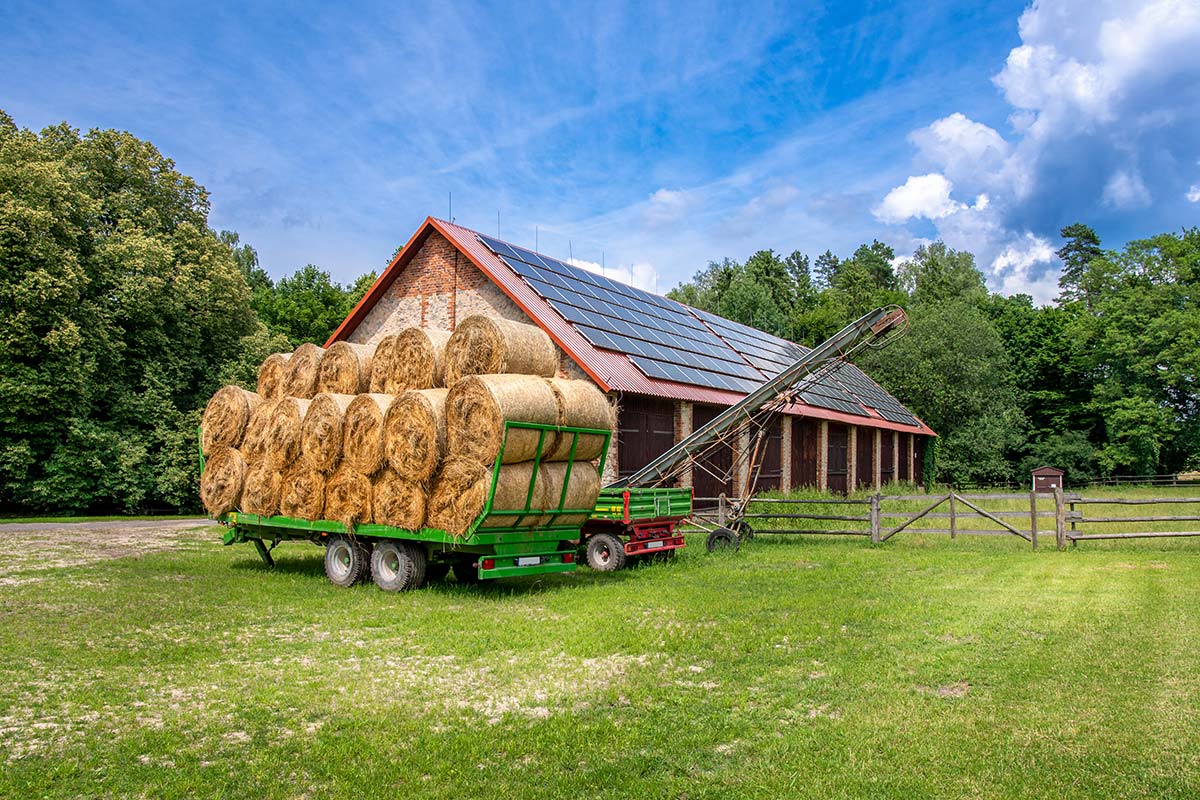
Barns, equipment sheds, workshops, greenhouses, packing buildings, and farm stores can offer valuable space for solar without taking productive land out of agricultural use.
But a big roof doesn’t automatically make a good solar roof.
Current Energy looks at the building, the electrical system, and the way your farm uses energy to determine whether rooftop solar is a good fit, or whether another part of the property offers a better solution.
Start With the Building, Not the Available Roof Space
Barns can offer a lot of room for solar. The first question is whether the building underneath it is ready for an array that may be there for decades.
We’ll help you look at the roof, the electrical system, and the farm before deciding where the panels belong.
A Good Barn Roof Can Be a Great Place for Solar
Agricultural buildings often have something solar needs: substantial, relatively unobstructed roof area.
Using a building also means the farm can produce electricity without dedicating additional ground to the array. For a smaller farm where every usable acre matters, that’s worth considering.
But roof area is only the beginning.
How Old Is the Roof?
Solar is a long-term addition to a building. Installing it over a roof that will need replacement in a few years usually doesn’t make much sense.
We want to understand the roofing material, its condition and age, and whether there are signs of problems beneath it.
Older barns deserve particular attention. A building may have been expanded or modified several times over its life, and what looks straightforward from outside doesn’t always tell the whole story.
Can the Structure Support Solar?
Solar adds weight to a roof, and here in New England, the building also has to contend with snow.
Large barn spans, older framing, previous additions, and the condition of the underlying structure all matter. Some buildings may need structural evaluation before anyone should be recommending panels.
That’s a question to answer before designing the solar system, not after.
Metal Roofs and Solar Can Work Very Well Together
Standing-seam metal roofs are common on agricultural buildings and can be particularly well suited to solar. Many mounting systems can attach to the seams without penetrating the roof itself.
Other roofing materials require different approaches. An aging shingle roof may be better replaced before solar goes up, while slate, asbestos-containing materials, or unusual older roofs can require specialized consideration.
The point isn’t that one roof type always works and another doesn’t. It’s to know what you’re working with before making the investment.
What About New Agricultural Buildings?
If you’re planning a new barn, equipment building, farm store, greenhouse, or other structure, solar is worth discussing before the building is finished.
Roof orientation, available area, electrical service, conduit pathways, and future farm loads can all be easier to accommodate when they’re considered early.
You don’t necessarily need to install solar on day one. Planning for it can make adding it later much simpler.
Sometimes the Ground Is the Better Answer
Not every barn should have solar on it.
The roof may be too old. The structure may not be a good candidate. Trees or another building may create too much shade. The orientation may be poor, or there simply may not be enough usable roof area.
On a farm with available space, a modest ground-mounted array somewhere else on the property may be the cleaner solution.
That’s not a lesser solar project. It’s solar going where it works better.
What Happens Inside the Barn Matters Too
Two barns with the same roof can need very different solar systems.
A dairy may use electricity for milk cooling, ventilation, pumps, and other equipment. A vegetable or CSA farm might have a walk-in cooler, wash-and-pack space, irrigation, or a farm store. Greenhouses, workshops, livestock buildings, and maple operations create their own electrical demands.
That’s why we don’t want to size farm solar simply by filling every available square foot of roof with panels.
We want to understand where the farm uses electricity, when it uses it, and what the operation may need in the years ahead.
Start With How the Farm Uses Electricity
Before deciding how much solar belongs on a barn, we need to understand what the farm is asking electricity to do.
The system should be sized around the farm’s actual energy use, not simply around how many panels will fit on the available roof.
Look at Real Energy Use
Utility bills can tell us how much electricity the farm has been using, but the numbers become more useful when we understand what’s behind them.
A farm’s electrical use may rise and fall dramatically with the seasons. Refrigeration, ventilation, pumps, greenhouse equipment, processing, farm-store operations, and other loads may run on very different schedules.
Rather than trying to make the electric bill disappear on paper, we can look at where on-site solar has the most value for the operation.
Don't Forget the Electrical System
Older agricultural buildings can have older electrical systems.
A farm may also have equipment with substantial electrical demands, multiple panels or services, or buildings that have been added over many years.
Solar has to connect to the electrical infrastructure that’s already there. Looking at that infrastructure early helps identify whether upgrades or other work need to become part of the project.
What If the Farm Has Several Buildings or Meters?
Many farms aren’t served by one building and one electric meter.
There may be separate electricity use at a barn, workshop, greenhouse, pump, farm store, packing building, or another part of the property.
Depending on the utility and current rules, there may be ways to account for solar production across multiple meters. In Massachusetts, virtual net metering can be relevant to some projects.
This is something to evaluate for the individual farm rather than assuming every meter needs its own solar array.
Think About What Comes Next
Farm operations change.
You may be planning another greenhouse, expanding cold storage, replacing equipment, adding an electric vehicle, changing how a building is heated, or passing the farm to the next generation.
We don’t need to predict every future load. But known plans can influence the decisions we make today about the electrical system and where solar belongs.
What About Grants and Farm Solar Incentives?
Agricultural producers have historically had access to federal programs specifically intended to support rural energy projects, including the USDA’s Rural Energy for America Program, or REAP.
These programs can be valuable, but their funding, eligibility requirements, deadlines, and treatment of different solar projects can change. REAP in particular has seen significant uncertainty in 2026.
Rather than promise a grant or build the case for solar around a particular incentive, we can identify programs worth investigating when you’re considering the project and verify what is available at that time.
Look at the Roof and the Ground Together
Sometimes a farm has several reasonable places for solar.
A barn may have an excellent metal roof but limited area. Another agricultural building might offer additional space. A small ground-mount could fill the gap.
Looking at the property together lets us compare those choices rather than assuming everything needs to fit in one place.
The best answer may be the barn. It may be the ground. In some cases, it could be a combination.
Frequently Asked Questions
Is my barn too old for solar?
Not necessarily. Age alone doesn’t determine whether a barn can support solar. Roof condition, roofing material, framing, previous modifications, structural capacity, and remaining roof life all need to be considered.
Are metal barn roofs good for solar panels?
They can be excellent solar roofs. Standing-seam metal in particular can allow solar mounting systems to attach to the seams without roof penetrations. The roof and structure still need to be evaluated for the individual building.
Should I replace my barn roof before installing solar?
If the roof is approaching the end of its useful life, replacing it before installing solar may save the expense and disruption of removing and reinstalling the array later. A newer roof in good condition may need no work at all.
What if my barn can't support solar?
A different agricultural building or a ground-mounted system elsewhere on the farm may be a better option. Finding out that a particular roof isn’t right for solar doesn’t mean the property isn’t right for solar.
How much solar does my farm need?
That depends on the farm’s electricity use, available solar locations, utility rules, budget, and what you want the system to accomplish. We would rather begin with the farm’s real energy use than simply fill the available roof with panels.
Your Farm Already Has an Energy System
Buildings, equipment, pumps, refrigeration, electrical service, and utility meters are already connected to the way you operate.
Solar needs to fit into that system.
Let's Look at the Buildings and the Farm Around Them
You don’t need to know whether solar belongs on the barn, another building, or somewhere on the ground before contacting us.
Tell us about your farm, the buildings you’re considering, and how the operation uses electricity. We’ll help you look at the options and figure out where solar deserves to go.
"*" indicates required fields