
You’re looking at another oil delivery slip and the estimate for a new boiler, and at the same time you keep seeing neighbors’ homes sprout minisplit heads and solar panels. Somewhere in the back of your mind a question keeps nagging: if you’re going to make changes, should you be thinking about heat pumps and solar together, or is that just too much for one Western Massachusetts house to handle?
The short answer is that they can work extremely well together here. The longer answer is that they only work well if you treat them as one plan instead of a couple of disconnected upgrades.
Table of Contents
ToggleWhat really happens when you switch to heat pumps
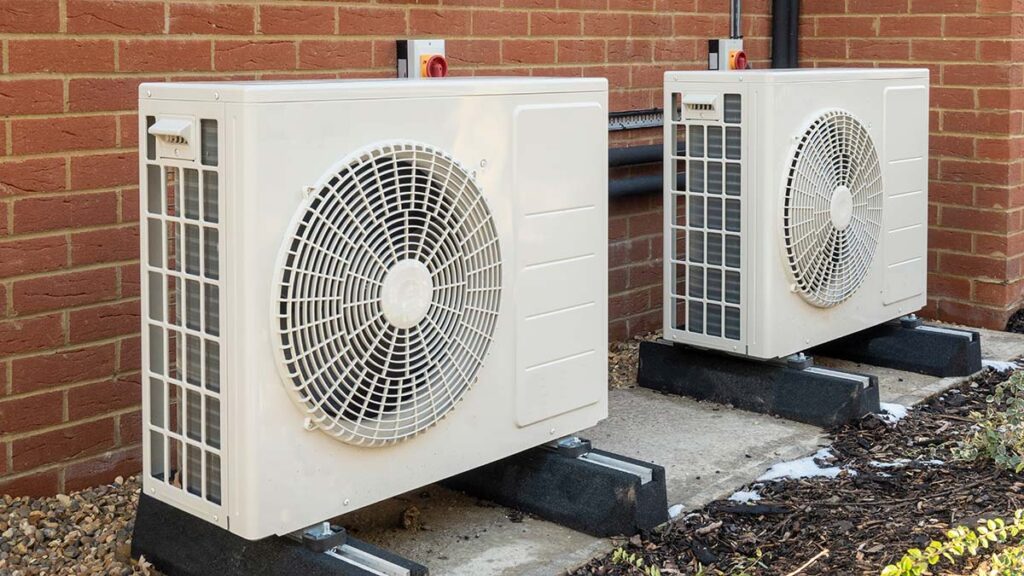
A modern air‑source heat pump isn’t magic; it’s a very efficient, reversible air conditioner that moves heat instead of burning fuel. It runs on electricity and can heat and cool the same rooms. Mass Save and MassCEC keep talking about them because cold‑climate models have been tested for exactly the kind of winters we get in Western MA, and because they’re far more efficient than electric baseboards or older resistance heaters.
From a homeowner’s point of view, the change looks like this: your electric bills get bigger, your oil or propane deliveries shrink or stop, and you suddenly have quiet, even cooling in summer as part of the package. In a reasonably insulated home, total annual energy spending often flattens out or drops, especially if you were burning a lot of fuel to begin with.
That jump in electricity use can feel scary. It’s also the opportunity. Once your heating and cooling are on the meter instead of in the oil tank, solar has something meaningful to work on.
How solar and heat pumps share the load over the seasons
Solar panels are very predictable over the course of a year. In Western Massachusetts, they do their best work from late spring through early fall. Days are longer, roofs are clear, and even cooler sunny days produce well. In the depths of winter, output drops: the sun is low, days are short, and storms can leave panels covered in snow.
Heat pumps have almost the opposite pattern. They sip electricity in fall and spring, work harder in the heart of winter, and then spike again during those hot, sticky weeks in July and August. On any given January night, your panels won’t keep up with what the heat pumps are doing. But that isn’t how the math works.
Over twelve months, a well‑sized solar array can still offset a large share of the total kilowatt‑hours your home uses—even after you switch to heat pumps. In months when the array makes more than you use, net metering lets you push power out to the grid and bank credits. In months when the array produces less than you’re using, you pull more from the grid and those credits help cover the bill. The pieces don’t have to match minute by minute; they have to make sense across full seasons.
Should you do heat pumps or solar first?
A good way to answer that is to look at which part of the house is bossing you around right now.
If your boiler or furnace is on borrowed time and the house still feels drafty, starting with weatherization and heat pumps is often the practical move. Air‑sealing, insulation, and properly sized cold‑climate heat pumps can cut your heating load enough that you don’t need to overbuild the system. After you’ve lived with them for a winter and a summer, you’ll have real electric bills that show what your new baseline looks like. That’s the perfect moment to design solar around reality instead of guesswork.
If, instead, the roof is your strongest asset—a fresh roof with a big, open south‑facing plane—and your fuel system still has some life left, it can make sense to flip the order. In that case, you install solar first, sized for your current usage plus a reasonable allowance for the heat pumps and maybe an EV you know you’ll want. The panels start working for you immediately, and when you electrify more of the house later, you’re already partway there.
In both cases, what you want to avoid is a design done in a vacuum. A solar array sized by someone who has no idea you plan to electrify everything—or a heat‑pump plan that ignores the fact you’ll be adding solar—sets you up for unpleasant surprises.
How much should you “future‑proof” the solar?
You don’t have to become an engineer to think about this sensibly. Start with a couple of simple, concrete facts about your house.
First, look at your fuel usage: how many gallons of oil or propane do you burn in a typical winter? That number can be converted into a range of kilowatt‑hours a heat pump would need to supply, assuming the house gets at least basic insulation and air‑sealing. It won’t be perfect, but it gives your designer a target.
Second, be honest about what’s coming. If you’re planning to add a minisplit to that hot upstairs, convert the whole house over the next few years, and buy an EV as soon as your current car wears out, say that. If those things are “maybe, someday,” say that instead. A good designer can then show you a small set of options: one system that covers your current use, one that assumes partial electrification, and one that leans into a fully electric future.
Plenty of Western MA homeowners land in the middle: a system that comfortably covers today’s load and a good chunk of tomorrow’s, with the option to add a small ground‑mount array later if their electric life grows faster than expected. The point is that you’re choosing that trade‑off, not stumbling into it.
Why the “boring” work on the house still matters
It’s tempting to treat solar as a giant eraser: put enough panels on the roof and you don’t have to think as hard about what’s happening inside the walls. But in this climate, the unglamorous work—sealing leaks, insulating attics and basements, fixing that drafty crawlspace—still shapes how well everything else performs.
Massachusetts’ own efficiency and clean‑energy guides are blunt about this. Heat pumps in leaky homes end up oversized, running harder than they should, and costing more to operate than they need to. The same house then demands a larger solar array to offset that extra use. In contrast, a tightened‑up envelope lets you install smaller, more efficient equipment and a smaller solar array while getting the same comfort.
For you, that doesn’t have to mean a gut renovation. It can be a stepwise approach: attic air‑sealing and insulation this year, basement work and heat pumps next, solar once you’ve seen the new pattern. Or solar and some attic work now, with deeper weatherization when budget allows. What matters is that someone is thinking about the whole system, not just selling you a box on the wall or panels on the roof.
What this could look like in real Western MA houses
Picture a 1970s ranch in Franklin County that’s been on oil forever. The owners insulate the attic and walls, add cold‑climate heat pumps in the main living spaces, and keep the boiler as backup. After a year, they look at their new electric use and work up a solar design that covers most of that, plus the EV charger they plan to add in a couple of years. The system feels boring in the best way: the house is more comfortable, bills are steadier, and they’re not juggling deliveries.
Now picture a newer home outside Greenfield with a nearly perfect south‑facing roof and a relatively young gas furnace. Here, the owners decide to start with solar. They size the array for their current use plus a clear plan to add heat pumps when the furnace is ready to retire. The roof starts cutting the electric bill right away, and when they finally make the switch to heat pumps, they’re not starting from zero.
On a rural road in Ashfield or Conway, another family knows their roof is chopped up and tree‑shaded but their back field bakes in the sun. They invest in weatherization and heat pumps, then put in a ground‑mount solar array sized for a nearly all‑electric life: heat, hot water, cooking, and a future EV. It’s a bigger up‑front commitment, but it also turns part of their land into a long‑term energy asset.
These aren’t wild edge cases; they’re the kinds of paths people are already taking around Western Massachusetts when they line up the pieces instead of treating everything as a one‑off project.
If you’re just starting to think about this
You don’t need a perfect plan before you talk to anyone. What helps is gathering a little context:
- A year or two of electric and heating‑fuel bills.
- A sense of how old your roof is and whether you have obvious insulation problems.
- An honest idea of whether you’ll still be in this house ten or fifteen years from now.
From there, the most useful conversations are the ones that don’t start with “How many panels do you want?” but with “What does your whole house need to do for you?” In Western Massachusetts, heat pumps and solar can absolutely work together; the trick is designing them around your specific home, your specific winters, and your specific plans instead of around someone else’s generic checklist.