
Residential Solar Installation
Solar Designed for Your Home and the Way You Use Energy
A good residential solar installation starts with your home, not a standard package of panels. Your electricity use, roof, shade, electrical system, property, and plans for the future all help determine what makes sense.
Current Energy designs and installs home solar systems throughout Western Massachusetts, with service extending into southern Vermont and southwestern New Hampshire. Whether you’re ready to move forward or still figuring out your options, we’ll help you understand what solar could look like for your home.
Start With the House, Not the Panels
There isn’t one solar system that’s right for every home. Good design starts by understanding the property, how you use electricity today, and where your energy needs may be headed.
What Goes Into a Residential Solar System?
The number of panels that fit on your roof is only part of the equation.
We start with your electricity use and the goals you have for solar. Then we look at the property itself: roof orientation, available space, shade, roof condition, and the electrical system that will connect everything to your home.
Those pieces determine whether rooftop solar is a good fit and what kind of system makes sense.
Your Roof Matters
A wide-open, south-facing roof can make solar relatively straightforward. Plenty of homes aren’t that simple.
Chimneys, dormers, additions, multiple rooflines, trees, and the age of the roof can all affect where panels should go and how productive they’ll be.
If your roof is approaching replacement, that’s something to address before the panels go on. And if the roof simply isn’t a good solar site, that doesn’t necessarily rule out solar. Properties with sufficient open land may be better suited to a ground-mounted solar system.
Your Electrical System Matters Too
Solar becomes part of your home’s electrical system, so the existing service and panel need to be part of the conversation.
Some homes are ready for solar as they are. Others may need electrical work or a service upgrade before or as part of the installation. Every home solar installation starts with a different combination of energy use, roof conditions, shade, and electrical capacity.
This is particularly relevant in a region with so many older homes. Western Massachusetts has a substantial stock of older houses, farmhouses, and homes that have been expanded or altered over time. Older electrical services and panels may need additional attention when planning a solar installation.
Think About Where Your Energy Use Is Going
The electric bill you have today may not be the electric bill you have five years from now.
If you’re thinking about adding heat pumps, an EV charger, battery storage, or other electric equipment, it’s worth talking about those plans before the solar system is designed.
You don’t necessarily have to install everything at once. But planning ahead can help you make better decisions about system size, electrical capacity, and how the pieces will eventually work together.
Solar Designed for Western Massachusetts Homes
Residential solar here comes with its own set of considerations. Older homes, wooded properties, significant snowfall, and the mix of village, rural, and hilltown properties can all affect how a solar system should be designed.
Roof condition and structure matter, particularly on older homes and in areas with higher snow loads. Trees and seasonal shade can affect where panels will produce the most energy. And on rural properties with enough open land, a ground-mounted system may make more sense than putting solar on the roof.
Winter matters too. Solar panels continue producing in cold weather, but shorter days and periods of snow cover change production throughout the year. A good system design accounts for those seasonal differences rather than treating every property, or every month, the same.
The goal is simple: design the system around the home and property you have.
How Residential Solar Installation Works
1. We Start With Your Home
The first step is understanding the property and what you want solar to accomplish.
That means looking at electricity use, available solar exposure, roof and site conditions, and the home’s electrical system. It’s also the time to tell us about future plans such as an EV, heat pumps, or battery backup.
If something about the property makes the obvious solution a poor one, we’d rather identify that early.
2. We Design the System
The system is designed around the available solar resource and your expected electricity use.
That includes determining system size, panel placement, and the electrical components needed to connect the system safely to your home.
For some properties, that’s a rooftop array. For others, a ground mount may offer better solar exposure or avoid putting panels on a roof that isn’t well suited to them.
3. Permitting and Interconnection
Before installation, the project needs the appropriate permits and utility approvals. Here, location makes a real difference.
Massachusetts and New Hampshire rely heavily on town-level permitting, while Vermont requires a state Certificate of Public Good for grid-connected solar in addition to other applicable approvals.
The utility matters too. In Western Massachusetts, homeowners may be served by Eversource, National Grid, or a municipal light plant. In southern Vermont, Green Mountain Power serves much of the region alongside municipal and cooperative utilities. Southwestern New Hampshire includes Eversource and New Hampshire Electric Cooperative territory.
Which utility serves your home can affect the interconnection process, net metering, and available solar or battery programs. It’s one more reason residential solar installation here needs to be planned around the specific property and location.
4. Installation
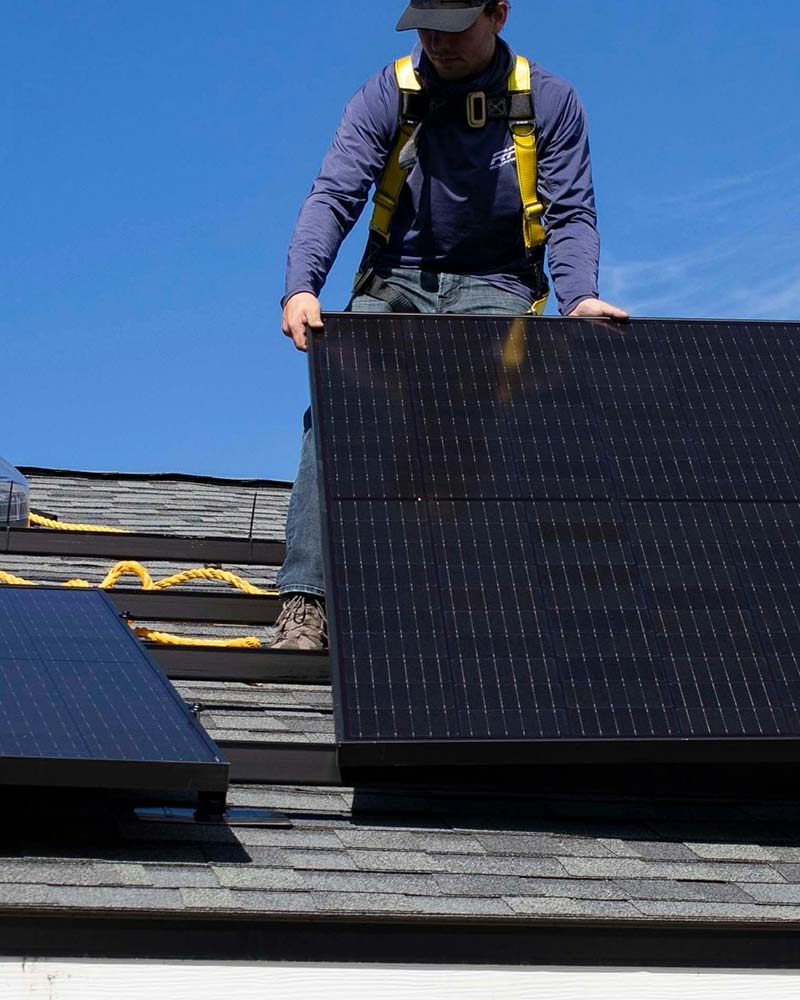
Once the project is ready to build, the racking, solar panels, inverter, and electrical components are installed and connected.
The physical solar panel installation is only one portion of the overall project timeline. Permitting, utility review, inspections, and final approval are why the complete process takes longer than the time installers spend working at your home.
If you’re trying to plan around a particular season or deadline, our guide to how long solar takes in Western Massachusetts explains the timeline in much more detail.
5. Inspection, Approval, and Startup
After installation, the required inspections and remaining utility steps have to be completed.
Once final approval is received, your system can be turned on and begin producing electricity.
Residential Solar Installation FAQs
How much does residential solar installation cost?
There isn’t one useful price for every home. Cost depends on system size, equipment, roof and site conditions, electrical work, and whether the project includes additions such as battery storage.
A good proposal should show you more than the total price. It should also help you understand the proposed system size, expected production, and the assumptions behind those numbers.
Do I need to replace my roof before installing solar panels?
Not necessarily. But if the roof is nearing the end of its useful life, replacing it before installing solar can avoid the cost and inconvenience of removing and reinstalling panels a few years later.
Roof condition should be part of the initial evaluation.
Will I need to upgrade my electrical panel?
It depends on your existing electrical service and panel, the solar system being proposed, and other electrical loads in the home.
Some homes won’t need an upgrade. Others will. Plans for an EV charger, heat pumps, battery storage, or additional electrification can also affect that decision.
How long does it take to install solar?
The physical installation is generally much shorter than the complete project.
Design, permitting, utility interconnection, inspections, and final approval all contribute to the timeline. We’ve covered the complete process in our guide to how long solar takes in Western Massachusetts.
Can I add battery backup to my solar system?
Yes. Battery storage can be planned with a new solar installation, and batteries can also be added to many existing systems.
If backup power is already on your mind, discussing it at the beginning gives you the opportunity to plan the solar and battery systems together.
Does solar work during a Western Massachusetts winter?
Yes. Cold temperatures don’t prevent solar panels from producing electricity. But shorter winter days, the lower seasonal sun angle, and periods of snow cover mean production changes throughout the year.
System design and production estimates should account for those seasonal differences.
What if my roof gets too much shade?
It depends on the amount and location of the shade and whether enough useful roof area remains.
On a property with sufficient open land, a ground-mounted solar system may provide better solar exposure than the roof.
What solar incentives are available in 2026?
Solar incentives and compensation depend on where you live and which utility serves the property. Massachusetts, Vermont, and New Hampshire have different programs and net-metering structures, and some programs have changed significantly.
Rather than relying on an old list of incentives, we recommend looking at current information for your state and utility. Our Massachusetts Solar Incentives guide covers the programs available to Massachusetts homeowners in more detail.
From the First Look to Turning on Your System
A solar project involves more than the days the crew spends at your house. Design, permitting, utility approvals, installation, inspection, and final authorization all happen along the way.
Let's Talk About Solar
You don’t need to know how many panels you need or have the whole project figured out before you contact us.
Tell us a little about your home, your electricity use, and what you’re hoping to accomplish. We’ll help you understand whether solar makes sense for the property and what the next step looks like.
"*" indicates required fields