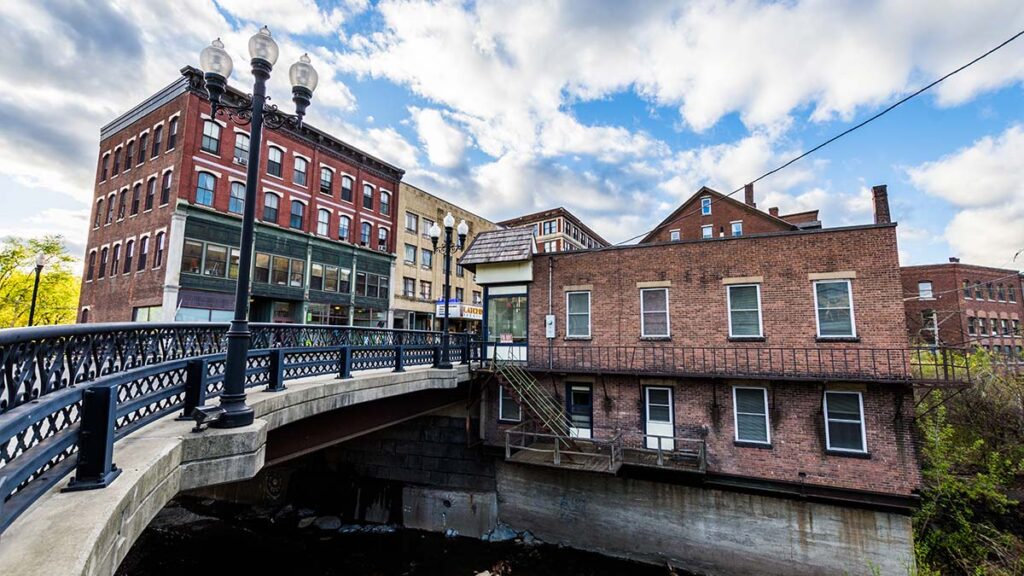
Ar you thinking about solar for your Brattleboro business? If you run a business in or around Brattleboro, you’re probably used to switching gears all day. You might be talking with customers at the counter one moment, then checking on a delivery, then glancing at invoices before you head back out. And somewhere in that mix, the electric bill shows up again, usually higher than you want it to be.
For main-street shops, small manufacturers, food producers, and farms from Brattleboro up through Dummerston and Putney, power has become a real cost of doing business. It’s not background noise anymore. It’s something owners feel every month.
Commercial solar, and sometimes solar paired with battery storage, is one way Southern Vermont businesses are starting to take control of that bill. That said, it’s not an automatic yes for every roof or property. Some buildings are easy wins. Others need a smarter design, or they’re better served by efficiency work first. The question worth asking is simple: where does commercial solar really make sense between Brattleboro and the farms in between, and what should owners think through before they sign anything?
Why Southern Vermont businesses are looking harder at solar
Southern Vermont sits at an interesting crossroads, and it’s not just about values or “going green.”
A lot of businesses here run on electricity in a way that’s hard to avoid. Refrigeration doesn’t take a day off. Pumps, compressors, processing equipment, lighting, and IT loads stack up fast, especially for food and production work. At the same time, outages from snow, wind, and ice still happen. Anyone along the Connecticut River, or up in the hills, has lived through the kind of storm that turns “a few hours” into something longer.
Then there’s the ownership piece. Many local businesses and farms own their buildings or land. That matters because solar is a long-term play. You get the best results when the person paying for the system is the one who benefits from the lower bills for years.
Vermont’s net metering structure and state-level programs can also improve the economics of a commercial system when it’s sized thoughtfully. Efficiency upgrades can help too, because the cheapest power is the power you don’t have to buy. Federal incentives for businesses are still part of the conversation as well, including the 30% Investment Tax Credit for commercial projects that begin construction in 2026 and are placed in service by the end of 2027. Accelerated depreciation may apply, and there can be bonus credits in certain cases based on location or project type.
Put all of that together and it’s a good window for owners in Southern Vermont to at least get clear numbers. Not a sales pitch. Just real math for a real property.
The types of Southern Vermont businesses that tend to be good candidates
Main-street and roadside businesses in Brattleboro and Putney
Picture the small commercial buildings along Brattleboro’s downtown streets, West Brattleboro’s commercial stretches, and the village centers in Dummerston and Putney. You’re talking about independent retailers and galleries, cafés and bakeries, professional offices like law and accounting, and a lot of health and wellness practices.
These buildings often share a few practical traits. Many are one to three stories. Many have a roof with at least one usable plane. A lot of them have steady daytime usage that lines up well with solar production. Lighting, HVAC, refrigeration, kitchen equipment, office equipment. It adds up.
For owners who plan to hold these buildings for a while, solar can offset a meaningful share of annual electric use and make monthly costs more predictable. It can also support upgrades that owners are already thinking about, like more efficient HVAC or EV charging in a parking area.
Food producers, processors, and cold storage
Between Brattleboro and Putney, there’s a dense cluster of food-related businesses. Cheesemakers. Breweries and cideries. Meat processors. Co-ops. Cold-storage operations. Specialty producers doing small-batch work.
These businesses live with a different kind of load. Refrigeration and freezers run 24/7. Temperature-controlled spaces don’t care if it’s sunny. Pumps, mixers, bottling lines, packaging equipment, and sanitizing systems keep pulling power even when the day is done.
For this group, commercial solar is usually less about identity and more about protecting the business. A large, constant base load can be a strong match for solar. That load tends to grow over time, too, especially when production expands. Pairing solar with efficiency upgrades can help every kilowatt-hour do more work, which matters when margins are tight.
Battery backup deserves a serious look in this category. It’s not a luxury for a cold room. It’s insurance against product loss and production downtime. If a storm takes down the grid and you’re sitting on perishable inventory, you don’t need a philosophical conversation about resilience. You need your equipment to stay on.
When farms are tied into these operations, like dairy barns supplying a creamery, the solar conversation can also fold into a broader farm and agriculture strategy.
Farms and the “in between” spaces
Between Brattleboro and Putney, and spreading out into Dummerston and Vernon, many farms and rural businesses have something that main-street buildings don’t. They have land.
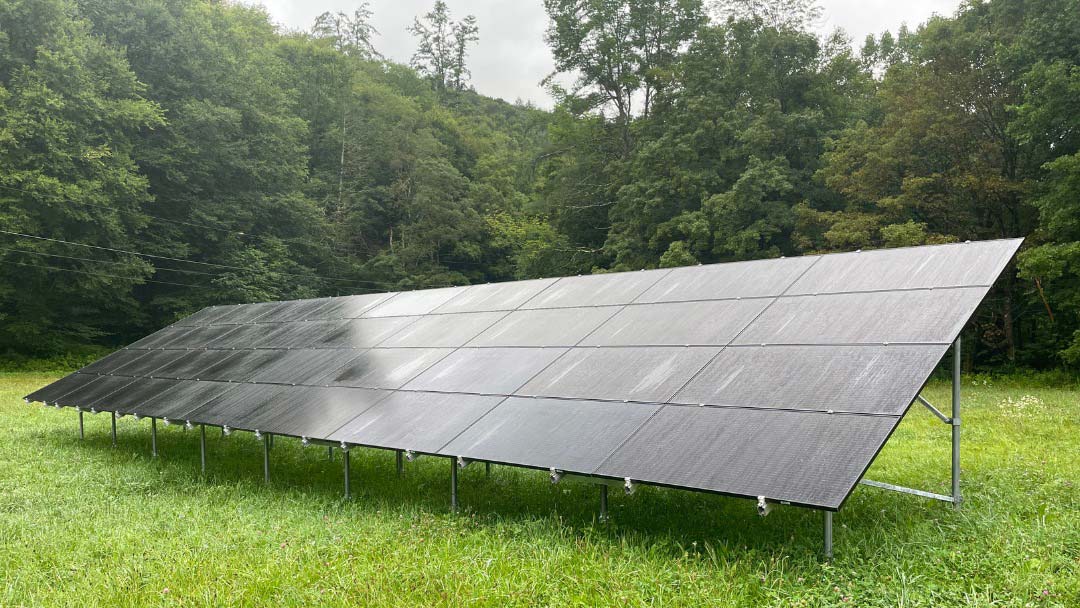
That matters because open fields, barnyards, and gently sloping pastures can offer better solar potential than an older roof. Ground-mounted solar can be sited for maximum sun instead of being stuck with whatever direction the barn happens to face. It can also be built with tilt and row spacing designed for Vermont snow and wind, which is not a small detail in February.
Ground-mount can also avoid loading old barn roofs or interrupting the use of historic structures. That’s often the right call when you’re dealing with buildings that were never designed for modern structural loads.
On farms, solar can support barn lighting and ventilation, milk house and milking equipment, cold storage and processing spaces, electric fencing, irrigation, and workshop loads. When the system is integrated with the farm’s layout and long-term plans, it can lower operating costs without compromising the land’s primary purpose.
Some owners will also want a deeper dive into agrivoltaics and farm-specific design choices. In that case, it makes sense to send readers to a dedicated farm and agriculture page.
Where battery backup fits into the Southern Vermont picture
Solar alone doesn’t keep the lights on when the grid goes down. That’s the part people sometimes miss, especially if they’ve only looked at residential installs in milder climates.
In Southern Vermont, storms are real. Ice is real. Snow loads are real. When lines go down, the fix isn’t always quick, and some roads stay rough longer than anyone would like. Battery backup can be a meaningful addition for the right operation, and the “right operation” usually has something to lose.
Businesses with something to lose during an outage
Battery storage is worth considering when an outage creates real risk, not just inconvenience.
That can mean perishable inventory like food, seeds, pharmaceuticals, vaccines, or temperature-sensitive supplies. It can mean caring for animals or people who can’t simply be sent home when power fails. It can also mean running equipment that does not tolerate abrupt shutdowns, or equipment that’s expensive to restart and recalibrate.
A battery system can be designed to keep key loads running. Refrigeration and freezers are the obvious ones. Circulation pumps, ventilation, and basic heat can matter just as much in winter. Networking, phones, and a few workstations may need to stay online for basic operations. Essential lighting and life-safety systems belong on that list too.
This is not a promise of business as usual through a multi-day outage. It’s about staying safe, staying controlled, and avoiding preventable losses until the grid comes back.
Smoothing demand and time-of-use costs
In some Vermont commercial rate structures, the bill isn’t only about how much energy you use. It can also be about your highest demand peaks and when you pull from the grid.
Batteries can charge during lower-load or lower-cost periods and discharge to support the building when usage spikes. That can soften peak demand. It can also help shift some consumption away from the most expensive hours when time-of-use rates apply.
For a small producer or warehouse that has a few intense production periods each day, trimming spikes can noticeably change the bill even if total usage stays roughly the same.
How Southern Vermont incentives and federal credits work together
For Southern Vermont businesses, the basic incentive stack often includes a few major pieces.
The federal 30% Investment Tax Credit can apply to commercial solar projects that begin construction in 2026 and are placed in service by the end of 2027. Accelerated depreciation on solar and associated equipment can also significantly reduce taxable income in the early years. Vermont net metering credits excess generation exported to the grid at set rates, with rules that vary by system size and customer type. Depending on timing and the specifics of the customer class, there may also be state or utility programs that add additional support.
The federal timeline matters here. For planning purposes, owners can assume that projects starting construction in 2026 and placed in service by the end of 2027 can still qualify for the 30% ITC. Projects started later may not.
That doesn’t mean everyone should rush. It does mean that owners who have been “thinking about solar for a while” may want to get serious numbers in hand while the current structure is still available.
How a Brattleboro-area owner might evaluate whether solar is worth it
If you own a building or farm in or near Brattleboro and Putney, it helps to walk through a real checklist in your head before jumping into quotes. Not a glossy checklist. A practical one.
Start with ownership. Solar and storage work best when the person making the investment is the person who benefits from lower bills and increased property value over many years.
Then look at your load. Steady, round-the-clock loads like refrigeration, well pumps, and certain process equipment can be excellent matches for solar. Seasonal or sporadic loads can still pencil out, but design needs more care. System sizing matters more than people think.
Outages are the next question, and it’s worth being honest here. If storms have caused spoilage, animal stress, or serious business disruption, batteries may be worth pricing as part of the initial design. If outages are rare and mostly annoying, solar alone may deliver the best return.
Your timeline matters too. If you expect to keep the property for 10 to 20 years, you can consider more comprehensive solutions. If you’re closer to selling or retiring, a modest, well-sized system that improves cash flow and strengthens resale value may be a better fit.
Finally, run the numbers properly. That means working with your installer and tax advisor to see how the 30% federal ITC, depreciation, Vermont net metering, and any local programs apply to your project. It also means running scenarios. Solar only. Solar plus a modest battery. Solar plus phased upgrades. You’re looking for trade-offs you can actually live with, not a single “perfect” answer.
The point isn’t to talk yourself into solar no matter what. It’s to see clearly where it makes sense for a Southern Vermont business like yours.
The bottom line for Brattleboro, Putney, and the farms in between
Commercial solar is not only for big companies on big roofs. In Southern Vermont, it’s become increasingly relevant for main-street owners who want more predictable operating costs, for food and farm businesses with high electricity usage and real storm risk, and for rural operations that own land and can turn a sunny corner of it into a long-term energy asset.
Battery backup isn’t required in every case. For businesses with perishable inventory, animals, or critical processes, though, storage can shift solar from a savings project into a resilience and risk-management tool.
If you own a building or farm in the Brattleboro–Putney corridor and you’ve been wondering whether commercial solar is really worth it, the next step is simple. Gather a year or two of power bills. Think honestly about outage tolerance and what you plan to do with the property. Then ask for a design tailored to Southern Vermont, not a generic pitch built for somewhere else.