If you own or manage a building here, Greenfield commercial solar installation probably feels less like a trend and more like a question you can’t ignore forever. Electric rates are high, gas and other fuel‑linked costs have jumped, and older roofs around town weren’t built with solar in mind. The challenge isn’t whether solar can work. It’s how to make it work on a building that already has history.
We’re Current Energy. We’re based just north of Greenfield and spend a lot of time on the commercial roofs that line Route 2, the industrial pockets, and the mixed‑use buildings in town. The systems we design have to respect those roofs, the businesses under them, and the fact that you can’t just close the doors for a month while something “sustainable” happens overhead.
Table of Contents
ToggleThe reality of Greenfield’s commercial roofs
Commercial roofs around Greenfield don’t look like the flat, wide, empty surfaces in national ads.
We see:
- Low‑slope roofs with years of patch work around roof‑top units and vents.
- Older structures with unknown framing details that need a real structural look, not assumptions.
- A mix of additions and original sections that don’t always line up cleanly.
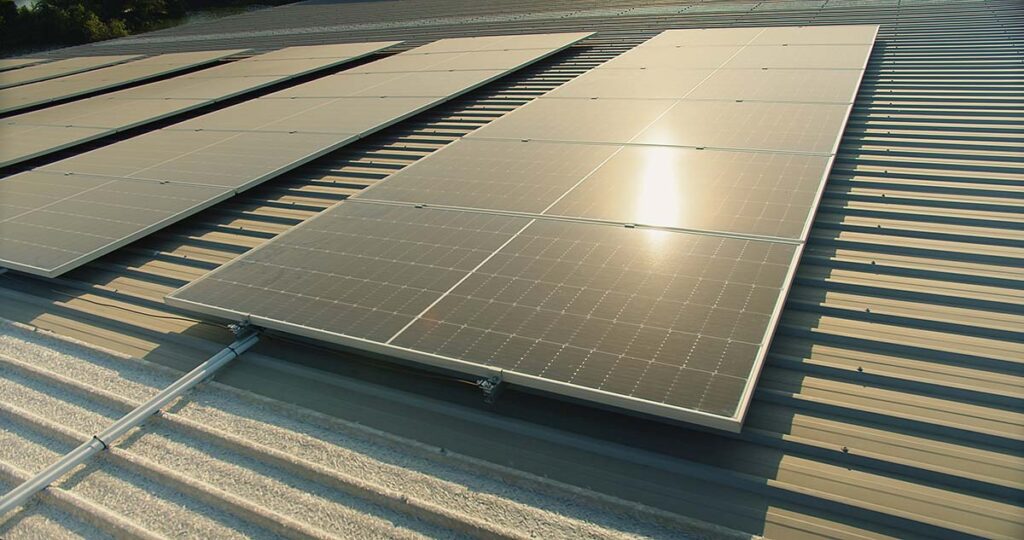
When we step onto a roof for a Greenfield commercial solar installation, the first job isn’t sketching panel rows. It’s understanding what the roof can handle and how long it’s likely to last. Sometimes that leads to a clean “yes.” Sometimes it leads to a phased plan. Sometimes the honest answer is that the roof needs attention before it deserves a 20‑year solar system on top of it.
Roof condition: when we say “yes,” “not yet,” or “only here”
We break the roof conversation into three simple buckets.
Yes, this surface is ready.
If the roof is in solid condition, with a clear membrane and good remaining life, we can usually move straight into designing a full or partial array on that surface. We still check structure, drainage, and snow paths, but we’re not fighting the roof itself.
Not yet.
If the roof is clearly near the end of its life, piling solar on top is a bad deal for you. In those cases, we talk about re‑roofing first—sometimes the whole building, sometimes just the section that makes the most sense for solar. We’d rather see you pair new roof and new solar once than pay twice to move equipment around a failing surface.
Only here.
Plenty of Greenfield buildings have one strong roof section and one or two that are tired, heavily shaded, or cluttered. In those cases, we often design an array that uses only the best area for now, with a plan for how to expand later if the rest of the roof gets upgraded.
This is the part of the job nobody sees in a production graph. If we get it wrong, everything built on top of that decision becomes more complicated than it needs to be.
Designing around roof‑top equipment instead of pretending it isn’t there
Most commercial roofs in town already have a crowded skyline: HVAC units, vents, stacks, hatches, maybe a satellite dish that no one remembers installing. Those details shape where solar belongs.
We pay attention to:
- Service clearances around equipment so techs can still do their jobs.
- Snow and water paths—where drifts form, where meltwater goes, and how panels will change that.
- Layout that avoids chopping the array into lots of tiny islands that are hard to wire and maintain.
Sometimes that means a smaller but cleaner array on one end of the roof, rather than a bigger but tortured layout that sneaks panels into every gap. In the long run, the system that’s easiest to access and maintain is usually the system that performs more reliably.
When a Greenfield commercial project moves off the roof
Not every Greenfield solar installation ends up on the roof.
We look for ground‑mount options when:
- The roof is structurally limited and upgrades would be expensive or disruptive.
- The roof is a patchwork of additions, each with different conditions.
- There’s open land on or near the property—field edges, unused corners of a lot, or setback areas that can host rows of panels without interfering with daily operations.
A ground mount can simplify future roof work and keep solar in play even if the building itself needs major changes later. For some sites, especially on the edges of town or along rural roads, a ground‑mounted system paired with a modest roof array tells a better long‑term story than trying to turn a tired roof into a contortion act.
Keeping the business running while the roof changes
The part building owners worry about most is disruption. You need to know what a Greenfield commercial solar installation feels like from the inside.
From our side, we:
- Plan loud and intrusive work around your operating hours as much as possible.
- Protect entrances, parking, and delivery routes so people and trucks can still move.
- Limit any necessary power shutoffs to focused windows you can actually work around.
From your side, you’ll see more trucks and ladders than normal for a short stretch, and you may hear footsteps overhead, but you shouldn’t see chaos on the floor. Whether we’re just adding solar or coordinating a roof replacement plus solar, the building remains a place people can work in, not a construction site you have to tiptoe through.
How high energy costs factor into the decision
Electricity in Massachusetts already costs more than in many other states, and Western Mass sits in that same expensive band. At the same time, gas prices have climbed quickly this spring, and anything that depends on fuel—shipping, materials, farm inputs—has been coming in at higher prices.
Solar doesn’t eliminate those issues. It does give you one lever you can actually move: how much of your building’s electricity you keep buying at full retail rates and how much you generate on your own.
For a Greenfield commercial building, that often means:
- Shaving a meaningful portion of your electric spend year after year.
- Making that part of your cost structure more predictable as everything else moves.
- Setting yourself up for future electric loads—more cooling, more equipment, EV charging—without assuming you’ll pay full freight for every extra kilowatt‑hour.
When we sit down with your bills and a roof plan, we’re not just selling panels. We’re trying to answer a simple question: does this building make more sense with solar on it than without, given what energy is costing you now and where it’s likely headed?
Questions Greenfield building owners should ask
You don’t need to become an expert in structural engineering or power markets. A handful of questions usually tells you whether a Greenfield commercial solar installation proposal is grounded in your reality:
- How did you evaluate the roof’s remaining life, and what are you assuming about roof work during the solar system’s lifetime?
- Which parts of the roof are you using and which are you deliberately avoiding, and why?
- If we need a new roof section, are you coordinating with our roofer, or expecting us to manage that separately?
- How will you keep our operations running during construction—what’s the plan for power shutoffs and access?
- If we later add more electric load or decide to put panels on a second building, does this design keep that path open?
The clearer and more specific the answers, the better the fit between your building and the solar system going on top of it.
Greenfield commercial solar installation isn’t about forcing a generic solar design onto whatever roof happens to be there. It’s about taking the actual building you own—the patches, the units, the snow paths—and turning it into a more predictable source of energy over the next decade. When the roof, the business, and the system are all working together instead of fighting each other, solar becomes less of a gamble and more of a practical piece of how your Greenfield property earns its keep.