If you own a building or run a farm in or around Northfield, you’ve probably wondered whether solar belongs on your roof, out in a field, or at all. Northfield commercial solar panels don’t have to sit on the roof by default. In plenty of cases around here, the ground is the better solar roof.
We’re Current Energy. We’re based just south of the Vermont line and work on commercial and agricultural properties across Franklin County. In Northfield, the decision between roof‑mounted and ground‑mounted solar isn’t theoretical. It’s about the actual roofs and the actual land you’re working with.
Table of Contents
ToggleWhy some Northfield roofs aren’t the best home for solar
A lot of Northfield commercial buildings and barns were built long before anyone thought about solar. They’re doing their job, but they come with quirks.
We see:
- Low‑slope or metal roofs that have seen years of repairs around vents and equipment.
- Long spans and older framing where we don’t have as much documentation as we’d like.
- Rooflines with multiple additions—each built differently—so load and water paths are not straightforward.
Solar can go on a roof like that, but only after careful structural review and often with limits on where and how much weight we add. Sometimes the engineering, reinforcement, and coordination with future roof work make a roof‑mounted system less attractive than it first looks.
If we know the roof is going to need major work in the next decade anyway, it’s fair to ask whether that surface is the right place for a 25‑year asset.
When the ground is simply a better “roof”
Northfield has something a lot of denser towns don’t: space.
Once we’ve walked the roof, we usually walk the property too. Ground‑mounted commercial solar panels start to look better when:
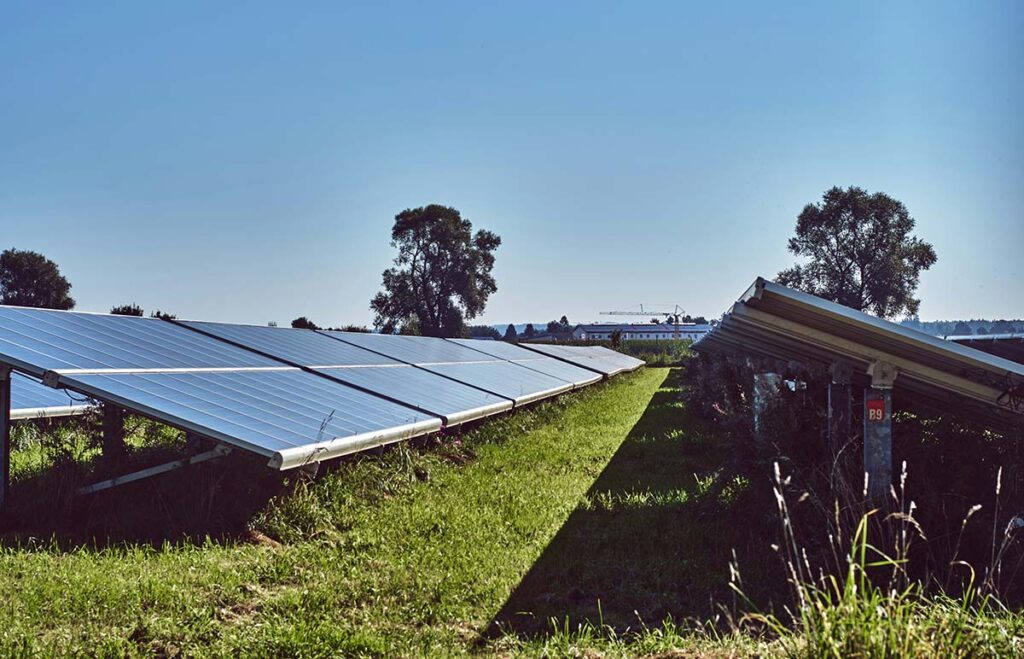
- You have open land near the building—field edges, pasture corners, or unused yard—where panels can sit without disrupting operations.
- That land sees more consistent sun than the roof, which might be shaded by trees, neighboring structures, or roof‑top equipment.
- You’d rather keep the roof “free” for future changes, expansion, or a replacement that doesn’t involve moving a whole array.
On a ground mount, we’re not stuck with the roof’s pitch or direction. We can set the tilt and orientation for Northfield’s latitude, often capturing noticeably more energy per panel than a compromised roof layout would.
The trade‑off is obvious: a ground mount uses land and usually costs more upfront than a roof array of the same size because it needs foundations, posts, trenching, and sometimes fencing. For many rural businesses and farms, that cost is worth it when the land isn’t pulling its weight otherwise.
What ground‑mounted commercial solar panels offer that roofs don’t
When we look at Northfield commercial solar panels on the ground instead of on the roof, we’re not just chasing a different look. Ground mounts bring a few practical advantages:
Better energy yield per panel
On the ground, we can aim the array exactly where it should be for this climate, not where the building happens to point. In New England, properly oriented ground mounts can squeeze 15–25% more energy out of the same panel count compared with some roof constraints.
Easier maintenance
Panels at ground level are easier to inspect, clean, and service. You don’t need ladders or roof access for routine checks or troubleshooting. That matters over 25–30 years of operation.
Room to grow
If you expect your load to increase, more refrigeration, more equipment, more electric vehicles, a ground mount can often be expanded more easily than a roof array boxed in by edges and skylights.
Less entanglement with roof work
Roof replacements and repairs are simpler when you’re not moving an entire solar array to get at the surface. With a ground mount, roofing stays roofing and solar stays solar.
For Northfield farms and rural businesses, those advantages often line up with how the property already works: fields that see plenty of sun, a barn roof you’re not ready to trust, and a desire not to turn roof maintenance into a solar project.
When a roof array still makes sense
Ground mounts are not always the winner. A roof‑mounted system is still a strong choice when:
- The roof is newer, structurally clear, and has a good orientation with minimal shade.
- Land is tight, heavily used, or too valuable to dedicate to panels.
- You want to avoid any additional structures in fields or yards for aesthetic or operational reasons.
Rooftop systems usually come in cheaper than ground mounts on a per‑watt basis, because they don’t require foundations, steel posts, or trenching. For some Northfield properties, that lower upfront cost and the ability to leave the land untouched outweigh the benefits of a ground mount.
Our job isn’t to push one option. It’s to lay both out clearly, given your roof, your land, and your plans.
Things Northfield owners should weigh before choosing
Before we recommend roof or ground, we ask a few questions with you:
- How healthy is the roof, and when do you realistically see replacing it?
- Is there land you’re comfortable dedicating to solar for the long haul?
- Where do you see your electric use going over the next 5–10 years—more equipment, more cooling, EVs, expanded operations?
- How important is easier maintenance and future flexibility compared to lower upfront cost?
In Northfield, where many commercial properties are on larger parcels and rely on equipment that burns fuel, a ground mount often ends up being the quiet, long‑term play. It turns underused land into a power plant that offsets some of the most expensive electricity in the country.
Northfield commercial solar panels don’t have to live on the roof if the roof isn’t the right partner. When the structure is tired, shaded, or complicated, and you’ve got land that can do more for you, a ground‑mounted array is often the better bet. Our work is to read the roof, read the land, and show you which choice actually makes your building and business easier to live with in the years ahead.