
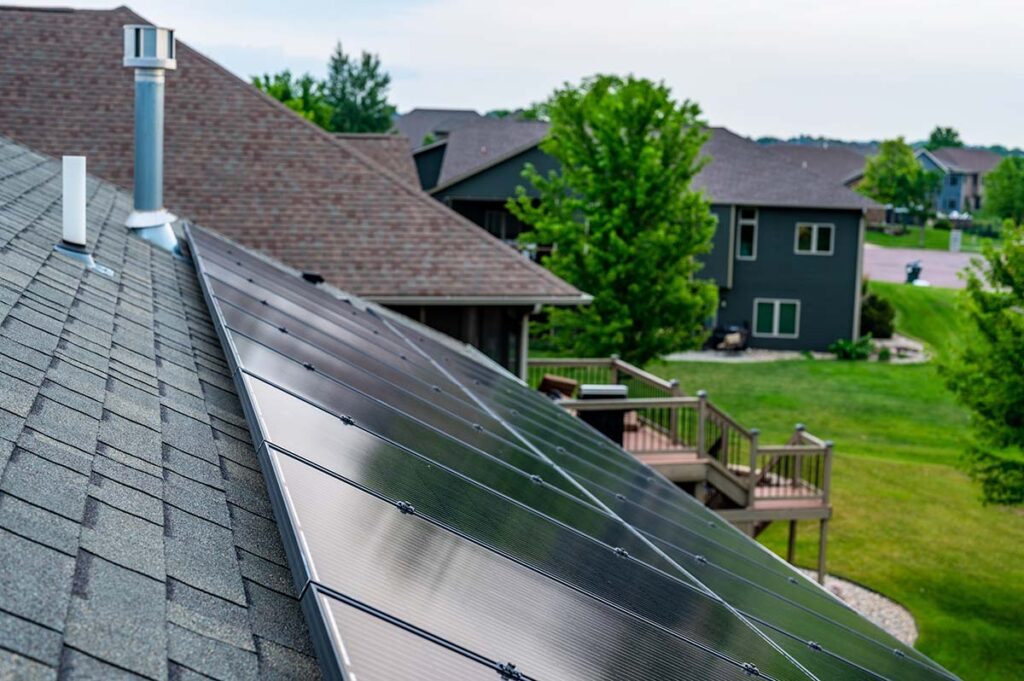
If you’re looking at Western Massachusetts solar panel installation, you’re usually trying to answer three questions at once: what will this cost, what support still exists now that the federal credit is gone, and what local rules could slow this down. From our perch in Bernardston, working roofs and properties up and down the valley, we see the same patterns over and over: the panels and inverters are only part of the story. State incentives, energy prices, and local rules matter just as much as the hardware.
We’re Current Energy. Our team designs and installs solar across Western MA, Southern Vermont, and Southwest New Hampshire, with most of our days spent on homes and small businesses along the Route 2 and I‑91 corridors.
Table of Contents
ToggleWhat actually goes into the cost here
Quotes online talk about “average systems.” The homes we see in Western Massachusetts are anything but average. The price you get for solar panel installation is shaped by a few concrete factors.
System size
The size of the system tracks how much work it does for you. A compact array on a smaller home with modest electric use is one thing. A larger system on a house with heat pumps, office equipment, a well pump, and maybe an EV charging is another. We size around how you actually use power, not just how much roof we can cover.
Roof condition and structure
Older roofs with patching, multiple shingle layers, or questions about framing sometimes need attention before they’re ready for solar. That might mean a full replacement, a targeted replacement on the solar plane, or reinforcement in key spans. It’s extra cost now, but it’s also what keeps you from having to take a system down in the middle of its life to deal with a tired roof.
Electrical service and panel
Some homes have plenty of room in the main panel and a clean path for new breakers. Others were never built with future loads in mind. If your panel is already crowded, or if you want battery backup or EV charging later, electrical work becomes part of the real project cost.
Site quirks
Long driveways, tricky conduit runs, ground‑mount locations, ledge, and access challenges all show up in the proposal. A simple roof close to the panel is one price. A field array a long trench away is another. None of this is hidden—it’s just the reality of building in a hilly, rural‑plus‑town region.
When we talk cost, we’re talking about the full package that makes the system safe, durable, and legal in Western Massachusetts—not just the sticker price on a set of panels.
Incentives after the federal residential credit
The big change everyone is still adjusting to is this: the federal 30% tax credit for new homeowner‑owned systems ended for projects placed in service after the last day of 2025. That doesn’t mean solar has stopped making sense here. It just means the support looks different.
For Western Massachusetts homeowners in 2026 and beyond, the important pieces are:
Massachusetts state incentives
The state still offers a personal income tax credit for qualifying residential systems, along with ongoing property and sales tax exemptions for solar equipment. Those don’t sound flashy, but together they take a meaningful slice out of the effective cost once everything settles.
Net metering and bill credits
Net metering rules turn extra power your home sends back to the grid into credits on your bill. Over the course of the year, a well‑sized system can chew through a large share of your supply charges, even without a federal residential credit in play.
SMART and program‑level support
Program details shift over time, but Massachusetts continues to reward clean generation through mechanisms that pay or credit you based on how much your system produces. Those payments aren’t a lottery ticket; they’re part of the long‑term payback picture.
Rising energy costs
On top of all that, there’s the thing you feel whether or not you think about incentives: electric rates and fossil‑fuel prices haven’t been sitting still. Oil, propane, and delivered fuels have given a lot of homeowners a rough couple of winters. Solar doesn’t replace every form of energy a house uses, but it does give you one clear, controlled piece of the puzzle—power you generate yourself instead of buying at whatever price shows up next year.
Put together, these factors don’t make solar “free.” They do explain why, even without a new federal residential credit, a well‑designed system in Western Massachusetts can still be a strong alternative to riding every future rate increase with no hedge at all.
Local rules and approvals that shape timing
A Western Massachusetts solar panel installation has to satisfy three sets of people: your town, your utility, and the state.
Local building and electrical officials
Every town from Easthampton to the hilltowns and up into Franklin County has its own way of handling solar permits. Some see them every week and have a smooth, familiar process. Others take a closer look at structure or wiring because the housing stock is older. We submit structural and electrical plans, answer questions, and adjust details so the project passes cleanly instead of getting stuck over small details.
Zoning and historic constraints
Historic districts, older neighborhoods, and certain scenic roads can add extra eyes to the design. That might mean keeping panels off a street‑facing roof, staying within certain height limits, or placing a ground mount where it’s screened from view. In rural parts of Western Mass, setbacks and neighbor sightlines tend to matter more than anything else.
Utility interconnection
Your utility has to agree to how your system connects and how power flows back and forth. That includes metering, safety shutoffs, and limits on how much generation a given part of the local grid can absorb. For typical homes, this is routine. For larger systems, or for clusters of solar on the same line, it can add a bit of time and occasionally require a design change.
None of this is meant to scare you off. It just explains why “how fast can we do this?” is usually answered in weeks or months, not days. The more we understand about your town, your roof, and your utility up front, the fewer surprises there are later.
Why Western Massachusetts is still a good place for solar
You don’t live in the desert. You live in a place with hills, trees, and real snow. Even so, Western Massachusetts has a few quiet advantages most homeowners don’t see at first glance.
Cool, clear days in spring and fall are very good for solar. Panels aren’t just about blazing heat; they like strong light and reasonable temperatures. The valley gets a lot of those days. Long summer evenings add more hours of useful production. Winter storms still drop snow on the glass, but bright days after a storm often produce more than people expect once the panels clear.
When you combine that production pattern with state‑level support and the way local net metering works, solar can still carry a large chunk of a typical home’s annual usage—especially if the system is sized for your real load instead of for a generic “average” house.
Questions to ask before you sign anything
You don’t need a spreadsheet full of jargon to make a good decision. A few straightforward questions go a long way:
- How did you size this system based on my actual bills and roof, not just a rule of thumb?
- What state incentives and exemptions are baked into this proposal, and what would the numbers look like without them?
- Do we need to address roof condition or electrical service before installation, or are you planning to build on top of problems that will come back later?
- How long do you realistically expect permits and interconnection to take in my town, based on recent projects there?
- If I add storage or increase my electric use later—heat pump, EV, workshop—does this design keep space for that?
Good answers feel specific: to your house, your town, and your corner of Western Massachusetts. If everything sounds like it could apply to anyone anywhere, you’re probably not getting the whole picture yet.
Western Massachusetts solar panel installation in 2026 isn’t about chasing a disappearing federal perk. That window closed. It’s about using the tools that remain—state support, net metering, solid design, and a roof you trust—to take one volatile line on your budget and make it more predictable. Done well, the system doesn’t turn your home into a project. It just quietly changes where a meaningful slice of your electricity comes from.