
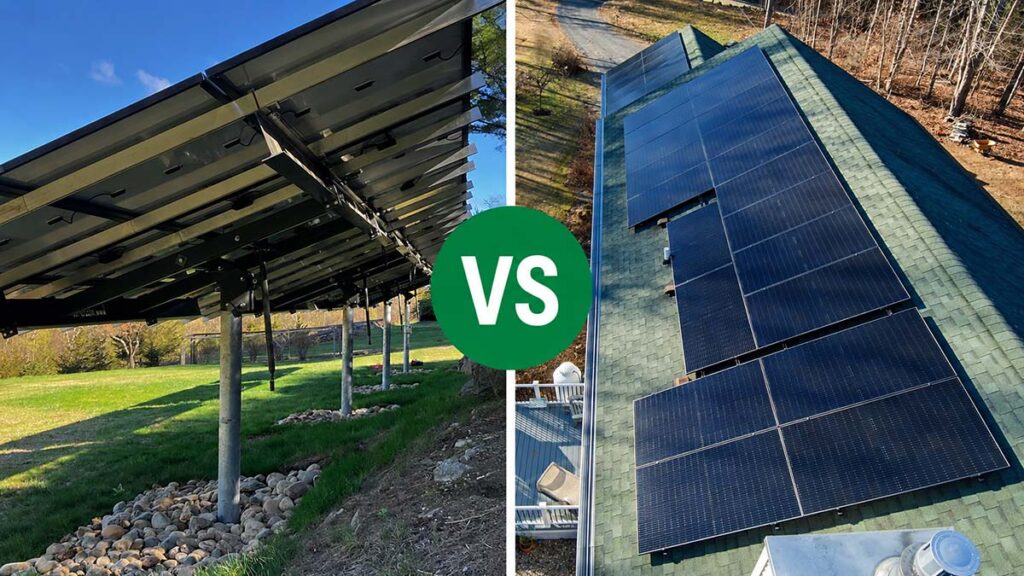
Solar usually starts with the roof.
That makes sense. It is the obvious place to look first, and for many homes, it works fine.
But Western Massachusetts homes can throw a few curveballs.
A roof may look wide open from the driveway and still lose sun before the best part of the afternoon. Older shingles can slow the project down. So can a steep pitch, a chopped-up roofline, or a house that just faces the wrong way.
That does not mean solar is out.
It may mean the panels belong somewhere else.
On some properties, the better spot is on the ground, where the array can be placed in stronger sun and serviced more easily. On others, the roof is still the cleanest option.
That is why ground mount vs roof mount solar is not a one-answer question.
The right choice comes down to the site: the roof, the land, the shade, and how much power the system needs to make.
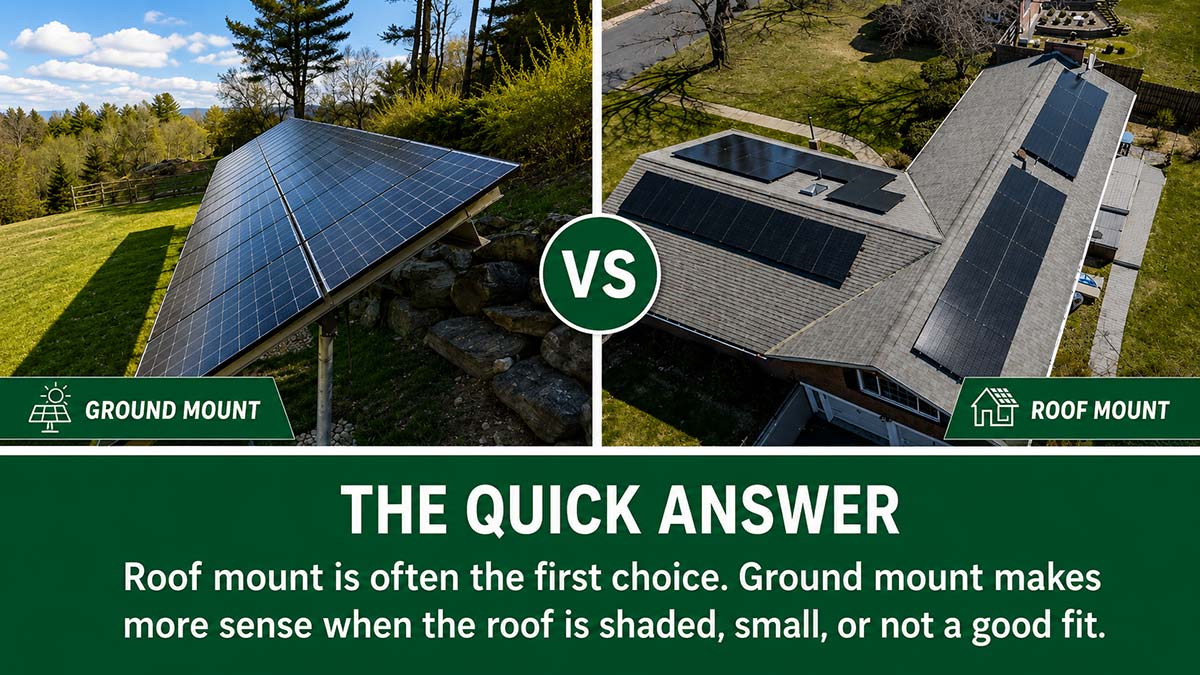
Ground Mount vs Roof Mount Solar: The Quick Answer
Roof-mounted solar is usually the first option to price out.
If the roof gets strong sun and does not need replacement soon, it can be the most straightforward way to install solar panels. The racking attaches to the existing roof, the yard stays open, and the project usually costs less than building a dedicated ground mount.
Ground-mount solar starts to make more sense when the roof gets in the way of the project.
That might mean too much shade. It might mean an older roof. It might mean the house faces the wrong direction, or there just is not enough usable roof space for the number of panels needed.
On some Western Massachusetts properties, the better solar site is not above the house. It may be a clear patch of land near the home, or a spot by an outbuilding that gets better sun.
So the quick answer is pretty practical.
Roof-mounted solar usually makes sense when the roof is ready and the sun exposure is good.
Ground-mount solar starts to look better when the roof keeps getting in the way of the project.
The cost matters, but so does production. A cheaper rooftop system is not much of a win if the panels cannot make enough power.
Ground Mounted Solar vs Roof Mounted Solar Panels: Quick Comparison
| Factor | Ground Mounted Solar Panels | Roof Mounted Solar Panels |
| Best fit | Homes with open yard, field, farm, or rural property space | Homes with a newer roof, strong sun, and enough roof space |
| Installation cost | Usually higher because the system needs racking, posts, trenching, conduit, and site work | Usually lower because the system uses your existing roof |
| Solar energy production | Often stronger when panels can be placed at the best angle and direction | Depends on the orientation of your roof, roof pitch, and shade |
| Roof impact | No need to mount your solar panels on the roof | Roof should be in good condition before panels are installed |
| Maintenance | Panels are easier to reach for cleaning, service, snow, and debris removal | May require ladders or roof access for maintenance |
| Space | Uses yard, field, or open land | Uses roof space and keeps the yard open |
| Expansion | Easier to add more panels if there is enough land and the system is designed for it | Limited by available roof space |
| Snow and airflow | Ground mounts often sit higher off the ground and can be easier to clear | Rooftop solar panels may be harder to clear safely |
| Permitting and site work | May require more review because of zoning, trenching, soil, and structure | Often more straightforward when the roof is suitable for solar |
| Best overall choice | Strong option when the roof is shaded, aging, or too small | Strong option when the roof is sunny, newer, and simple to work with |
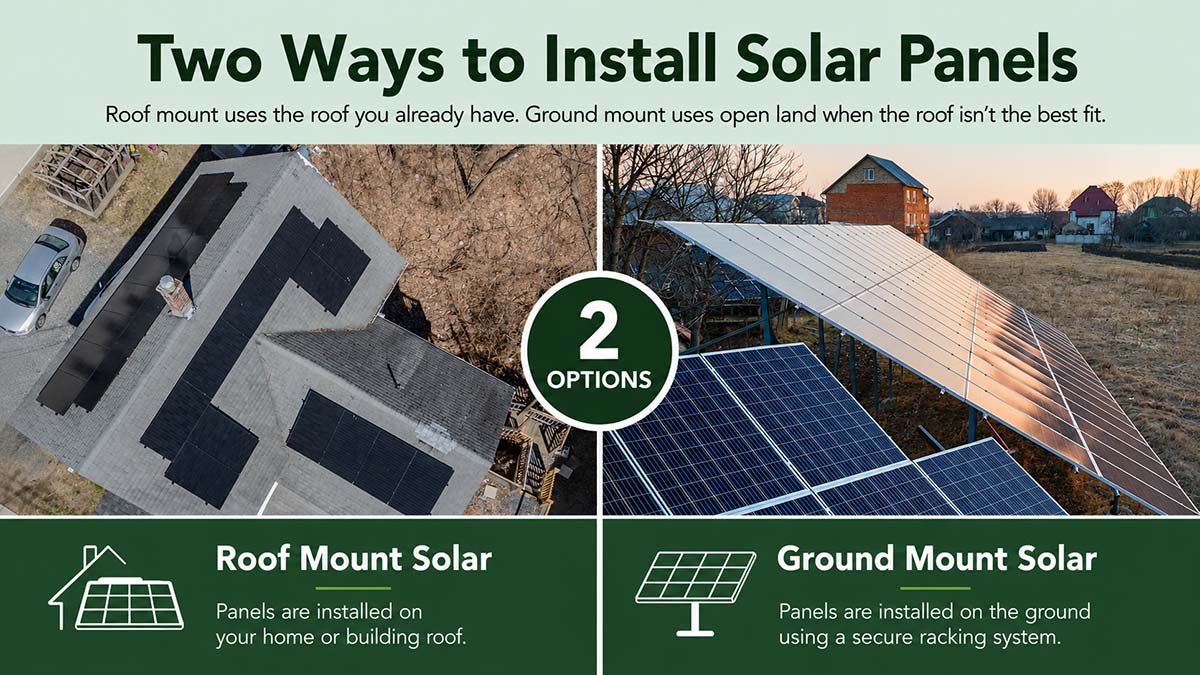
What Is a Ground Mounted Solar Panel System?
A ground-mounted solar panel system puts the solar array on the land instead of the roof.
That is the basic idea.
The panels are held in place by a racking system built for the site. On one property, that might mean posts set in the ground. On another, it might involve concrete footings or a different foundation for your solar project.
The power still goes back to the house or building. It just travels underground through electrical conduit instead of coming straight down from panels on your roof.
A ground-mounted system can work well when the roof is not the best solar location.
Maybe the roof gets too much shade. Maybe it is older. Maybe it faces the wrong way. Maybe there is not enough roof space for the number of panels the home needs.
On larger Western Massachusetts properties, the better spot may be somewhere else entirely.
A side yard.
A field edge.
Open land near a barn.
Ground-mount solar gives you more control over where the panels go. That can help with solar energy production, especially when the house itself is not sitting in the best position for sun.
There is more work involved, though.
The installer has to look at the land, not just the roof. Soil, slope, setbacks, trenching, and local rules can all affect the design. The array also needs to stay out of the way of normal life on the property.
You do not want it blocking a driveway.
You do not want it sitting where a future shed might go.
And on a farm or rural lot, you definitely do not want it in the way of equipment, gardens, animals, or access routes.
So ground-mount solar can be a strong option. It just needs to be planned around the property, not dropped into the first open patch of grass.
What Is a Roof Mounted Solar System?
Roof-mounted solar is the familiar version: panels on the house.
The system uses the roof instead of a separate frame in the yard. That usually keeps the project simpler, assuming the roof is ready for it.
The panels attach to roof-mount racking, then connect into the home’s electrical system.
When the roof gets reliable sun and does not need work soon, roof-mount solar can be a practical way to go solar without taking up space on the property.
It also keeps the yard open, which matters if there is not much extra land to work with.
The system does not take up yard space. It usually has a lower installation cost than a dedicated ground mount. It can also be quicker to install when the roof is newer, structurally sound, and gets enough sun.
But the roof controls the project.
The direction of the roof affects production. So does the pitch. Shade from trees or nearby buildings can reduce output. Dormers, chimneys, vents, and small roof sections can limit how many solar panels fit.
Roof condition matters too.
If you need to replace the roof soon, it usually makes sense to handle that before installing panels on your roof. Otherwise, the panels may have to come off later so roof repairs can be made.
So a roof-mounted solar system can be a strong choice, but only when the roof is ready for it.
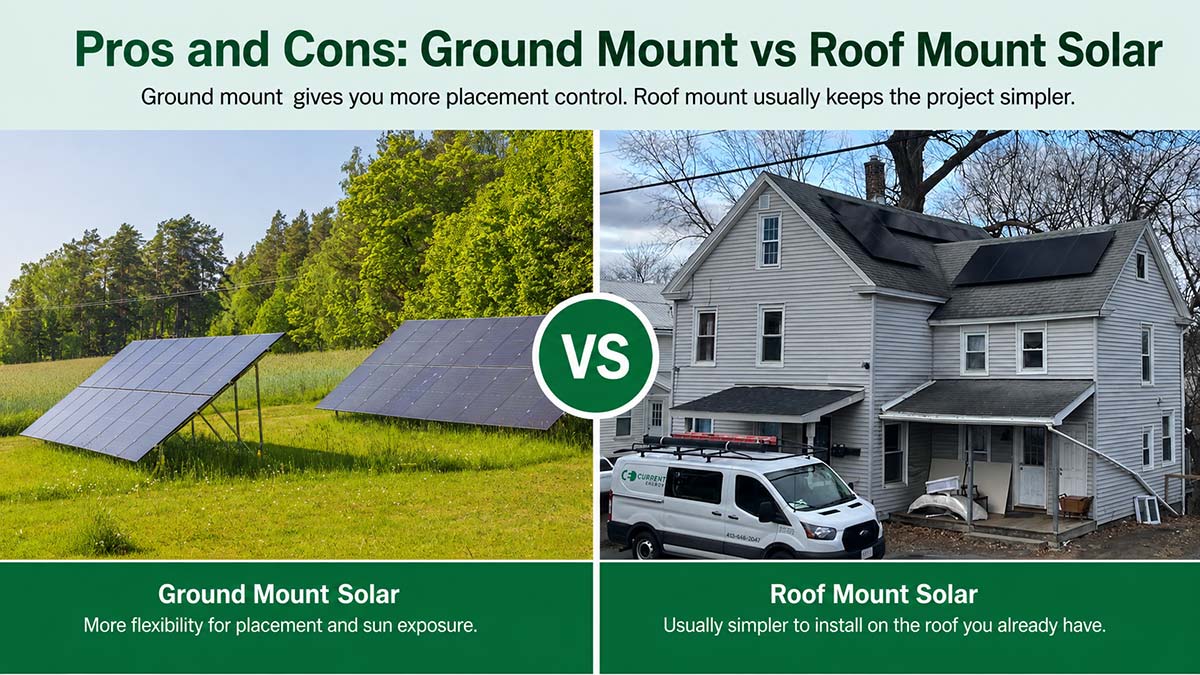
Pros and Cons of Ground-Mounted Solar Panels
Ground-mounted solar panels make the most sense when the roof is not doing the project any favors.
Maybe there is too much shade. Maybe the roof is older and may need work soon. Maybe the house faces the wrong direction, or the usable roof space is limited. In those cases, forcing a roof-mounted system onto the house can lead to a smaller system than the homeowner really needs.
A ground-mounted solar system gives the installer another option.
Instead of putting solar panels on your roof, the solar array can be placed in a sunnier part of the property. That may be a side yard, a field edge, or open land near an outbuilding. On larger Western Massachusetts properties, that flexibility can make a real difference in solar power production.
Ground mount systems are also easier to reach. If panels need cleaning, inspection, or service, the work can usually happen from the ground. That is a lot different from dealing with roof-mounted panels after snow, leaves, or debris collect.
There are cons of ground mount solar too.
A solar array on the ground takes up space. It needs racking, site work, and a route for electrical wiring back to the home. The installer also has to think about setbacks, soil conditions, mowing, plowing, gardens, septic areas, and how the property is used day to day.
Pros and Cons of Roof Mount Solar
Roof mount solar is popular for a reason.
If the roof is in good shape and gets steady sun, it can be the simplest place to put panels. The structure is already there. The system stays off the ground. The yard, driveway, garden, and open land stay usable.
That lower installation cost is one of the main pros of roof-mount solar.
A roof-mount solar system usually does not need the same site work as ground mount arrays. There is no separate structure to build in the yard. There is no long trench from the array back to the house. For many homes, that makes the solar installation more straightforward.
But the roof has to cooperate.
A roof-mount solar system can only work with the roof that is there. Direction matters. So does shade. A roof with several small sections may not leave much room for panels, even if the house looks large from the ground.
Roof age is another thing to settle early.
Panels can stay in place for a long time. If the shingles are near the end of their life, it usually makes sense to handle that work before the solar installation. Taking panels off later so the roof can be repaired or replaced is possible, but nobody wants that surprise a few years in.
Maintenance is less convenient too.
With roof-mounted solar panels, cleaning or service may involve ladders and roof access. After a storm, snow and debris are not always easy to deal with safely.
That does not make roof-mount solar a bad choice. For many homes, it is still the best one.
It just means the roof needs to earn its place in the plan. If it has good sun, enough room, and plenty of life left, roof-mounted solar may be the right fit. If the roof keeps creating limits, it is worth comparing it against a ground-mounted solar system before making the final call.
Cost, ROI, and Incentives
Cost is usually where roof-mount solar has the early advantage.
When you install solar on a roof, the house is already doing part of the work. The roof becomes the support structure. That usually means less construction, less ground work, and a lower installation cost than building a separate array on the property.
Ground-mount solar systems cost more because there is more to build.
The panels need their own racking. The system needs a secure foundation. Power has to travel from the solar array back to the house, which may involve trenching and electrical conduit. On some properties, the installer also has to work around slope, soil, setbacks, or access.
So yes, ground-mount solar panels usually cost more upfront.
But upfront cost is not the only number that matters.
A rooftop solar system only makes financial sense if the roof can produce enough power. If the roof gets too much shade, faces the wrong way, or does not have enough room for the number of panels needed, the cheaper option may not deliver the better return.
That is where the comparison gets more interesting.
A ground-mounted solar array may cost more to install, but it may also produce more electricity over time. It may leave room for extra panels later. It may help a homeowner plan for heat pumps, battery storage, or an EV charger.
Incentives can also change the math.
Depending on the property, utility, system size, and current program rules, both ground-mounted and roof-mounted solar systems may qualify for available solar incentives. That can include tax credits or state-level programs, but the details should always be checked before making a decision.
The better question is not just, “Which one is cheaper?”
It is, “Which system gives this property the better long-term return?”
Energy Production, Shade, Snow, and Maintenance
Energy production is where the roof-mount versus ground-mount question gets more serious.
A roof-mounted system has to work with the roof as it exists. If the roof faces a strong solar direction and gets clean sun, that can work very well. If the roof loses sun behind trees or points the wrong way, the system may produce less than the homeowner expects.
Ground-mounted solar gives the installer more choice.
The panels can be placed in a sunnier part of the property. They can also be set at an angle that works better for solar power production. That can matter in Western Massachusetts, where trees and older rooflines often complicate a rooftop solar system.
Snow is part of the picture too.
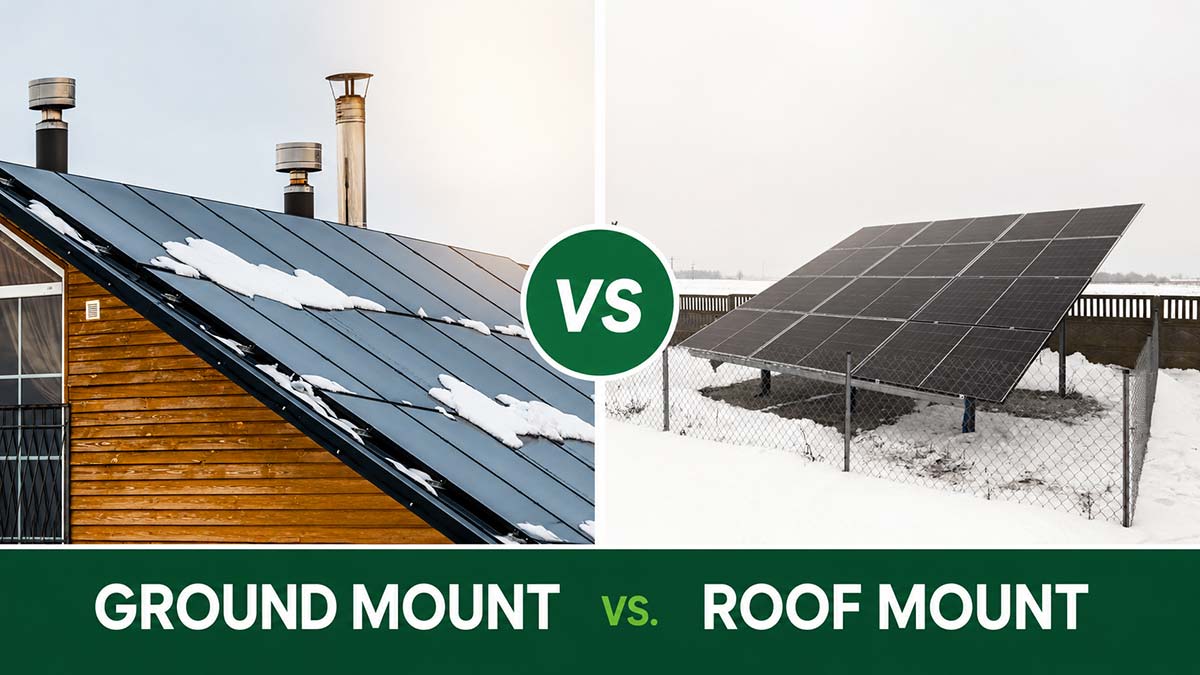
Roof-mounted solar panels can shed snow on their own, but not always quickly. And most homeowners are not climbing onto a roof after a storm to clear panels. With a ground-mounted system, panels are usually easier to reach. That can make snow, leaves, and debris less of a hassle.
Maintenance follows the same logic.
If panels need cleaning or service, ground-mount solar panels are simply easier to get to. Roof-mounted panels can still be maintained, of course. The work just takes more care because ladders and roof access may be involved.
That does not mean ground mount solar always produces more. It means the placement matters.
A good roof can be a great solar site. A shaded roof can hold the whole project back.
Why Western Massachusetts Properties Need a Local Solar Review
Western Massachusetts has a lot of properties that do not fit the standard solar sales pitch.
There are older homes in Greenfield. Farmhouses in Deerfield. Wooded lots in Shelburne. Hilltown homes where the best sun may not land on the roof at all.
That is why a local solar review matters.
A quick online estimate may assume the roof is the obvious place for panels. Sometimes it is. But around here, a better option may be a garage roof, a barn roof, or a solar array on the ground.
Current Energy looks at more than the panel layout.
The roof condition matters. The electrical setup matters. So does the way the property is used. A ground-mounted solar system should not block plowing, equipment access, a septic area, or a future building spot. A roof-mounted solar system should not go on shingles that need to be replaced soon.
The right choice depends on the actual property.
For some Western Massachusetts homes, roof-mount solar will be the cleanest and most affordable option. For others, ground mount systems may produce more power and avoid roof problems altogether.
That is the value of having someone walk the site, look at the sun, and think through the whole solar project before recommending one type of system over another.
What About Sheds, Barns, Carports, and Open Yards?
The choice is not always limited to panels on the house roof or a full ground-mounted system in the yard.
Some properties have a better middle option.
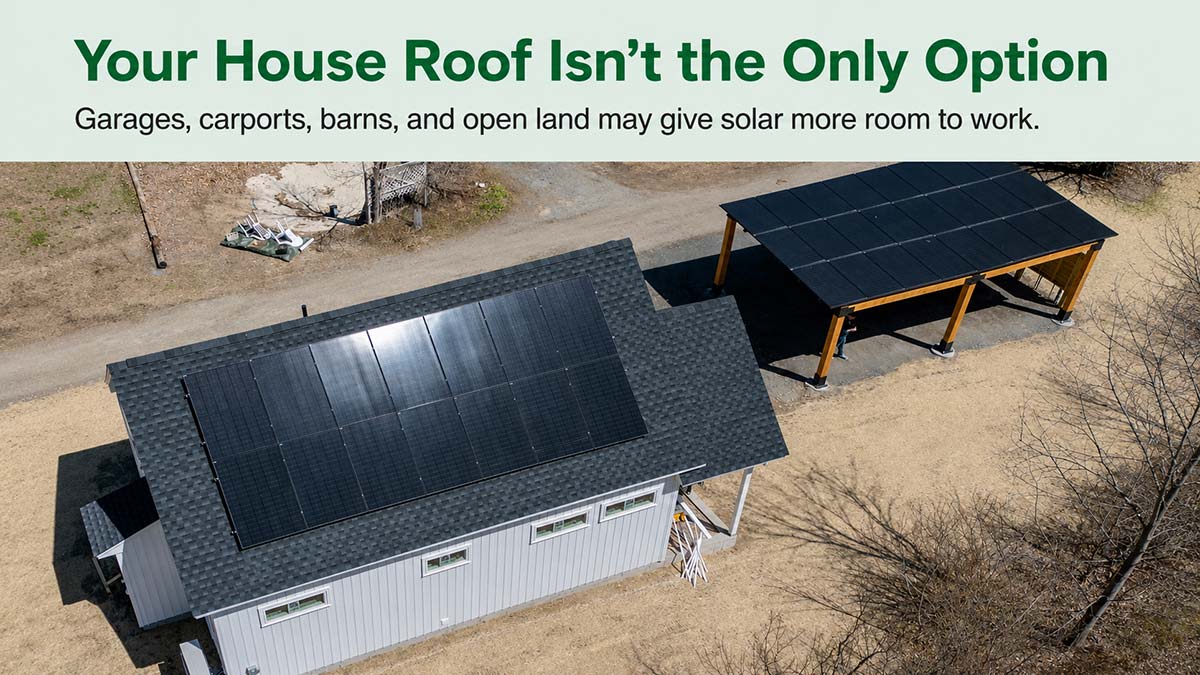
A detached garage may get better sun than the main house. A barn may have a wider roof plane with fewer obstructions. A carport can sometimes turn parking space into solar production. On a rural lot, an open yard or field edge may give the system more room than any roof on the property.
This is why ground-mount and roof-mount solar should not be treated like two rigid boxes.
There are several types of solar layouts, and the right one depends on the property. The system might go on the house. It might go on an outbuilding. It might belong on the ground. In some cases, the best answer may be a mix.
The main thing is to avoid forcing the project onto a roof that is not a good fit.
If the roof needs work, make roof repairs first. If the roof is shaded or too small, look around the property. The better solar site may already be there.
How to Choose the Right Solar Panel System
The right solar setup should fit the property instead of fighting it.
Roof-mount solar often makes sense when the roof is ready for panels. It needs reliable sun, enough usable space, and no major roof work coming up soon. When those pieces line up, keeping the system on the roof can lower the cost and leave the yard alone.
But there are cons of roof-mount solar to consider.
If the roof is shaded, old, or broken into small sections, the system may be limited from the beginning. If the shingles need replacement soon, putting panels in place can create extra work later.
Ground-mount solar makes more sense when the roof keeps creating problems.
A ground-mounted system can move the array to a better part of the property. It can also make the panels easier to reach for cleaning or service. The cons of ground mount solar are mostly about space, site work, and cost. The system needs land, proper placement, and more planning before installation.
So the decision comes down to a few practical questions:
Does the roof get enough sun?
Is the roof ready to hold panels for years?
Is there enough roof space for the number of panels needed?
Is there a better solar location elsewhere on the property?
Will the home need more power later for heat pumps, battery storage, or EV charging?
If the roof gives you a clean answer, roof-mounted solar may be the right fit.
If the roof keeps adding complications, ground-mount solar is worth a serious look.
FAQ: Ground Mount vs Roof Mount Solar
Is ground mount solar more expensive than roof mount solar?
Usually, yes.
A roof-mounted system uses the roof as the support structure, so there is less to build. Ground mount solar needs its own racking, a secure foundation, trenching, and electrical work back to the house. That adds cost.
The lower-cost option is not always the better value, though. If the roof is shaded or too small, a ground-mounted system may produce more power over time.
Do ground mounted solar panels produce more energy?
They can.
Ground mounted solar panels are not limited by the direction or pitch of the roof. They can often be placed in a sunnier part of the property and angled for stronger production.
That does not mean every ground mount will outperform every roof mount. A sunny, well-positioned roof can work very well. But when the roof is working against the project, ground mount solar may have the advantage.
Can I install solar panels if my roof is shaded?
Maybe, but the shade needs to be reviewed carefully.
A little shade may not be a dealbreaker. Heavy shade during peak sun hours can reduce production enough to change the design.
If the roof is shaded, the installer may look at another roof section, a garage, a barn, or a solar array on the ground. For some Western Massachusetts homes, that is where the better solar site turns out to be.
What happens if I need roof repairs after installing solar panels?
The panels may need to be removed and reinstalled so the roof work can be done.
That is possible, but it adds cost and scheduling headaches. If the roof is close to replacement, it usually makes sense to make roof repairs before installing solar panels on your roof.
This is one of the big cons of roof-mount solar. The system may last for decades, so the roof underneath it needs to be ready.
How much space do ground mount solar panels need?
It depends on the system size, the number of panels, the layout, and local site conditions.
A small ground-mounted system may fit in part of a yard. A larger system may need more open land, especially if the homeowner wants extra panels for future electric use.
The site also needs to work practically. The array should not block a driveway, septic area, garden, plow route, or future building location.
Which solar panel system is better for Western Massachusetts?
For many homes, roof-mounted solar is still the simpler and less expensive choice.
But Western Massachusetts has a lot of wooded lots, older homes, rural properties, barns, and uneven rooflines. In those cases, ground mount solar can be a better fit.
The best answer comes from looking at the actual property. The roof, sun exposure, electrical setup, land, and future energy needs all matter.
Thinking About Ground Mount or Roof Mount Solar?
There is no universal winner between ground-mount and roof-mount solar.
A good roof can be the right place for panels. It usually keeps the project simpler and the upfront cost lower.
But plenty of Western Massachusetts homes do not have that kind of roof. Shade, roof age, limited space, and odd angles can all change the plan.
That is when it makes sense to look beyond the house.
Current Energy can review the site and help you compare both options before you commit to a solar installation. The goal is simple: put the system where it will do the best work for your home.