
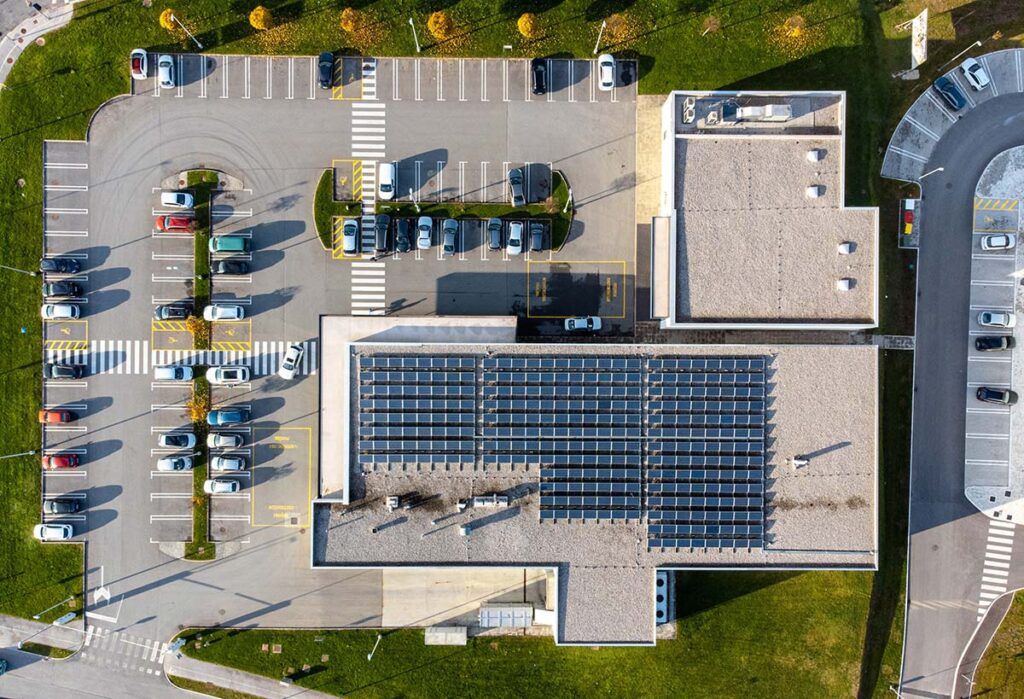
If you run a business in this region, Western Massachusetts commercial solar installation is no longer a futuristic idea. It’s something you pass every week on warehouses, farms, light industrial buildings, and mixed‑use spaces from Easthampton up toward Northfield and along Route 2. The question isn’t whether solar works. The question is whether it works on your building, with your bills, on your part of the grid.
We’re Current Energy. We design and build commercial solar systems for the kinds of properties you actually see in Western Massachusetts, not just the textbook roofs in marketing images.
Table of Contents
ToggleWhat commercial solar can actually change for a business here
Most owners don’t start with kilowatt‑hours. They start with a stubborn line on the P&L.
A well‑designed commercial solar system in Western Mass usually has three jobs:
- Take some of the sharp edge off your electric costs over time.
- Make your future energy spend more predictable in a region where rates move.
- Set the building up for the next decade of changes, more electric equipment, more cooling, maybe EV charging for staff or fleet.
The panels are visible on the roof or in the field, but the real story plays out quietly on your bills and in how you plan capital improvements.
Roofs, land, and deciding where the array belongs
Along the Route 2 and I‑91 corridors, the buildings are not all the same. Some have newer low‑slope roofs with plenty of open space. Others carry decades of patch work or a maze of rooftop units. Then there are sites with a decent roof and also a piece of open land just behind the building.
When we look at a property for commercial solar, we’re usually weighing three questions at once:
- Does the roof have enough remaining life to deserve a 20‑plus‑year asset on top of it?
- Is there open, reasonably flat land we can use without getting tangled in access or snow‑management problems?
- How will maintenance look in ten winters, not just the first one?
Sometimes the answer is a straightforward roof system. Sometimes it’s a ground mount tucked where plows and trucks can still do their thing. Quite often, it’s a mix, a solid roof array plus a ground‑mounted addition that lines up better with your actual load.
We don’t force panels into awkward corners just to hit a number on paper. The array has to make sense for the building itself.
Western Massachusetts commercial solar installation: Incentives and tax benefits in plain language
Massachusetts does a lot to support commercial solar, and Western Mass businesses can tap the same core programs as the eastern half of the state. In practice, most of the conversation comes down to a few moving pieces:
- A federal tax credit that covers a significant slice of the installed cost.
- Accelerated depreciation that lets you recover much of the investment faster than a typical project.
- State‑level incentives that reward production.
- Net metering rules that determine how your extra power is credited when the system is generating more than you use.
We don’t expect building owners to memorize program names. The important thing is seeing a clean picture: estimated installed cost, what those incentives realistically do for your project, and how that compares to staying fully exposed to utility rates.
When we sit down with bills from a Western Mass business, we’re not plugging them into a generic model. We’re looking at the pattern of how you actually use power, weekday vs weekend, day vs night, summer vs winter, and showing how the incentives and energy savings interact with that pattern.
What the installation process looks like from your side
Commercial solar can sound complicated from the outside. Inside, the steps are consistent.
First, we study your usage and your site
We pull bills, look at demand and usage over time, and walk the site. That means roof, potential ground‑mount areas, electrical room, and how the property ties into the grid. We’re looking for both opportunities and constraints, structural limits, shade, aging equipment, tricky access.
Then we draft a design that matches your building
The design isn’t just “fill the roof.” It’s an array sized around your goals, your roof or land, and what the interconnection will allow. We also think ahead: if you plan to add more electric load or storage later, we want today’s design to keep that door open.
Permits and interconnection run in the background
On your end, this looks like a packet to review and a few signatures. On our end, it’s structural drawings, electrical plans, and interconnection applications going through the town and the utility. Different Western Mass towns move at different speeds; part of the job is planning with that in mind.
Construction and commissioning
When everything is approved, we schedule installation. As crews build racking, set panels, and run conduit, we work around your operations as much as possible. Any power interruptions are planned and as short as we can make them. After inspections and permission to operate, the system goes live and you start seeing production, and over time, the way it affects your bills.
Roof‑only vs ground‑mount: how the landscape changes the decision
On paper, roof‑mounted and ground‑mounted systems can deliver similar kilowatt‑hours. In Western Massachusetts, the landscape and building stock often nudge the choice one way or another.
A roof‑only system makes sense when:
- The roof is in solid condition with a reasonable remaining life.
- Structural loading checks out without major reinforcement.
- Obstructions and rooftop equipment don’t chop the array into lots of small, inefficient pieces.
A ground‑mount, or a roof‑plus‑ground combination, becomes attractive when:
- The roof is nearing the end of its life and you’d rather not pair new solar with an old membrane.
- There’s open land close enough to the building to keep trenching and access reasonable.
- Long‑term maintenance and snow clearing look easier on the ground than around rooftop units.
We’ve seen projects along Route 2 and up into Franklin County where a modest roof array and a well‑placed ground mount told a better long‑term story than trying to cover every square foot of an aging roof.
When batteries belong in the same conversation
Not every commercial solar project in Western Massachusetts needs batteries. But in parts of the region where outages and voltage dips are part of life, storage often comes up early.
Adding storage to a commercial solar system can:
- Help smooth demand spikes by letting you discharge during your most expensive intervals.
- Keep critical loads online when the grid cuts out, refrigeration, servers, key process equipment, or safety systems.
- Position the building to participate in programs that pay for supporting the grid during peak events.
Sometimes the best move is to build the solar system “battery‑ready”: equipment and layouts chosen so a future battery can drop in without re‑wiring everything. In other cases, it makes sense to add storage from day one. That choice depends less on technology trends and more on how your business handles outages today.
Questions worth answering before you sign anything
You don’t need to become a solar engineer to make a good decision. A few pointed questions usually cut through the noise:
- How did you size this system for our actual load, not just our roof or field?
- What assumptions are you making about incentives and rates over the next decade?
- What happens when the roof needs work, who handles removing and re‑installing the array?
- How will this system handle the outages and grid quirks we already see on this street?
- If we add storage or EV charging later, does this design make that easier or harder?
The answers should feel specific to your building and your part of Western Massachusetts. If they sound like they could apply to any business anywhere, the design probably isn’t finished.
Western Massachusetts commercial solar installation isn’t a template. It’s a series of decisions about one building on one site, in a region with its own weather, grid behavior, and building stock. When those decisions respect the actual roof under your feet and the way your business runs day to day, the panels become more than an image on the website, they become part of how you stay resilient and predictable in a changing energy landscape.