
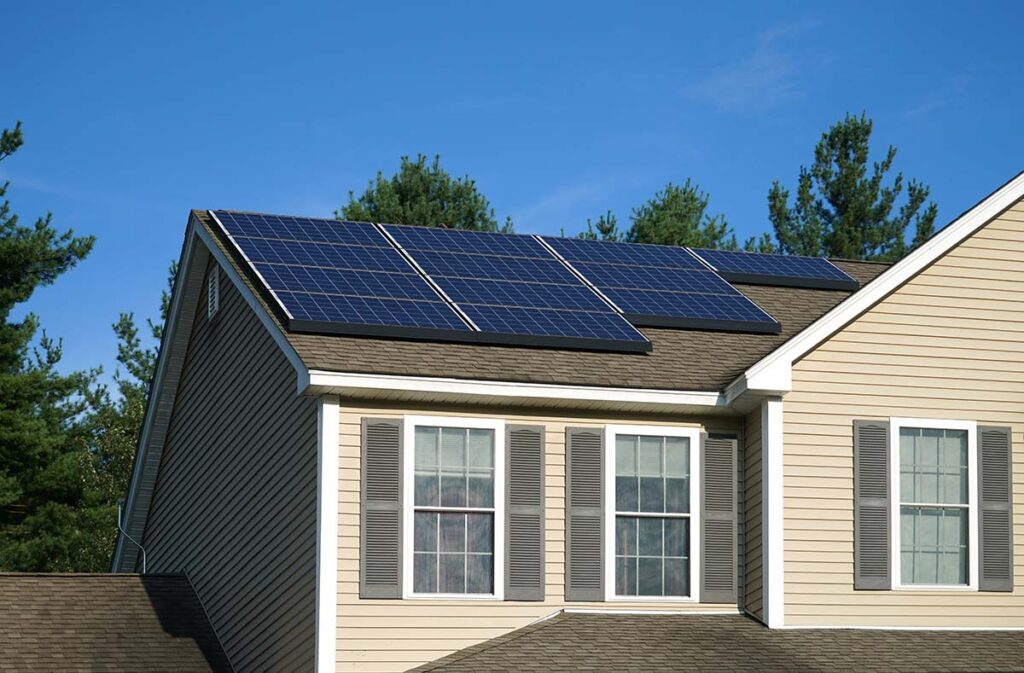
If you live here, you’ve probably noticed a quiet pattern. Newer homes near the highway pick up solar first. Then the panels start showing up on older capes, colonials, and farmhouses along Route 2 and up toward Northfield. Western Massachusetts residential solar panel installation isn’t just for perfect, modern roofs. It’s for the homes people already live in, the ones with history, patch work, and trees that have been there longer than the utility poles.
We’re Current Energy. We spend most of our time on real roofs in this strip of Western Mass, from Easthampton up toward the I‑91 and Route 2 corridors and into Franklin County. Older roofs are not a problem to avoid. They’re the reality we design around.
Table of Contents
ToggleHow we look at an older Western Mass roof
A satellite photo can’t tell you much about how a roof really feels under your boots. Older Western Mass homes come with quirks: multiple roof planes, layers of shingles, chimneys in awkward places, and snow paths that only show up after a couple of winters.
When we step onto a roof, a few questions come first:
- How much life is realistically left in this surface?
- Where does water go now, and where does snow tend to pile or slide?
- Which sections are structurally sound and simple enough to host an array without strange gymnastics?
Sometimes the answer is clear: the roof is tired, and it needs to be addressed before we add solar. Sometimes only one side is ready for panels and the other needs time. In a lot of cases, a focused, well‑designed array on the best roof plane does more good than trying to cover every angle and corner just to hit a big number.
We’d rather be honest about that up front than build a system that looks full on day one and becomes a headache when the roof needs work.
When roof replacement and solar should happen together
In Western Massachusetts, it’s common to see roofs that are ten to fifteen years into their life and starting to show it. Shingles curl. Flashing tells stories. The question becomes whether to replace the roof now, wait, or split the difference.
Our rule of thumb is simple: if you’re likely to replace the roof within the next decade, we should at least talk about pairing that work with solar.
That can mean:
- Replacing the whole roof before the array goes on.
- Replacing only the section we know will host solar and planning to deal with other surfaces later.
- Designing the array and wiring so removal and re‑installation will be straightforward if roof work happens mid‑life.
It’s not about selling two projects at once. It’s about avoiding the pain of pulling a solar system off a roof you knew was already on borrowed time.
Trees, hills, and how we read sun in Western Mass
On paper, Western Massachusetts gets enough sun to make residential solar worth a hard look. In real life, trees and hills complicate the picture.
Drive almost any back road and you’ll see:
- Tall trees lining narrow streets and driveways.
- Houses tucked into slopes where one side of the roof sees plenty of light and the other lives in shadow.
- Neighboring structures that cast long, skinny shade across a roof for just a few key hours.
We don’t treat shade as an abstract “percentage lost.” We look at when it hits and where. Morning shade on a small slice of roof is different from heavy afternoon shade over the main array. Sometimes trimming a few branches changes everything. Sometimes it doesn’t, and the honest answer is that a particular roof plane just isn’t worth using.
Designing residential solar panel installation in Western Massachusetts means choosing your battles. We put panels where they’ll actually see work, not just where they fit.
Winter, snow, and what to expect from production
Snow is part of the deal here. It lands on the panels, sticks for a while, then slides in heavy sheets or melts away slowly. None of that means solar “doesn’t work in winter.” It just means winter is one chapter in the story, not the whole book.
We pay attention to:
- Roof pitch and orientation, steeper roofs tend to shed snow more quickly.
- Local wind patterns around the house, some roofs stay swept clean while others hold drifts.
- How ice builds on the lower edge of the roof and what that means for sliding snow.
When we talk about expected production, we’re not promising full output on every cold, gray day. We’re looking at a full year of western MA weather, spring and fall shoulder seasons, bright winter days after storms, and long summer afternoons. The system is sized to work across that blend, not around one kind of day.
How we size systems for older homes
A lot of calculators assume a smooth, modern load profile. Older Western Mass homes don’t always behave that way.
You’ll see:
- Electric use spike when someone adds a heat pump to an older heating system.
- Basements with dehumidifiers, sump pumps, and freezers that run harder in certain seasons.
- Home offices, workshops, or small studios that quietly pull more power than the original design ever imagined.
When we size a system, we’re looking at your actual bills, summer vs winter, weekdays vs weekends, not a generic “average home.” We also ask what’s coming: EV plans, more electric heat, renovations. That shapes whether we design to cover a steady, known load or leave room for planned growth.
A system that covers a realistic percentage of today’s usage and can grow later is usually healthier than an oversized array crammed onto a tired roof right now.
What installation feels like in an older Western Mass house
People often picture residential solar installation as a major disruption. On older homes, it’s more about careful planning than chaos.
The work usually unfolds like this:
We confirm the design on site
Before anything goes on the roof, we walk it with the final plan in hand. We double‑check structure, layout, and any roof work that’s been done since the first visit.
Roof and mounting work
If there’s roofing to be done, that comes first. Then racking is installed with attention to existing features, flashing, and the way water already moves off the house.
Wiring and interior work
Wiring runs, conduit is placed, and we tie into your electrical panel. On older homes, this is where panel upgrades or cleanup can make a big difference. We keep this part as straightforward and neat as the existing setup allows.
Inspection and turn‑on
Local inspectors and the utility review the work. Once permission to operate comes through, the system turns on and starts feeding your home. From your side, the most noticeable changes are on the bill and in the monitoring app, if you want to watch the numbers.
Day to day, most homeowners say the system fades into the background. The house just quietly buys less from the grid.
Is residential solar a fit for your Western Massachusetts home?
There’s no single answer that covers every house from Easthampton to Northfield and along Route 2. You can get close, though, by asking a few blunt questions:
- Does at least one section of my roof have solid remaining life and decent access to the sun?
- Would trimming a few branches open things up, or is shade baked into the site?
- Are my electric bills high enough that reducing a chunk of that line would feel meaningful over the next decade?
- Am I likely to stay in this house long enough to care what my energy costs look like five or ten years from now?
If you find yourself nodding more than shaking your head, Western Massachusetts residential solar panel installation is probably worth a serious look for your home. The rest is about matching the system to your roof, your trees, and the way your life actually runs inside those walls, not to an idealized house that only exists in a brochure.