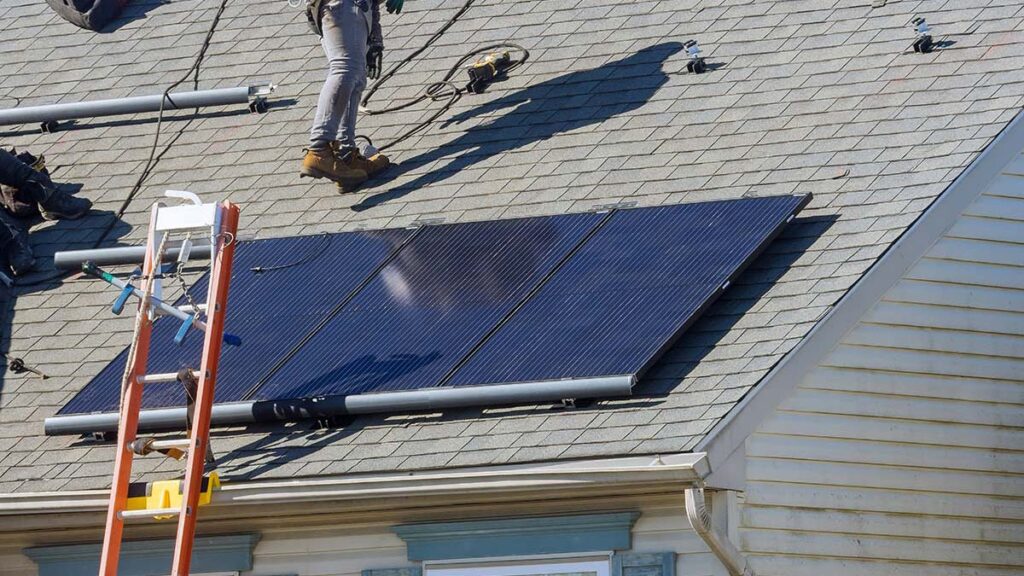
If you live in the Pioneer Valley, you’ve probably heard two things in the last year: first, that the big 30% federal solar tax credit for homeowners is gone, and second, that your neighbors in Northampton, Amherst, Easthampton, and up the valley are still putting panels on their roofs anyway. It’s natural to wonder if they know something you don’t—or if they’re just late to the party.
The honest answer is that residential solar in the Pioneer Valley looks different without that federal handout, but “different” is not the same as “dead.” With our local electric rates, state‑level incentives, and the way well‑built systems behave over 25 years, solar can still be a solid decision here. You just have to judge it on its own merits instead of on the size of a line item on your tax return.
Table of Contents
ToggleWhat actually changed—and what didn’t
When the residential 30% federal tax credit ended at the close of 2025, it removed a simple, easy‑to‑understand discount that had been part of solar math for years. Instead of getting nearly a third of the system cost back at tax time, homeowners now have to look more carefully at:
- Up‑front price.
- State and utility incentives.
- Electricity rates and how fast they’re likely to climb.
- How long they expect to stay in their home.
What hasn’t changed is the underlying physics or the local context. The sun over the Pioneer Valley is the same. Panels still generate power whenever they see light. Eversource and other utilities still charge what they charge—and those rates haven’t been trending down. A properly sized and installed system still produces a fairly predictable stream of kilowatt‑hours for decades.
What’s different is that the decision has shifted from “Can I grab this big federal deal before it disappears?” to “Does this make sense as a long‑term way to manage my energy costs in this house, in this valley?”
Why the Pioneer Valley is still a good place for solar
Pioneer Valley homeowners start from a better position than many parts of the country. We have:
- Decent solar resource for New England. The valley’s south‑facing roofs and open lots can generate a surprising amount of energy over a year, especially once snow is off the panels.
- Relatively high electricity prices. Massachusetts electric rates remain among the higher ones in the country, which means every kilowatt‑hour you generate yourself is worth more.
- State‑level incentives that didn’t vanish with the federal credit. There is still a Massachusetts residential solar tax credit (up to a cap), net metering that credits excess generation, and various utility or program‑specific offerings that can help with financing or efficiency improvements.
Local solar installers and energy analysts looking at 2026 numbers in Massachusetts keep landing in a similar place: even without the 30% federal credit, solar can still deliver reasonable payback times here, especially for homeowners with higher usage, good sites, and plans to stay put.
In other words, Pioneer Valley homes didn’t suddenly become bad fits for solar on January 1st. The investment case just got a little more conservative and a little more focused on long‑term ownership.
How to tell if solar still makes sense for your Pioneer Valley home
The easiest way to think about “worth it” is to walk through a few straightforward questions rather than chase a perfect spreadsheet.
How high is your current usage?
If your electric bills in Northampton, Amherst, Easthampton, Hadley, or South Hadley are already substantial—because of electric heat, a big family, home offices, or lots of plug‑in gear—you have more room for solar to make a visible dent. Lower‑usage households can still benefit, but the payback is naturally slower.
How good is your site?
A south‑ or southwest‑facing roof with minimal shading in a place like Northampton or Amherst will outperform a heavily shaded north‑facing roof every time. Ground‑mounts or carports can level that playing field if you have land, but on tight lots the roof matters a lot.
How long do you plan to stay?
Solar is a long game. If you expect to be in your home for 10–15 years or more, you’re giving the system time to pay for itself and then some. If you’re likely to move in a few years, the decision leans more on resale value and how much buyers in your part of the valley value lower energy bills.
Are you planning to electrify more of your life?
If you’re thinking about heat pumps, an EV, or electrifying hot water, your electric usage is going up. Panels you install now will be feeding not just today’s loads but tomorrow’s as well. That can actually strengthen the case for solar, even without federal support, as long as the house and budget are ready for it.
If your answers line up as “higher usage, good site, staying put, planning more electrification,” solar is still very much worth a hard look—even in a post‑credit world.
How the payback story changes without the federal credit
Before, the federal credit did a lot of heavy lifting early in the payback story. Now the emphasis shifts toward:
- The gap between what solar power effectively costs you over the life of the system and what your utility power is likely to cost you over that same period.
- The role state incentives and net metering play in narrowing that gap.
Massachusetts‑focused analyses written since the credit ended tend to agree on a few points:
- Payback times have lengthened some, but not catastrophically, because local electricity prices are high and panels keep getting more efficient.
- The economics look strongest for households with higher usage, solid roof or ground conditions, and plans to stay put.
- Poorly sited systems, or “too‑good‑to‑be‑true” offers that bury costs in confusing financing, are where people get burned.
In plain terms, solar in the Pioneer Valley has shifted from “slam dunk if you can swing it” to “good long‑term move if your house and budget are a fit.” That might not be as exciting as a huge federal rebate, but it’s more honest—and more durable.
Why local, trade‑forward design matters more now
When a big federal credit is dangling, it can hide a lot of sins: aggressive production estimates, over‑optimistic payback charts, or systems that don’t really fit the house. Without that cushion, the basics matter more:
- Is someone actually looking at your roof, shade, and electrical service in Northampton or Amherst, or just running your address through a generic tool?
- Are they asking about future plans—heat pumps, EVs, growing family—or just selling a cookie‑cutter system?
- Are they clear about how Massachusetts incentives and net metering work in your specific utility territory, or just waving at “state programs?”
In an environment where you’re leaning more on long‑term performance and less on a federal check, trade‑forward design—people who actually understand wiring, load management, and local conditions—becomes more valuable, not less. You don’t need the cheapest system; you need the one that will still make sense on your roof in 15 or 20 years.
How to think about “worth it” for your Pioneer Valley home
If you strip the marketing away, “Is solar still worth it?” in the Pioneer Valley comes down to a few practical questions:
- Does a well‑designed system on your roof or property have a good shot at offsetting a meaningful chunk of your electric use over 20–25 years?
- Do the remaining Massachusetts incentives and net‑metering rules help that picture enough to make the investment feel responsible, not reckless?
- Are you comfortable betting that utility rates here will not drop dramatically over the next couple of decades?
For many homeowners in Northampton, Amherst, Easthampton, Hadley, and up the valley, the honest answer is still yes—especially if they plan to own the home for a while and expect to lean more on electricity over time. For others—those with heavily shaded roofs, very low usage, or a short time horizon—the best answer might be “not right now,” or “let’s fix the house first and revisit solar later.”
Either way, the decision is more nuanced now, which is actually a good thing. You’re less likely to be swept up in a fad and more likely to get a system that genuinely fits your life in the valley.