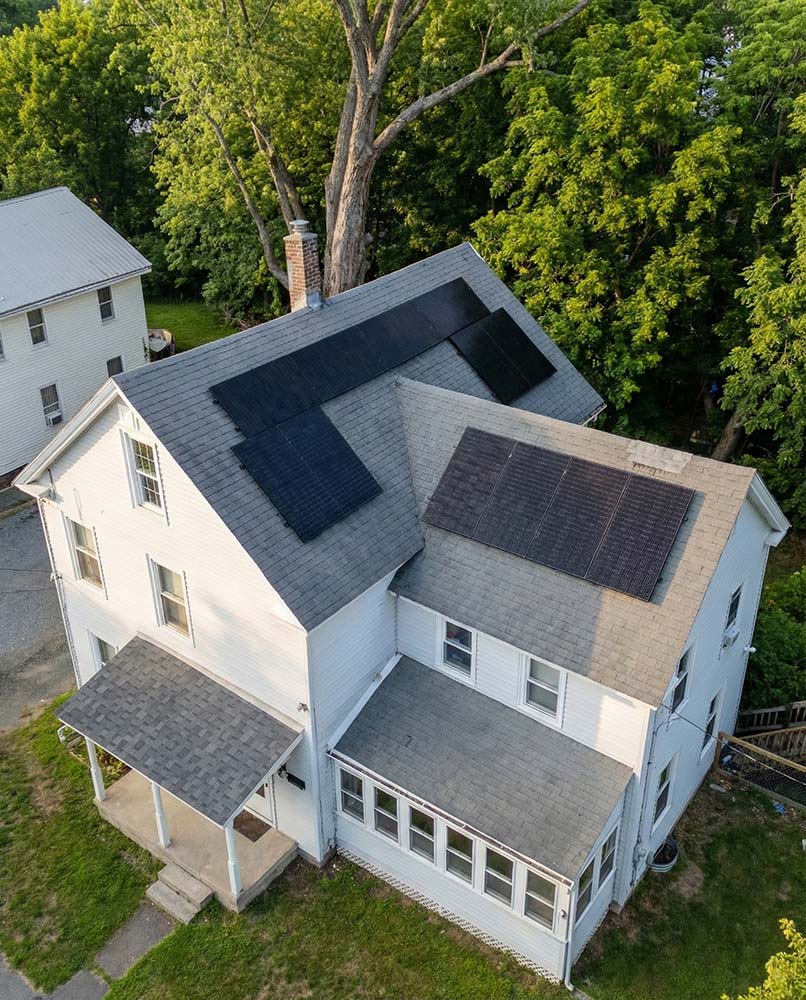
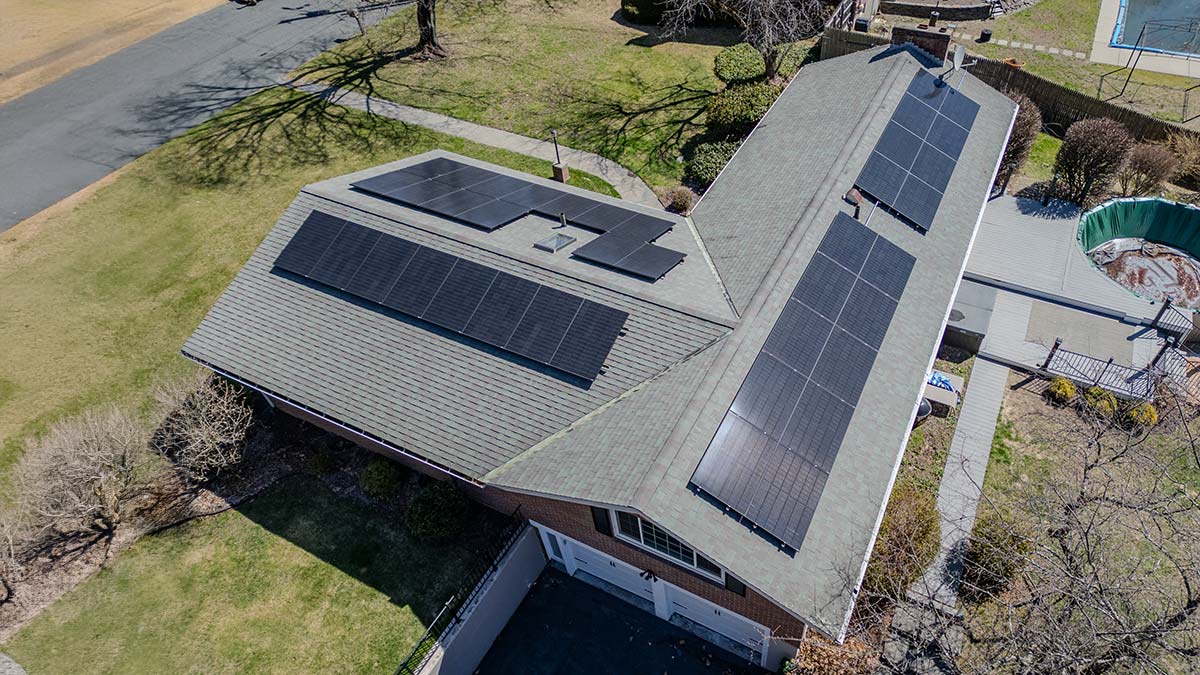
Every home is different — the wiring, the roof shape, the way sunlight moves across the property, and the way your household uses electricity through the seasons. A residential solar system only performs well when the design reflects those details.
We size, place, and install systems that match how your home behaves day to day, giving you steady production, more control over energy use, and a system that’s ready for whatever Greenfield’s weather brings.
Greenfield’s mix of neighborhoods — from historic homes near downtown to newer builds on quieter roads — creates a wide range of solar conditions. Some properties get clean southern exposure all day. Others have patches of shade, older roofing, or additions that changed how the home draws power.
A well-designed residential system accounts for this. We look at the roof structure, electrical panel, daily use patterns, and long-term goals so the system fits naturally into how the home already works. Once these pieces line up, solar becomes a reliable part of the house rather than an afterthought.
A complete home system is more than just panels on the roof. Most Greenfield homeowners want a mix of production, backup, and practical upgrades so the house runs smoothly all year. Here’s how each part of our residential offering supports that.
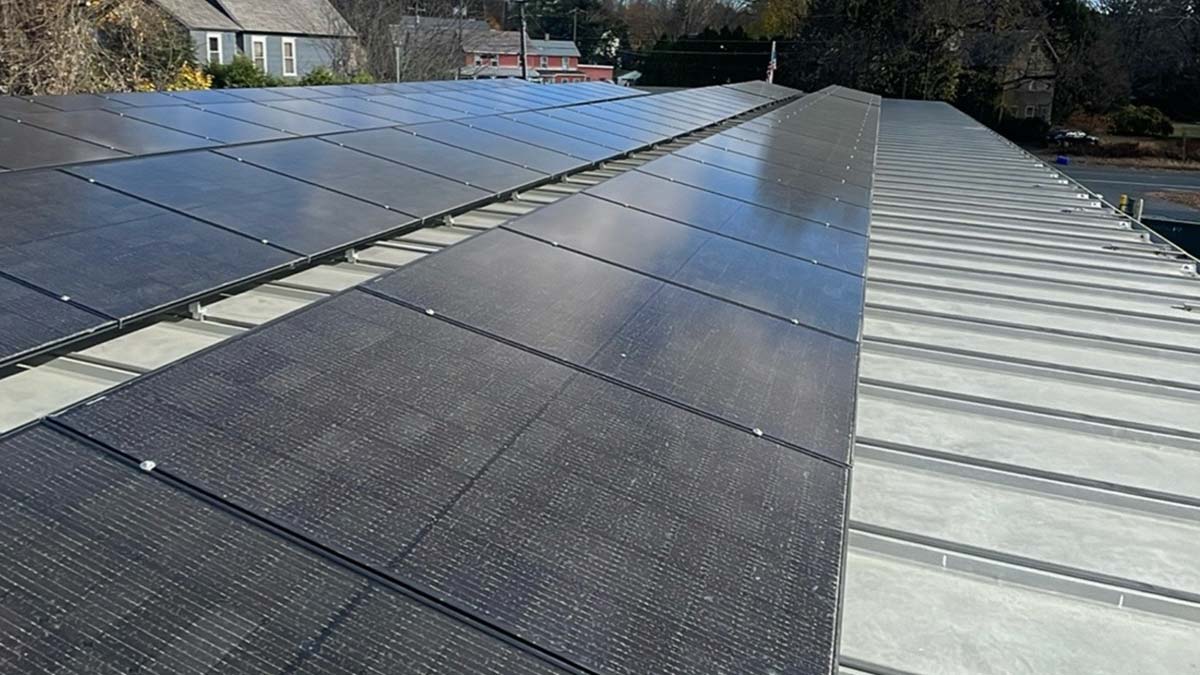
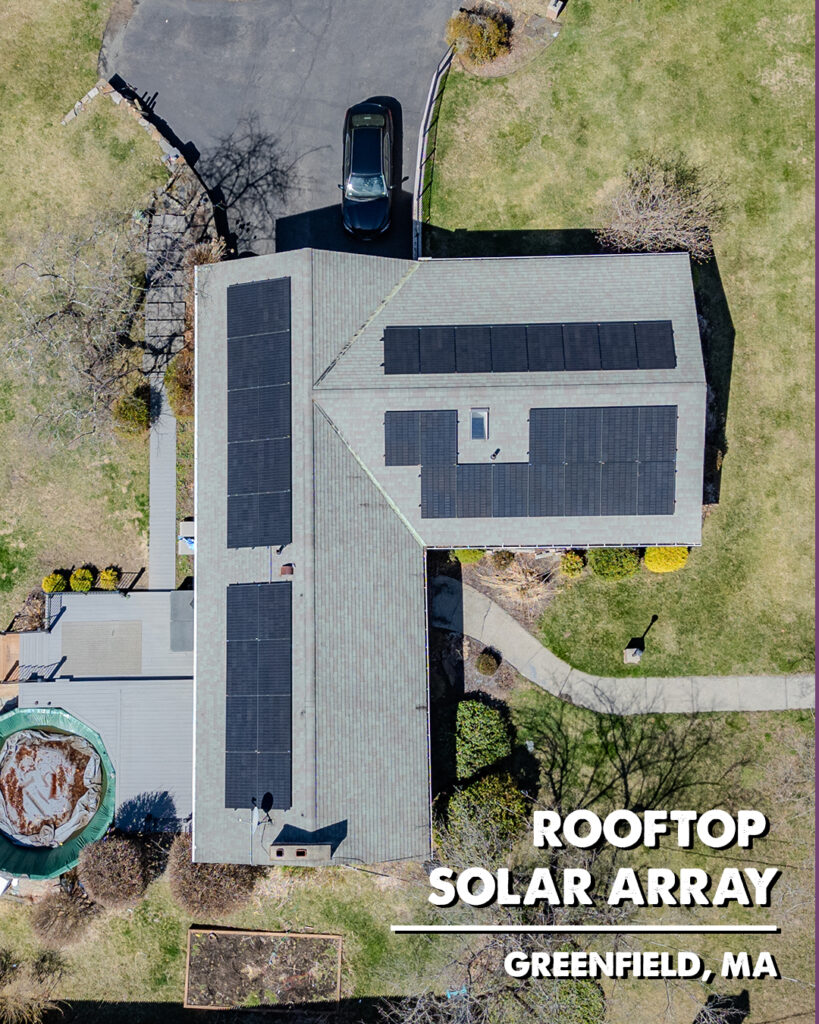
Solar panel installation is the core of every residential project. We start by looking at how your Greenfield home sits in relation to the sun, nearby trees, and neighboring buildings. South-facing roof planes are great when you have them, but we also work with east–west layouts, dormers, and complex roof shapes.
Our goal is reliable production, not just a big array on paper. We adjust the design for snow loads, roof age, and local weather so the system keeps performing over many winters, not just the first few years.
Battery storage gives Greenfield homes a simple way to keep the lights on when you lose power. Power from the panels sits ready, so the house can lean on stored energy instead of going dark.
With a battery in place, you don’t need to haul out a generator or listen to anything loud running in the yard. The system keeps heat, the fridge, and the basic circuits moving without much effort from you.
We size the battery around the way you live. Some households want several days of light usage during longer outages. Others care more about riding through short, sharp drops in bad weather. Either way, a well-planned battery turns your residential solar system into a more complete backup plan.
More Greenfield homeowners are switching to electric vehicles, and a wall outlet often can’t keep up. A Level 2 charger shortens the wait and makes daily driving easier.
When we size a home charger, we look at how much room you have on the panel and what else is already running on it. We also check how the parking area works through the year so the charger ends up where it’s actually convenient.
For most households, it means parking for the night, plugging in once, and waking up with the car ready to go – without thinking about public stations or their hours.
Older homes in Greenfield often have layers of electrical history — additions, upgraded appliances, maybe a heat pump or two. Load management puts that whole picture on a single screen so you can see what’s drawing power and when.
With a smart panel, you can prioritize key circuits, trim back non-essentials during peak times, and avoid pushing your service past its limits. It’s especially helpful when you’re adding solar and storage to a house that already has a lot going on behind the walls.
Before we install solar, some Greenfield homes need electrical clean-up: panel changes, new circuits, or fixes for aging wiring. Our electrical team handles that work in-house, which keeps the project moving instead of bouncing between contractors.
Even after your solar system is live, we can help with lighting upgrades, outlet additions, and other everyday residential electrical needs. It’s one relationship for your whole home, not a different company for every small job.
Residential solar is low-maintenance, but it’s not no-maintenance. Through our partnership with Omnidian, your system gets professional monitoring and fast attention when something doesn’t look right. Their team tracks performance data and flags issues like snow cover, shading changes, or component trouble.
If a problem crops up on a Greenfield home, Omnidian reaches out proactively and we coordinate the follow-through. You’re not left wondering who to call or whether the system is still working the way it should.
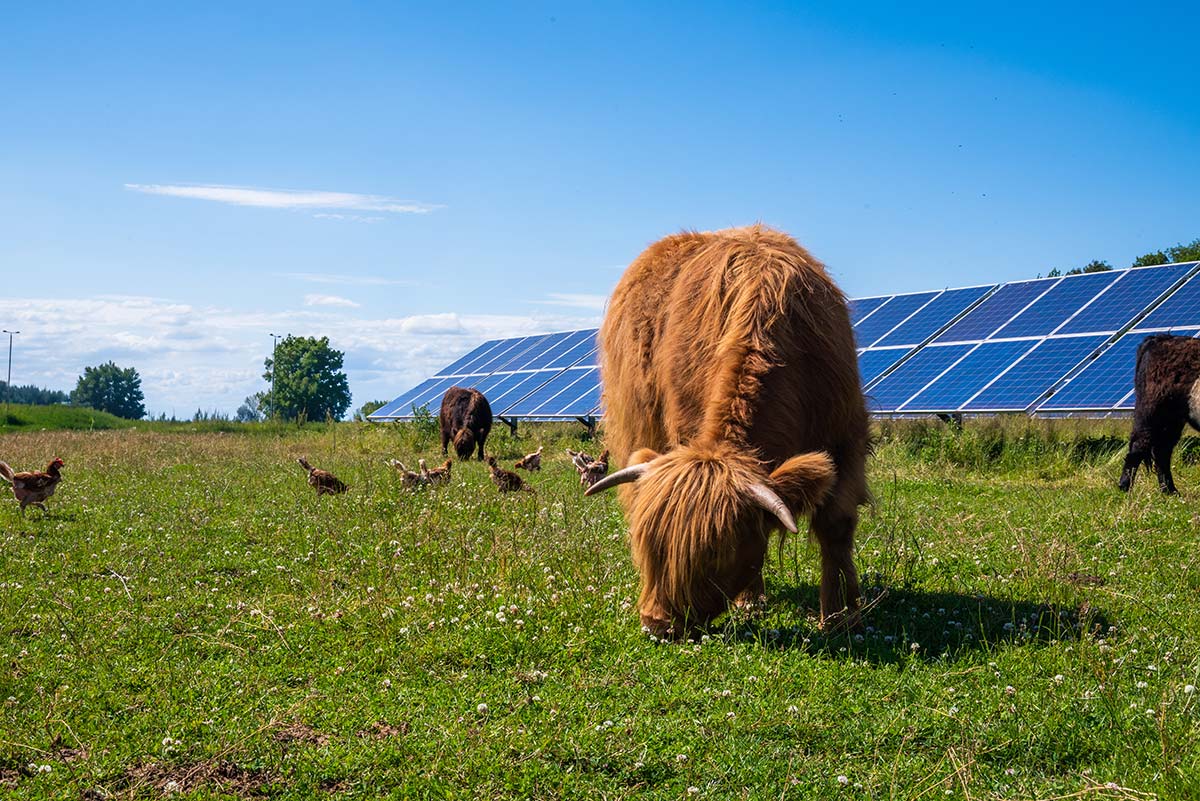
Not every Greenfield roof is a good fit for solar. Shade, orientation, or structural concerns can block the path. Ground mount solar gives homeowners another option by shifting the array into the yard or field.
We look for open ground with solid sun exposure and plan the layout so mowing, snow removal, and everyday use stay simple. Ground mounts are also easier to expand later if your needs grow or you add an EV.
When we design solar and storage together for a Greenfield home, we treat it as one unified system. The panels, inverters, and battery are chosen to work as a single package instead of being bolted on in stages.
That approach gives you smoother operation day to day and more control when storms hit. You see what the system is doing, where power is going, and how long you can expect the house to run during an outage — all from one place.
Producing your own power stabilizes bills and reduces dependence on grid swings.
Panels can cover much of your daytime load, easing strain on the grid and the home.
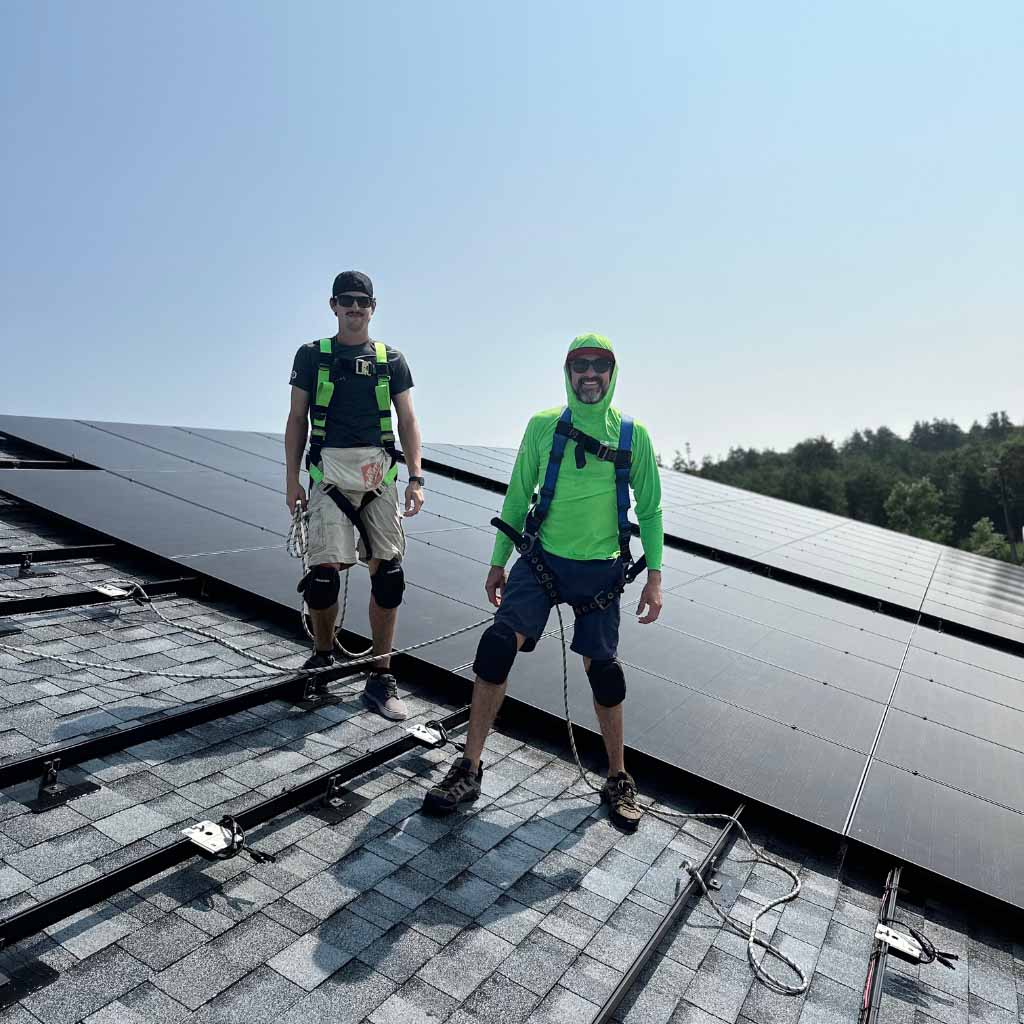
Proper placement keeps the array balanced, anchored, and efficient.
A well-installed system supports resale value and reduces long-term operating costs.
Greenfield’s housing stock doesn’t follow one pattern. Some homes still carry wiring from earlier renovations, and roof sections get added over time in ways that change how solar should be mounted. In neighborhoods with older trees, shade shifts more than people expect as the seasons move. Homes built into hillsides or on uneven grades often see very different sun angles in February than they do in July.
We design around those quirks. The roof pitch, where the ridge sits, how the panels can anchor into the framing, and how the house handles winter weather all influence the final layout. When the system is built to match those on-the-ground details, it rides through the seasons without much fuss and keeps producing the way it should.
If you’re looking for a solar system that fits your home’s layout, wiring, and daily use, we can walk the property and show you what makes sense. Most homes have more solar potential than people realize — it just takes a clear look at the roof and how the household uses power.
Please fill in the details below so that we can understand the scope of services you are interested in.