
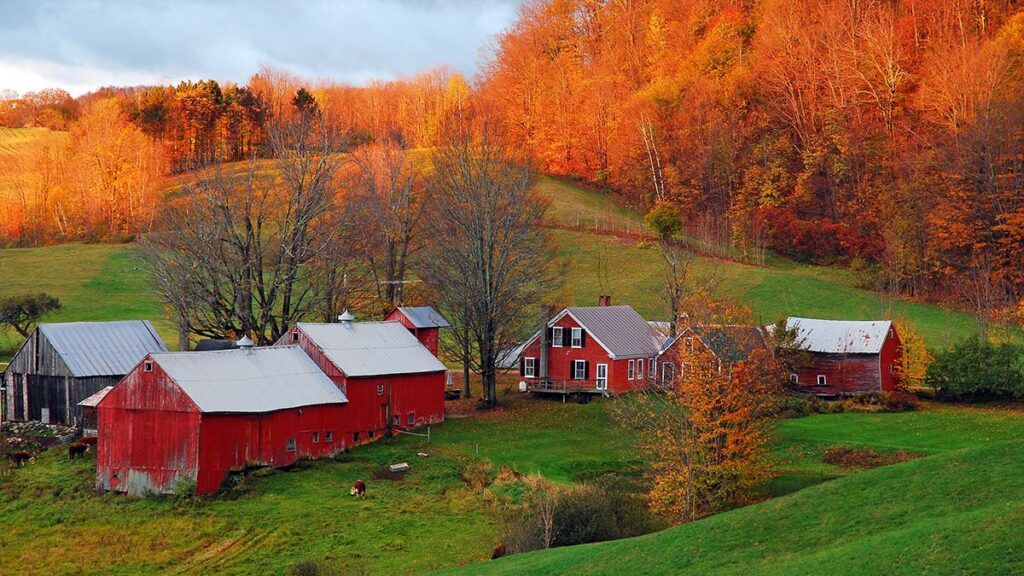
Walk down Main Street in Brattleboro or drive the back roads toward Dummerston and Putney and you’ll see what makes Southern Vermont feel like Southern Vermont: older farmhouses, village homes, capes, colonials, and barns that have seen a lot of winters. When you start thinking about solar, it’s natural to wonder whether panels belong on buildings like these at all, or whether solar is really just for newer houses and big metal roofs out by the highway.
The short answer is that solar can make a lot of sense on older Brattleboro‑area homes, but it has to respect the building. Structure, roof condition, aesthetics, and wiring all matter more than they do on a cookie‑cutter suburban roof. The good news is that Southern Vermont has already been working through how to blend solar into its historic landscape, so you don’t have to start from scratch.
Table of Contents
ToggleSouthern Vermont is already mixing solar and history
Brattleboro and the surrounding towns sit at the center of a region that cares both about clean energy and about the way its towns look. Local groups and planners have been talking for years about “blending solar into our historic landscape”, finding ways to put panels on and around older homes and barns without erasing what makes those places special.
Across New England, solar installers who work on historic homes have built up a toolkit: careful roof assessments, thoughtful layout, all‑black equipment, and sometimes ground‑mounted arrays that let the house keep its original face. Those same tools work just as well in Brattleboro’s in‑town neighborhoods as they do on farm properties up Route 30 or along the Connecticut River.
The key is shifting the question from “Can I physically screw panels onto this roof?” to “What’s the right way to bring solar into this particular older building?”
First things first: can the roof and structure handle it?
Older homes have character, but they also have history behind the plaster. Before anyone starts counting panels, we want to know what’s under the shingles.
For a Brattleboro‑area farmhouse or village home, that usually means:
- Looking closely at roof age and condition, are shingles near the end of their life, are there chronic leaks, does the roof see heavy ice dams?
- Checking framing and sheathing, some older rafters and boards are overbuilt and rock‑solid; others have been notched, sistered, or stressed by decades of snow loads.
- Asking honestly whether the roof will need replacing in the next decade.
Solar panels are long‑lived hardware. Putting them on a worn‑out roof is an invitation to pay twice: once to install them now and again to remove and re‑install them when the roof finally has to be replaced. On an older home, a lot of the conversation is simply, “Let’s make sure the roof is ready to be a partner for the next 20–25 years.”
Sometimes that means a straightforward “yes, it’s ready.” Sometimes it means a little structural reinforcement. Sometimes it means doing the roof work first and treating solar as the second phase of the same project.
Keeping the house looking like itself
Many Southern Vermont homeowners would happily lower their electric bills but don’t want their house to suddenly look like something out of a different region. That’s a valid concern, and it’s one designers are used to addressing.
On older homes in Brattleboro, Putney, and surrounding villages, good solar design usually means:
- Favoring all‑black panels and low‑profile racking that sit close to the roof for a quieter, more integrated look.
- Lining arrays up with roof edges and features so they look intentional instead of scattered.
- Choosing secondary or less street‑visible roof planes when performance and layout allow.
In some cases, especially on very prominent façades or on homes in historic districts, the best answer is to let the main roof stay naked and place solar on a rear ell, barn, garage, or ground‑mount instead. The goal isn’t to hide the fact that you’ve gone solar; it’s to make the array feel like part of the property’s evolution rather than a sticker slapped on the front.
If you care about how your house looks now, that should be front and center in the conversation, not something you apologize for at the end.
When a ground‑mount or barn roof makes more sense
Some older homes in Southern Vermont simply aren’t good candidates for roof‑mounted solar on the main house. Maybe the primary roof faces north toward the river. Maybe the street trees you love shade the front all afternoon. Maybe the rooflines are so chopped up by dormers and valleys that there just isn’t much clean space left.
In those cases, you have options:
- A barn or outbuilding roof can often host a well‑sized array while keeping the main house roof untouched.
- A ground‑mounted array in a sunny corner of a field or yard can be optimized for tilt and orientation, with structure engineered specifically for local snow and wind.
New Hampshire and New England cold‑climate resources highlight ground‑mounts as a particularly good fit for rural properties because they can be placed and angled for winter sun and easier snow shedding, even when the house itself is a poor candidate. The same logic applies just over the line in Brattleboro‑area towns.
For many farm and village properties, this is the best of both worlds: the farmhouse keeps its traditional roofline, and the panels quietly do their work on a barn roof or in the field.
Wiring and electrical realities in older houses
Even when the roof is a great candidate, older homes often need a little help behind the scenes before they’re truly solar‑ready.
That might include:
- Upgrading an old 60‑ or 100‑amp service to a modern panel that can handle solar backfeed and future loads like heat pumps or an EV charger.
- Cleaning up decades of “creative” wiring so circuits are properly labeled and balanced.
- Making sure grounding and bonding meet current code so new equipment has a safe home.
These aren’t glamorous upgrades, but they make a big difference in how reliable and flexible your home feels once solar is in place. They also set you up to take advantage of future changes, like switching some heating or hot water loads to electricity, without having to open the panel again.
In a Brattleboro farmhouse or in‑town Victorian, that may be the quietest part of the project but also the one that gives you the most long‑term options.
What about snow and steep, slippery roofs?
Southern Vermont winters are not gentle, and many older homes have steep roofs that shed snow quickly. Homeowners sometimes worry that panels will either be buried for weeks or cause dramatic “snow slides.”
In reality:
- Panels are designed to handle snow loads, and cold weather actually improves their electrical efficiency.
- Steeper roofs can help snow shed more quickly once the sun comes out; snow often slides off panels in sheets once the glass warms even slightly.
- Annual production estimates for our region already account for winter downtime, systems are sized and modeled with snow and short days in mind.
On tricky roofs, the design may call for avoiding areas where sliding snow would dump directly onto walkways or entries, or for choosing ground‑mounts where snow management is less of a safety concern. Again, those are design choices, not reasons to write off older homes entirely.
How to get started if you have an older Brattleboro‑area home
If you’re in Brattleboro, Dummerston, Putney, Vernon, or one of the nearby villages and you’re curious but cautious, you don’t need to figure everything out alone before you talk to anyone. A thoughtful first step looks like this:
- Gather 12 months of electric bills so you know where you’re starting from.
- Note what you know about your roof, age, leaks, any past structural work.
- Think about how you feel about solar on the main house vs. on a barn or ground‑mount.
- Be honest about how long you expect to stay in the home and whether you might add heat pumps or an EV over the next decade.
From there, the conversation you want isn’t “How many panels can we cram on this?” It’s “Given this specific older house and this property, what’s the smartest way to bring solar into the mix?”
In Southern Vermont, older farmhouses and village homes aren’t on the wrong side of history. Done thoughtfully, they’re exactly the kinds of places where solar can quietly take pressure off high electric bills and help the buildings you love keep doing their job for the next generation.
If you’d like, next we can draft the second Southern Vermont article, Solar and Wood Heat: How Southern Vermont Homeowners Can Mix Old and New, which pairs nicely with this one for people who are thinking about solar but still love their stove or boiler.