
Home EV Charging (new)
Level 2 Charging Designed Around Your Home and Electrical System
Charging an EV at home is one of the biggest advantages of owning one. Plug in when you get home, charge overnight, and start the next day ready to go.
But installing a Level 2 charger isn’t always as simple as putting a charger on the garage wall. Your electrical service, panel capacity, where you park, and how much power the charger needs all factor into the installation.
Current Energy installs home EV charging systems throughout Western Massachusetts, southern Vermont, and southwestern New Hampshire, with the electrical expertise to look at the charger and the house as one system.
Start With the Car. Then Look at the House.
Most EV owners want the same thing: reliable charging at home without having to think about it.
Getting there starts with understanding what your electrical system can support.
What Does It Take to Install a Level 2 EV Charger?
Most electric vehicles can charge from an ordinary 120-volt outlet, commonly called Level 1 charging. It works, but it’s slow.
Level 2 charging uses a dedicated 240-volt circuit and can add substantially more range while the car is parked. For many EV owners, that makes overnight charging practical and eliminates the need to rely on public charging for everyday driving.
The charger itself is only part of the installation.
Your Electrical Panel Matters
An EV can become one of the larger electrical loads in your house.
Before installing a charger, we need to understand the capacity of your electrical service and panel along with the loads already there.
That’s particularly important in Western Massachusetts, where we work on everything from newer homes to houses with electrical systems that have been expanded and updated over decades.
A panel that’s already supporting electric cooking, a heat pump, electric water heating, or other large loads may need a different approach than a house with plenty of available capacity.
A Service Upgrade Isn't Always the Only Answer
If the electrical system doesn’t have enough available capacity for unrestricted EV charging, increasing the service may be one solution. But it isn’t necessarily the only one.
Load management can give us another option.
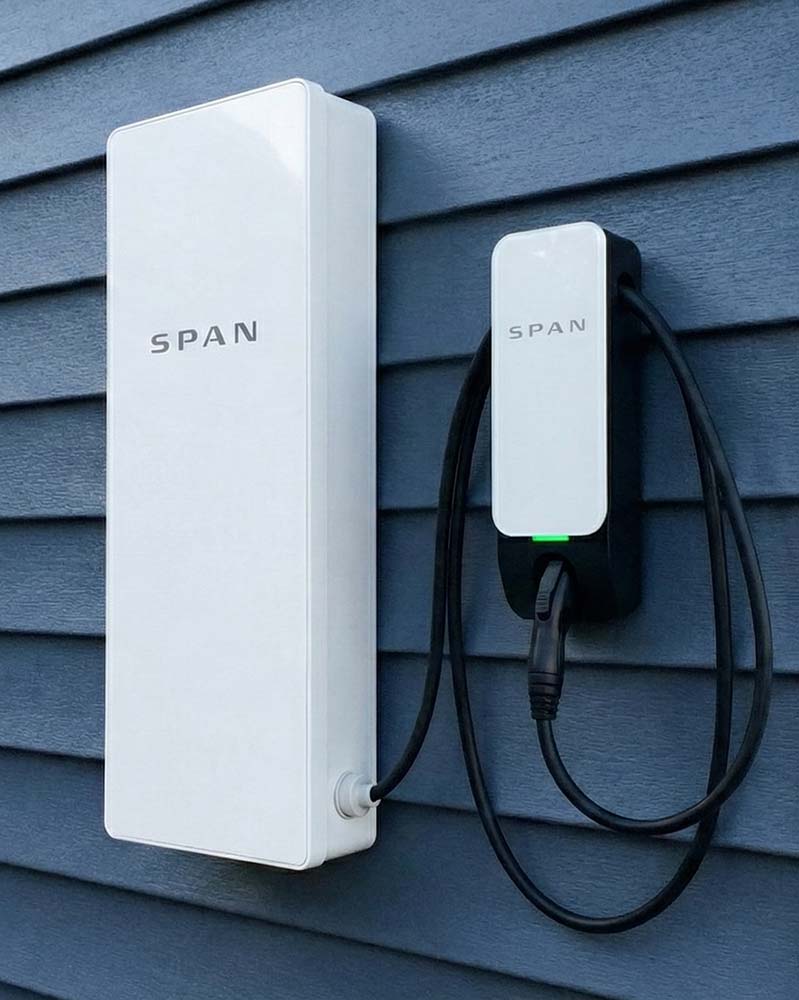
Current Energy works with Span smart electrical panels and the Span Drive EV charger. A smart electrical system can monitor household loads and manage EV charging around the power that’s available rather than treating the charger as an unmanaged load.
That makes the electrical-capacity conversation more interesting than simply asking whether the panel is “big enough.”
Where Do You Park?
Sometimes the charger belongs a few feet from the electrical panel.
Sometimes it doesn’t.
Detached garages, barns, long driveways, and outbuildings are common throughout Western Massachusetts and the surrounding rural areas. Getting power to the place where you actually park may require a longer electrical run, trenching, conduit, and additional planning.
Distance doesn’t necessarily make home charging impractical. It just needs to be part of the design from the beginning.
Your EV Is Part of a Changing Electrical System
A lot is changing inside Western Massachusetts homes.
Heat pumps are replacing or supplementing fossil-fuel heating. Induction ranges are replacing gas stoves. Homeowners are adding solar, battery storage, and electric vehicles.
The house may have been built long before any of those things existed.
Adding an EV charger gives us a reason to look at where the home’s electrical system is today and where it’s headed next. If more electrification is coming, it makes sense to consider that now rather than treating every new piece of equipment as a separate project.
Sometimes that means upgrading electrical equipment. Sometimes load management gives us another way to use the capacity that’s already there.
Either way, the goal is the same: install charging that works for the car you have now without losing sight of what the house may need next.
Choosing a Home EV Charging System
Different vehicles, houses, and driving habits don’t necessarily need the same charging setup.
How far you drive each day, how long the vehicle is typically parked at home, your electrical capacity, and whether you have or plan to add solar or battery storage can all affect the decision.
Current Energy’s existing EV offering includes Level 2 charging equipment from Span and SolarEdge, giving us options for integrating charging with other home energy systems.
The goal isn’t necessarily to install the fastest charger available. It’s to install one that gives you the charging you need and works well with your home’s electrical system.
EV Charging With Solar
You don’t have to have solar to charge an electric vehicle at home.
But if you already have solar, or you’re considering it, the EV becomes an important part of calculating your future electricity use.
Driving on electricity shifts energy that used to come from gasoline onto your electric bill. That’s expected. If we’re designing a new solar system, we can account for that additional electricity use rather than sizing the system around what the house consumed before the EV arrived.
What About Battery Storage?
An EV charger, solar array, home battery, and electrical panel can increasingly operate as parts of the same home energy system.
Battery storage can provide backup power and help manage when stored energy is used. Smart electrical controls can determine which loads receive power and when. EV charging adds another substantial load that can be coordinated with the rest of the house.
You don’t need all of these systems for an EV charger to make sense. But if you’re considering several of them, planning them together can avoid making one decision at a time without considering what comes next.
EV Charging Programs Depend on Where You Live
Where you live matters here.
Massachusetts utilities have offered programs that can help with some of the electrical work associated with home EV charging, including wiring and panel upgrades. Municipal light plants may have their own programs.
Vermont utilities have a different mix of charger incentives and special charging rates, while programs in New Hampshire are different again.
These programs change, and eligibility can depend on your utility, equipment, rate plan, and enrollment requirements.
So rather than assuming an incentive you’ve seen online applies to your house, start with your address and utility. That’s what determines which programs are relevant.
Frequently Asked Questions About Home EV Charging
Do I need a Level 2 charger at home?
Not everyone does.
If you drive relatively few miles each day and your vehicle spends a long time parked at home, Level 1 charging from a standard outlet may be enough.
For drivers who regularly need to replenish more of the battery overnight, Level 2 charging is usually much more practical.
Does an EV charger require a dedicated circuit?
Level 2 home charging generally requires a dedicated 240-volt circuit sized appropriately for the charger and the electrical system.
Part of the installation is determining what the equipment requires and whether the existing panel and service can support it.
Will I need to upgrade my electrical panel?
Maybe, but don’t assume that you will.
It depends on your existing service, panel, household loads, and the charging system being installed.
In some situations, load management can allow EV charging to work within existing electrical capacity rather than simply increasing the size of the service. Current Energy can evaluate those options as part of the project.
Can you install a charger in a detached garage?
Yes, depending on the property and available electrical infrastructure.
The important consideration is getting sufficient power from the home’s electrical system to the garage. Longer distances can mean additional wiring, conduit, trenching, and electrical design.
That’s something we encounter on rural properties where the best parking location isn’t necessarily attached to the house.
Do I need solar to install an EV charger?
No.
A home EV charger can operate using electricity from the grid. Solar can be added separately or considered at the same time if you’re interested in producing more of the electricity you use at home.
Will an EV increase my electric bill?
Yes.
You’re replacing energy that previously came from gasoline with electricity, so household electricity consumption will increase.
How much depends on the vehicle, how far you drive, charging efficiency, and your electric rate. Solar and utility off-peak charging programs can change the economics, but the EV itself still represents additional electrical use.
Should I install solar before buying an EV?
You don’t have to.
If you’re planning solar and know an EV is coming, however, tell us. The additional electricity needed for driving should be considered when we look at your expected future energy use.
The same is true if you’re planning heat pumps, battery storage, or other major electrical changes.
Are there rebates for installing an EV charger?
There may be utility or state programs available depending on where you live.
Massachusetts, Vermont, and New Hampshire have different programs, and even neighboring towns can have different options depending on the electric utility.
The former federal residential EV charger credit expired on June 30, 2026, so it should not be included when calculating the cost of a new installation today.
Can my EV eventually provide backup power to my house?
Some newer vehicles and charging systems support bidirectional charging, including Vehicle-to-Home, or V2H, which allows energy stored in the vehicle battery to power parts of a home.
Compatibility still depends heavily on the vehicle and charging equipment, so this isn’t something to assume every EV can do today.
If backup power is part of what you’re trying to accomplish, we can look at your vehicle, battery storage options, and electrical system together.
Make Charging Fit the Way You Use Your Car
You shouldn’t have to become an expert in electrical systems or charging equipment to plug in at home.
We’ll help determine what the car needs and what makes sense for the house.
Bring the Car Home. We'll Figure Out the Charging.
You don’t need to know what size circuit you need, whether your panel has enough capacity, or which charger belongs on the wall.
Tell us what you drive, where you park, and how you use the car. We’ll look at the electrical system and help determine what makes sense for your home.
Current Energy installs home EV charging systems throughout Western Massachusetts, southern Vermont, and southwestern New Hampshire from our home base in Bernardston, Massachusetts.
"*" indicates required fields