
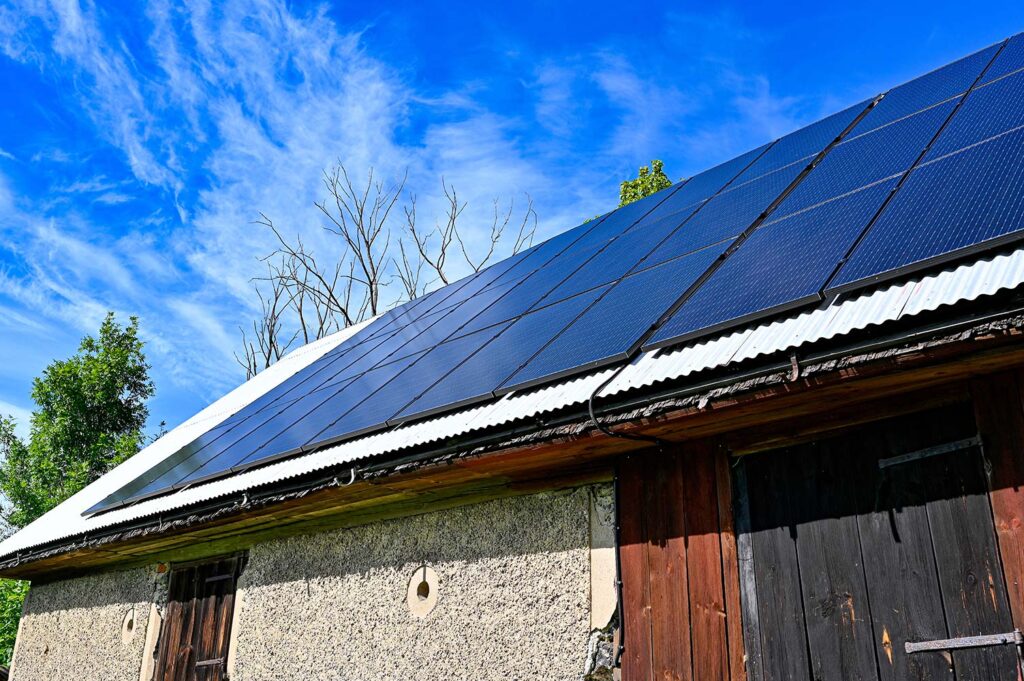
Solar for Older Homes
Your House Doesn't Have to Be New to Be Ready for Solar
Western Massachusetts is full of homes that were built long before anyone thought about solar panels, heat pumps, EV chargers, or battery storage.
That doesn’t make them bad candidates for solar. It means we need to understand the house before we design the system.
Current Energy works with older homes throughout Western Massachusetts, southern Vermont, and southwestern New Hampshire. We look at the roof, electrical system, energy use, and property together to determine what makes sense for the house you already have.
Start With the House, Not the Panels
An older home may have been reroofed, rewired, expanded, renovated, and changed many times over its life.
Before we decide where solar panels should go, we need to understand what we’re connecting them to.
What Should You Look at Before Putting Solar on an Older Home?
Age by itself isn’t the issue.
A well-maintained 100-year-old house may be a better solar candidate than a much newer home with a failing roof or heavy shade.
The important questions are more specific.
What Condition Is the Roof In?
A solar system is a long-term investment. You don’t want to install it over a roof that’s likely to need replacement a few years later.
We look at the condition and remaining life of the roof before designing around it.
If roof replacement is coming soon, it may make more sense to coordinate that work before the solar installation.
What Kind of Roof Do You Have?
Older New England homes come with all kinds of roofs.
Some have asphalt shingles. Others have standing-seam metal, slate, wood, or materials installed during different periods of the home’s history. Additions can leave one house with several roof ages, pitches, and materials.
The roof material affects how a solar system can be mounted and whether the roof is a good candidate in the first place.
Standing-seam metal roofs can be particularly well suited to solar because mounting systems can often clamp directly to the seams without penetrating the roof.
Other materials require a more careful evaluation before deciding how, or whether, solar should be installed there.
What Does the Electrical System Look Like?
The roof is only half the story.
Many older homes have electrical systems that have evolved over decades. The original service may have been upgraded at some point. Panels may have been replaced. Additions and renovations may have introduced newer wiring alongside older work.
Adding solar is a good reason to understand the electrical system as it exists today.
Current Energy is both a solar and electrical contractor, so we can look at the house as one electrical system rather than treating the solar installation as something separate from it.
What Else Are You Planning to Electrify?
Solar isn’t always the last electrical project a homeowner has in mind.
You may be considering heat pumps, an EV charger, electric water heating, induction cooking, battery backup, or some combination of them.
Those plans matter when we’re thinking about future electricity use and the capacity of the home’s electrical system.
Designing around where the house is headed can be more useful than designing only around what it uses today.
Old Houses Were Built to Change
A 150-year-old farmhouse wasn’t built for solar. It wasn’t built for a refrigerator, central heating, a dishwasher, or Wi-Fi either.
Homes change because the people living in them change.
That’s especially easy to see across Western Massachusetts and northern New England. Farmhouses gained additions. Porches were enclosed. Barns became workshops. Heating systems changed. Electrical services were upgraded. Roofs were replaced, sometimes more than once.
Solar can be another chapter in that history.
The goal isn’t to pretend an old house is a new one. It’s to understand what’s there, work with it where we can, and make the changes that are necessary where we can’t.
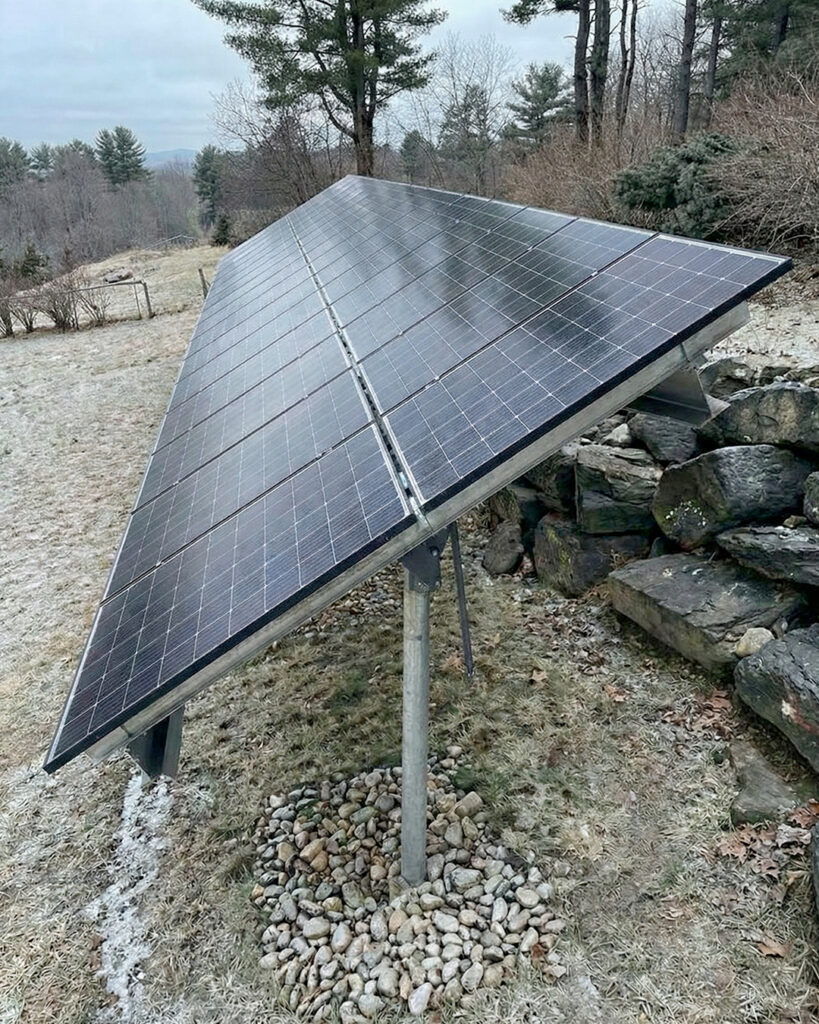
Your Land May Be Better for Solar Than Your Roof
Sometimes the right decision for an older home is to leave the roof alone.
The roof may be heavily shaded, nearing replacement, unusually complicated, or simply not positioned well for solar. A homeowner may also want to preserve the appearance of a particular roofline.
If there’s enough open land elsewhere on the property, a ground-mounted solar system can provide another option.
That’s particularly relevant in Western Massachusetts, southern Vermont, and southwestern New Hampshire, where many older homes sit on larger rural or semi-rural properties.
Solar can also sometimes be divided among appropriate structures on a property, such as a house, garage, barn, or purpose-built solar carport.
The best location for the panels doesn’t have to be the location someone chose for the house a century ago.
What Goes Into Planning Solar for an Older Home?
The solar design comes after we understand the house.
That means looking beyond how many panels will fit on the roof.
Roof Replacement and Solar Should Be Planned Together
If your roof has many good years left, there may be no reason to replace it before installing solar.
If it’s near the end of its useful life, the calculation changes.
Removing a solar array later so the roof can be replaced adds work and expense. When roof replacement is already on the horizon, coordinating the projects can make more sense.
The right sequence depends on the roof that’s there now, not simply the age of the house.
A Metal Roof Can Be a Great Place for Solar
Old house doesn’t automatically mean old roof.
Many New England homes and farmhouses have been reroofed with standing-seam metal, and that can be an excellent combination with solar.
Rather than treating every older home as a difficult installation, we look at what’s there today.
Sometimes a house that’s 100 or 150 years old has exactly the roof we want to see.
Does an Older Home Need an Electrical Service Upgrade for Solar?
Not necessarily.
The age of the house doesn’t tell us the capacity or condition of its electrical system.
Some older homes have already had substantial electrical upgrades. Others may have limited panel space, an older service, or electrical work from several generations of renovations.
We evaluate the electrical system before deciding what work is necessary.
And if you’re planning additional electrical loads such as an EV charger or heat pump, that’s worth considering at the same time.
What If Your Home Is in a Historic District?
An old house and a house in a designated historic district are not the same thing.
Most older homes aren’t subject to historic-district review simply because they’re old.
If your property is within a designated local historic district, however, exterior changes may require additional review. Solar placement, visibility from the street, mounting, and conduit location can all become part of that conversation.
That doesn’t automatically rule out solar. It means those requirements need to be understood early enough to become part of the design rather than a surprise later.
Appearance Matters Even When Nobody Requires It
You don’t need to live in a historic district to care what solar looks like on your house.
Maybe you have a farmhouse with a prominent front roof. Maybe one side of the house faces the road while another is barely visible. Maybe an addition or garage offers another location.
Production matters, but it’s not the only consideration.
When a property gives us choices, we can talk about the tradeoffs between solar production, roof conditions, cost, and appearance.
Solar for Older Homes FAQs
Can you put solar panels on an old house?
Yes, many older homes can be good candidates for solar.
The important questions are the condition and material of the roof, available sunlight, the home’s electrical system, and whether the property offers a practical location for the panels.
The age of the house alone doesn’t determine whether solar will work.
Is my roof too old for solar panels?
The age of the roof matters less than its condition and remaining useful life.
If a roof is approaching replacement, it may make sense to reroof before installing solar. If it’s in good condition with substantial life remaining, replacement may not be necessary.
Can solar panels be installed on a metal roof?
Yes. Standing-seam metal roofs can be particularly well suited to solar. Mounting systems can often attach to the raised seams rather than requiring penetrations through the roofing material.
The specific roof and mounting system still need to be evaluated for the project.
Can solar panels be installed on a slate roof?
Slate requires more specialized consideration because the material can be fragile and individual tiles can be difficult to work around.
Whether rooftop solar is appropriate depends on the particular roof and installation approach. A ground mount or another structure on the property may sometimes be a better solution.
Do I need to upgrade my electrical panel before getting solar?
Not every older home needs a panel or service upgrade for solar.
The existing electrical service, panel, wiring, solar-system design, and other planned electrical loads all need to be considered. Current Energy evaluates the electrical system as part of planning the project.
Can I get solar if my old house has a complicated roof?
Possibly.
Dormers, additions, multiple rooflines, different pitches, shade, and limited uninterrupted roof space can affect the design.
If the roof doesn’t provide enough useful solar area, another structure or a ground-mounted system may be worth considering.
Can I install solar on a historic home?
Often, yes.
If the property is in a designated historic district, there may be additional local review for exterior changes. Placement and visibility may influence the design.
An older home outside a historic district generally doesn’t face those requirements simply because of its age.
What if I don't want solar panels on my historic roof?
If the property has enough suitable land, a ground-mounted solar array may allow you to generate solar electricity without putting panels on the house.
Garages, barns, and other appropriate structures may provide additional options depending on the property.
Should I plan for an EV charger or heat pump when installing solar?
If you expect to add significant electrical loads in the future, tell us during the solar-planning process.
An EV, heat pump, electric water heater, or other new load can change your future electricity use and may affect both solar-system sizing and electrical planning.
The House Has a History. The Solar System Needs a Plan.
Older homes don’t need a different kind of sunlight.
They need a little more attention to what’s underneath the panels and behind the electrical panel before the project begins.
Have an Older Home? Start With the House.
You don’t need to know whether your roof is right for solar or whether your electrical panel needs work before you contact us.
That’s what we need to look at.
Tell us about the house, what you’re hoping to do, and what you know about the roof and electrical system. We’ll help determine whether rooftop solar, a ground mount, or another approach makes sense for the property.
Current Energy works with homeowners throughout Western Massachusetts, southern Vermont, and southwestern New Hampshire from our home base in Bernardston, Massachusetts.
"*" indicates required fields