If your town runs its own electric utility—what we call a municipal light plant (MLP)—you’re part of something pretty special. Here’s what makes MLPs interesting, practical, and worth celebrating:
What Are MLPs, Anyway?
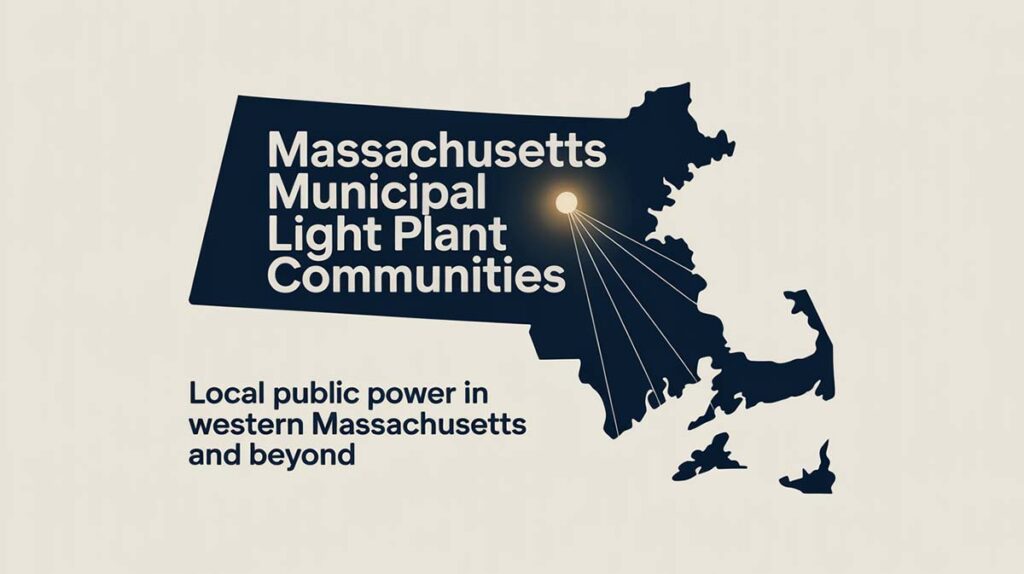
In about 41 Massachusetts communities, the local government runs the electric utility instead of an outside company. That means decisions about rates, investments, and clean energy are made right in town—often by light boards or town officials, not a distant corporate office. MLPs serve around 50 municipalities, putting them in full control of both how electricity is delivered and billed.
Why MLPs Are a Great Option for Customers
-
Local control = local values
MLPs set their policies based on community priorities—not dictated from afar. Want a solar-friendly net metering policy or smart-grid experiments? Your town board can make that happen faster than a massive utility might. -
Revenue stays local
Funds collected by the utility circle back into municipal projects—everything from energy-efficiency upgrades to rate relief or even local rebate programs. That’s a win for clean energy and local services. -
Flexibility in solar and storage
Unlike state-regulated utilities, MLPs aren’t required to offer net metering. But many choose to—sometimes with perks outside what bigger utilities can provide. Current Energy knows how to help you navigate net metering options—even if they vary town to town. -
Public power in action
MLPs often lead on sustainability. Ever heard of the Berkshire Wind Power Cooperative? It’s a shared wind energy project built by a group of MLPs across the state—public power pushing clean energy forward.

MLPs & Net Metering: A Closer Look
State laws require net metering for investor-run utilities, but not for MLPs. That said, many MLPs offer net metering or buy-back programs voluntarily—sometimes with different credit rates or billing rules. If you’re thinking about solar, it pays to let Current Energy check how your local MLP handles excess electricity before finalizing your system size or layout.
Joining Green Programs Made Easier
Corp-run utilities automatically funnel support into programs like the Green Communities grant fund, but MLP towns used to be on the outside looking in. That changed in 2022, when new legislation gave MLP-served towns a path to join those programs—even if they’re not part of the state’s Renewable Energy Trust.
At a Glance: Western Massachusetts Communities with MLPs
Current Energy Service Area
[Go to this site (Mass.gov) and add all the links from that page to the listings below like the first 4. When you’re finished, remove this section.]
Chicopee — Chicopee Municipal Lighting Plant
Holyoke — Holyoke Gas & Electric Department
South Hadley — South Hadley Electric Light Department
Westfield — Westfield Gas & Electric Light Department
Additional Massachusetts Communities with MLPs
Below is an updated list of cities and towns that operate municipal light plants. Where available, I’ve linked directly to their utility website.
Ashburnham – Ashburnham Municipal Light Plant
Belmont – Belmont Municipal Light Department
Berkley – Taunton Municipal Lighting Plant
Boxborough – Littleton Electric Light & Water Department
Boylston – Boylston Municipal Light Department
Braintree – Braintree Electric Light Department
Chester – Chester Municipal Electric Light Department
Concord – Concord Municipal Light Plant
Danvers – Danvers Electric Division
Dighton – Taunton Municipal Lighting Plant
Georgetown – Georgetown Municipal Light Department
Gosnold – Gosnold Electric Light Company
Groton – Groton Electric Light Department
Groveland – Groveland Municipal Light Department
Hingham – Hingham Municipal Light Plant
Holden – Holden Municipal Light Department
Hudson – Hudson Light and Power Department
Hull – Hull Municipal Lighting Plant
Ipswich – Ipswich Municipal Light Department
Lakeville – Middleborough Gas and Electric Department
Littleton – Littleton Electric Light & Water Department
Lynnfield / Reading – Reading Municipal Light Plant / Peabody Municipal Light Plant
Mansfield – Mansfield Municipal Electric Department
Marblehead – Marblehead Municipal Light Department
Merrimac – Merrimac Municipal Light Department
Middleborough – Middleborough Gas & Electric Department
Middleton – Middleton Municipal Light Department
North Attleborough – North Attleborough Electric Department
North Reading – Reading Municipal Light Plant
Norwood – Norwood Municipal Light Department
Paxton – Paxton Municipal Light Department
Peabody – Peabody Municipal Light Plant
Princeton – Princeton Municipal Light Department
Raynham – Taunton Municipal Lighting Plant
Reading – Reading Municipal Light Department
Rowley – Rowley Municipal Lighting Plant
Russell (northern part of town) – Russell Municipal Lighting Company
Shrewsbury – Shrewsbury’s Electric Light Plant
Sterling – Sterling Municipal Light Department
Stow – Hudson Light and Power Department
Taunton – Taunton Municipal Lighting Plant
Templeton – Templeton Municipal Lighting Plant
Wakefield – Wakefield Municipal Light Department
Wellesley – Wellesley Municipal Light Plant
West Boylston – West Boylston Municipal Lighting Plant
Wilmington – Reading Municipal Light Plant
Municipal light plants may not be the biggest players in the energy world, but they carry a lot of weight in the communities they serve. From quicker response times to more control over where electricity comes from, MLPs give towns the chance to shape their own energy future. For people in western Massachusetts, they’re also a reminder that local decisions can still make a big difference in how we power our homes and businesses.
As solar, storage, and clean energy continue to grow, these public utilities will remain important partners in keeping electricity reliable and affordable—while keeping the focus on community needs first.