
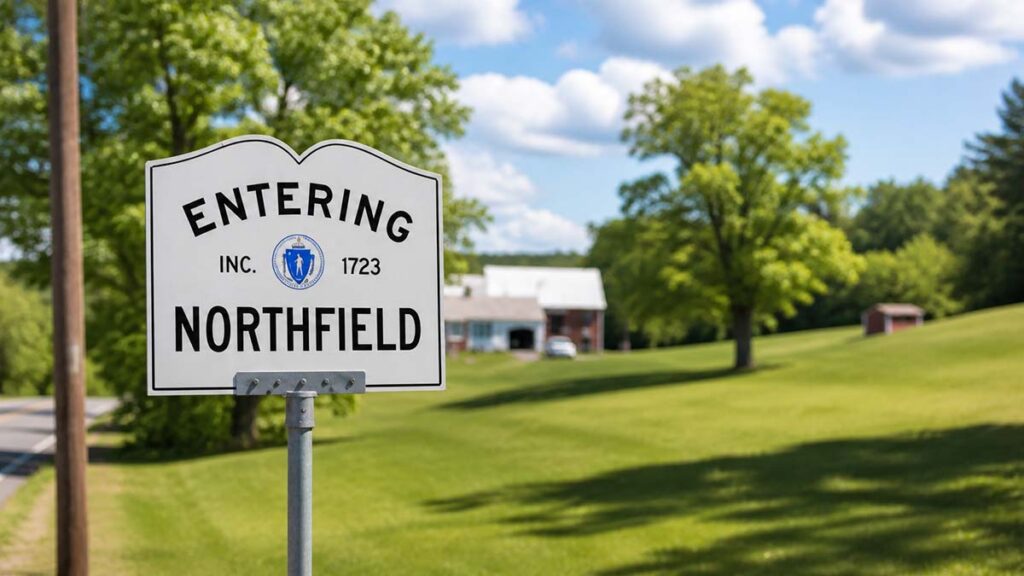
If you live in or around Northfield, you’ve probably wondered whether Northfield solar panels would actually work on your property—not just in theory, but on your particular roof, with your trees, your outages, and your bills. Some houses are a clear yes. Others are a clear no. Most sit in the middle, where the answer depends on a handful of details people don’t always look at together.
We’re Current Energy. We work on rural and small‑town homes across this part of Western Massachusetts. When we walk a Northfield property, these are the things we pay attention to before we ever talk about how many panels could fit.
Table of Contents
Toggle1. Does at least one roof face the sun enough to matter?
You don’t need a perfect, textbook south‑facing roof. You do need one or two planes that see decent sun.
We’re looking for:
-
A roof section that isn’t permanently shaded most of the day.
-
Enough surface to host a meaningful number of panels, not just a token string.
-
A pitch that lets snow clear at some point after storms instead of sitting for weeks.
If every roof plane is heavily shaded from morning through late afternoon, or chopped up by dormers and valleys into tiny fragments, rooftop solar may not be the right fit. In those cases, we start talking about whether ground space could do the job instead—or whether this just isn’t the property to force solar on.
If we can point to one roof surface and say, “That’s your solar plane,” you’re over the first hurdle.
2. How healthy is the roof that would carry the panels?
Solar panels are long‑lived hardware. Putting them on a roof that’s near the end of its life is asking for trouble.
On the candidate roof plane, we ask:
-
How old is this section, really—not just when someone last patched it?
-
Are shingles or metal in solid shape, or are there curling, cracking, soft spots, or repeated repairs?
-
Is the framing obviously robust, or does it need a closer structural look?
If the roof is in good condition with reasonable life left, we can likely build on it. If it’s tired, we’ll be honest about that. That may mean replacing that plane before solar, or at least planning how we’ll handle panel removal and re‑installation when roof work eventually happens.
If you already know the roof needs replacing “sometime soon,” it’s better to put that on the table before we start drawing arrays.
3. Trees: friend, enemy, or neutral bystander?
In Northfield, trees are part of the deal. The question is whether they’re blocking you from solar or just softening the edges.
We look beyond “is there a tree?” and focus on:
-
Where the shade falls during the 9 a.m.–3 p.m. window, season by season.
-
Whether the worst shade lands in winter (when days are short anyway) or during prime spring and summer production.
-
Whether reasonable trimming or selective removal can open enough sky to change the picture.
If the roof is wrapped in tall trees on all sides and you have no interest in touching a single branch, solar might not be worth chasing on that house. If one big limb or a few overgrown edges are the main culprits, there’s room for a conversation about whether it’s worth opening things up.
You don’t have to strip your property bare. You do need honest shade mapping, not wishful thinking.
4. Land: could the ground be your “second roof”?
Some Northfield properties have another option: open ground.
We ask:
-
Is there a sunny, reasonably flat or gently sloped area near the house that isn’t heavily used for something else?
-
Can we get conduit between that spot and your electrical panel without turning the yard into a trench maze?
-
Are you comfortable dedicating that patch of land to solar for the long haul?
If your roof is marginal but you’re sitting on field edges, open lawn, or pasture corners that see great sun, a ground mount may be your best path to a solid system. If both roof and ground are constrained—dense woods, steep terrain, fully used land—it’s harder to justify forcing solar onto the property.
5. What do your bills and future plans look like?
Property fit isn’t just about surfaces. It’s about whether the payoff matters for your life.
We look at:
-
Your current electric bills over at least a year. Are they high enough that cutting a chunk would matter every month?
-
How you use electricity now—steady all day, mostly evenings, heavy in certain seasons?
-
What’s coming: heat pumps, an EV charging station, a shop expansion, more refrigeration, home office gear.
If your usage is already significant and not likely to drop, and if you expect to stay in the house long enough to care what your energy costs look like five or ten years out, solar has more room to make a difference. If usage is minimal, you’re planning to move soon, or future electric load is unclear, we’ll say so and design accordingly, or recommend holding off.
6. How do outages and the local grid affect your thinking?
Some Northfield streets barely blink. Others ride a line that seems to attract outages and voltage dips.
We ask:
-
How often does your power go out now, and for how long?
-
Are there critical loads, heat controls, water, communications, that you really can’t afford to lose?
-
Are you interested in solar as bill relief only, or also as part of a backup plan?
This matters because it shapes whether we treat solar as a stand‑alone bill reducer or as the backbone of a future solar‑plus‑battery system. If outages are a recurring problem, that nudges your property toward “strong candidate for solar and, eventually, storage.” If they’re rare and short, we design with less emphasis on backup and more on pure bill impact.
Northfield solar panels: when your property is a good fit
You don’t need every box checked. But if you can honestly say:
-
“We’ve got at least one roof plane—or a piece of land—that sees good sun,”
-
“The surface we’d use isn’t on its last legs,”
-
“Trees make our place beautiful but don’t bury the house in shade all day,”
-
“Our electric bills are high enough that cutting them matters,” and
-
“We plan to be here long enough to care what our energy costs look like in a decade,”
then Northfield solar panels for home are probably worth more than just a casual look.
If, on the other hand, every roof is tired, every potential spot is buried in trees you don’t want to touch, the land is steep or fully spoken for, and you’re not planning to stay, forcing a system onto the property may not serve you well.
Our job isn’t to talk every Northfield homeowner into solar. It’s to help you see clearly whether your specific property is a place where solar can do good work for a long time—or whether it’s better to wait, plan for future changes, or invest in other parts of your home first.