
How S.50 Opens the Door for Ground-Mounted Systems
If you’ve been watching the solar market in Vermont and wondering if it’s the right time to act, there’s good news. A newly enacted law, S.50, has cleared a major barrier for homeowners who want to install ground-mounted solar systems. That matters especially if you live in southern Vermont—where lots of land, tree cover, snow-loads and longer grid runs make ground mounting a smart choice. Here’s how S.50 works, why it’s relevant to you, and how your home can benefit.
What S.50 Actually Does
Passed by the Vermont Legislature and signed by the Governor in late May 2025, S.50 amends the state’s net-metering statute to make installation easier and faster for certain ground-mounted systems.Here are the key changes:
- Ground-mounted net-metered systems up to 25 kW can now qualify for the “expedited registration” process instead of the longer, more complex permit path.
- The law directs the Vermont Public Utility Commission (PUC) to revise the definition of “plant” so that expansions or colocated arrays don’t trigger full review every time.
- It also sets clearer setback standards: for example, the bill states that ground‐mounted arrays under 25 kW should be able to use a 10-foot setback from roads or property lines.
In practical terms, S.50 removes a major roadblock: home-scale ground-mounted systems just got simpler to approve. What used to require the full Section 248 process or lengthy municipal review may now be eligible for streamlined registration.
Why This Matters for Southern Vermont Homeowners
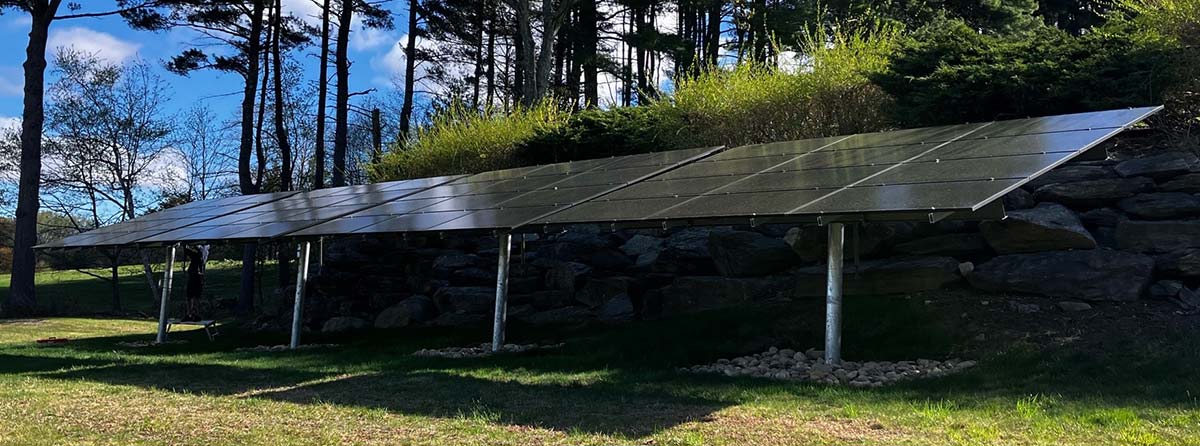
If your property in southern Vermont has more open land than ideal roof space, or you deal with heavy snow loads, deep trees, or want a future-proof system scaled for EVs/heat-pumps, ground mounting becomes a compelling option. With S.50, you can aim higher.
More capacity, less red tape
Previously the threshold for expedited registration was around 15 kW for ground-mount in many cases. S.50 raises that to 25 kW. That means you can build a larger system with less permitting friction.
Better fit for rural sites
In towns like Brattleboro, Bennington, Wilmington, or other southern Vermont communities, roofs may be shaded or snow-laden. Placing solar on the ground, oriented for full sun, possibly elevated for snow run-off, gives you more output and often a better ROI than a compromised roof system.
Faster timeline
Expedited registration means less waiting, fewer hearings, and simpler approval. The quicker you install the solar system and connect to net-metering, the sooner you’ll benefit from reduced utility bills and federal tax credits. (More on that later.)
Using your land wisely
If you have acreage, a ground-mounted system can integrate simply, perhaps oriented south or southwest for optimal production. With S.50, you’re less likely to run into complex permit conditions that can stymie modest arrays.
Ground-Mount Solar + Storage: What Homeowners Need to Know
Let’s walk through how a home on a piece of land in southern Vermont can take advantage of this law, using best practices.
Step 1: Site assessment
You’ll want an installer to visit your property. They’ll evaluate sun exposure (trees, hills, shade), snow load, soil or ground-mount rack suitability, and clearances for local code and utility interconnection. They’ll also look at your electric usage—how many kilowatt-hours you use per year—and whether you’re planning future loads (EVs, heat pump, workshop).
Step 2: Sizing your system
With the 25 kW cap for expedited registration under S.50, many homeowners can aim at something larger than the typical 5-10 kW roof system. For instance, a 25 kW ground-mounted array might consist of ~60-70 panels (depending on wattage) and generate enough energy for not just your home but additional loads. Budget and usage drive size.
Step 3: Pairing batteries
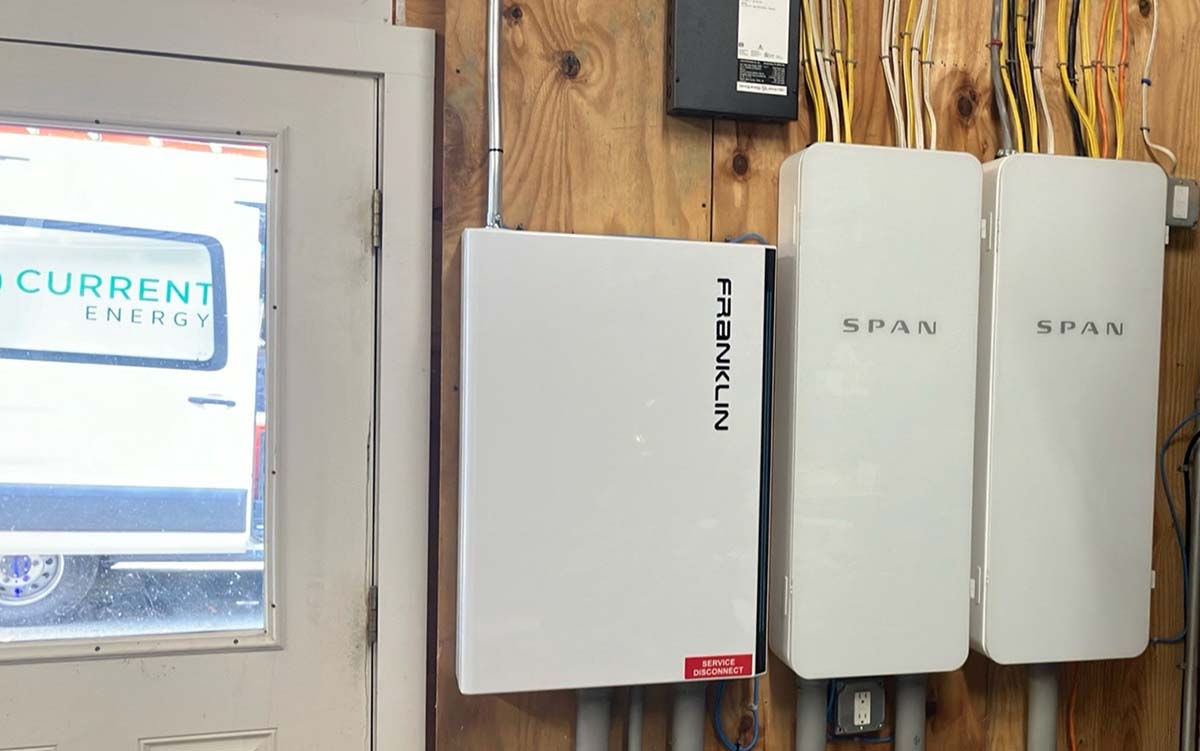
You don’t have to stop at solar. Adding a battery storage system makes sense in rural Vermont where grid outages (trees down in storms, long lines) can occur. Solar plus battery gives you resilience: power when the grid is off, and the ability to time-shift your energy production. While S.50 addresses the solar side, pairing with storage is increasingly compelling.
Step 4: Permitting & registration
Thanks to S.50, if your ground-mounted system is under 25 kW and meets setback requirements, you likely qualify for the expedited registration path. That means fewer municipal hearings, faster PUC registration, and fewer delays. For net-metering you’ll work with your utility and the PUC to register your system.
Step 5: Installation & interconnection
Once approved, your installer will install racking, panels, inverter(s), and possibly battery system. After inspection, you’ll interconnect with your utility under net-metering rules., In Vermont, net-metering allows you to send excess solar production back to the grid and receive credits against your bill.
Step 6: Enjoy the benefits
As soon as your system is active, you’ll generate your own electricity, reduce your bills, gain resilience, and participate in Vermont’s clean energy transition. With a ground-mounted system sized for your land, you have a strong long-term investment.
What the Numbers Look Like
Solar makes solid financial sense for many Vermont homeowners. A 5 kW setup can often cover its cost in under a decade, and the savings keep stacking year after year. Now that the S.50 law lets residential systems reach 25 kW without extra red tape, it’s easier to build something that actually matches your energy use. Bigger systems usually stretch your dollar further per watt, especially on properties that run heat pumps, EV chargers, or outbuildings.
The federal credit winds down at the end of this year, but Vermont still gives homeowners plenty of reasons to move forward.
- Sales tax exemption: Vermont drops the 6 percent sales tax on most solar equipment and installation costs for systems up to 500 kW.
- Property tax break: Systems under 50 kW aren’t taxed for the extra value they add to your home. For most households, that means saving a few hundred dollars a year.
- Battery incentive: Green Mountain Power’s “Bring Your Own Device” program pays customers who share stored power back to the grid—roughly $850 per kW for a 3-hour battery or $950 per kW for a 4-hour model, with totals reaching $10,500.
All of this adds up to a strong case for solar in Vermont. The permitting changes under S.50 cut delays, and these local incentives help close the cost gap. For most homeowners, that’s enough reason to at least get a site visit and see what a system could save.
Why Act Now
With S.50 in place, the window is open. Here’s why now is the time:
- Delay means you may be subject to older limits (15 kW expedited threshold), more review and longer timeline.
- Tax credits and utility incentive programs sometimes change—moving now secures more of the benefit.
- Equipment and labor costs are trending up in some areas—locking in the project earlier may save you money long term.
- Building your system sooner means starting savings and resilience sooner.
How to Take Advantage (What You Should Do)
Here’s your home-owner action plan for southern Vermont:
- Reach out to a local solar installer – One familiar with Vermont regulations, ground-mount designs, snow loads, utility interconnection and S.50’s new rules.
- Schedule a site visit – Assess land, shading, orientation, usage, future loads (EV/heat pump).
- Get your system sized and designed – Determine what solar + optional battery storage fits your land and needs.
- Check incentive eligibility – Confirm federal tax credit, net-metering status, utility requirements, and that your system fits the 25 kW expedited rule under S.50.
- Submit registration and permits – Under S.50 you may qualify for the expedited registration path.
- Install and connect – Once approval is secured, schedule the build and interconnection.
- Monitor performance & maintain – Keep an eye on system production, battery health (if added), and enjoy the benefits.
Working with an installer that knows Vermont’s local rules—including zoning, setbacks, utility interconnection—and S.50’s implications will help you avoid permit surprises and keep timeline and budget on track.
Closing – Seizing the Moment in Southern Vermont
If you own property in southern Vermont with room for a ground-mounted solar system, this is a good time to move. With S.50 raising the expedited threshold to 25 kW and simplifying registration, the path to clean energy, lower bills, and steadier power is much clearer. You can put your land to work, size a system for real needs, and add the resilience many rural homes want.
Current Energy designs and installs residential solar and battery systems across southern Vermont. We start with a site visit and shade review, size the system around your usage, handle permits and interconnection, and support you after the install. If you’re comparing options, we can help you decide between ground-mounted solar in Vermont, roof-mounted solar based on your property and goals. We can also explain home battery storage options.
Ready to take the next step? Talk with a solar installer in southern Vermont and get a straightforward plan for your home.