If you’ve lived in Greenfield for more than five minutes, you know the “average New England year” is a myth. Some winters feel endless, spring shows up late, and summer can go from perfect to muggy in a week. Your electric use doesn’t stay steady either, especially if you’ve got heat pumps, an EV, a dehumidifier that runs nonstop, or a home setup that’s part living space, part workshop.
That’s why Greenfield MA solar panels deserve a closer look, not as a feel-good idea, but as a practical home upgrade you can size and plan around the way your household actually runs.
This post breaks down what residential solar can look like in Greenfield, using neutral third-party numbers, local rate context, and one important “financing reality” that’s easy to miss if you only read national solar articles.
Greenfield’s “utility” situation is different than most people assume
Before we talk panels, it helps to clear up one point that confuses a lot of homeowners.
Greenfield Light & Power is a municipal electricity aggregation program, not a separate electric utility that owns poles and wires. In plain English: the City helps residents buy electricity supply in bulk, but Eversource still delivers the power, handles outages, and sends the bill. You’re basically changing the supply rate line item, not your whole utility relationship. That’s exactly how the City describes the program, and it’s also spelled out in the program’s “how aggregation works” explainer.
Why does that matter for solar?
Because solar savings are tied to what you’re offsetting. Your supply rate can shift with aggregation contracts, while delivery charges still exist. So solar math in Greenfield isn’t just “compare to Eversource” or “compare to a national average.” It’s: compare to your real bill, right now, with your current supply option.
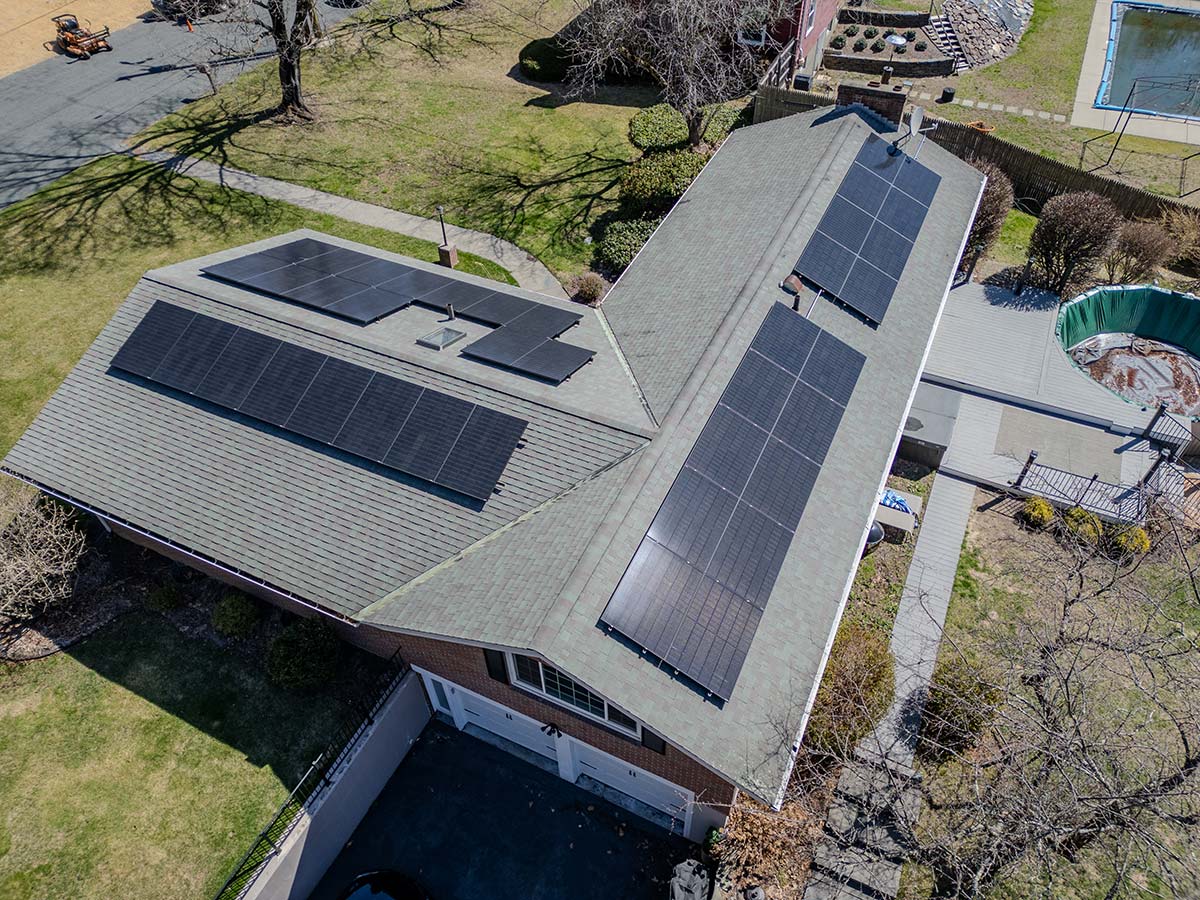
What a “typical” Greenfield solar system looks like
The most useful way to talk about residential solar is to start with a realistic system size.
EnergySage’s local Greenfield data (based on quote activity in their marketplace) suggests the average homeowner in Greenfield needs around a 9.54 kW system to cover electric bills, at an average installed cost around $3.11 per watt, and roughly $29,671 before incentives.
That’s the “typical” frame.
But the better question is: what does your house need?
A smaller home with gas heat might land closer to 5–7 kW. A home with heat pumps, an EV, or a big family schedule can push 10 kW and beyond. And roof layout matters more than people expect: a simple south-facing plane is easy mode; a chopped-up roof with dormers and shade patterns can change how the system is designed.
Still, those averages are a helpful baseline when you’re trying to understand what Greenfield MA solar panels might mean in dollars, not just vibes.
What does solar cost in Greenfield right now?
EnergySage also publishes a Greenfield-specific “solar panel cost” snapshot with estimated pricing by system size. As of late 2025, they cite an average installed cost of $3.09/W in Greenfield and estimate a 5 kW system around $15,434 before incentives (with a range depending on quotes).
They also include a simple size ladder that’s useful for planning:
-
5 kW: about $15.4k
-
7 kW: about $21.6k
-
9 kW: about $27.8k
-
10 kW: about $30.9k
Don’t take any of these as a “quote.” Take them as a sanity check. If you’re getting pricing that’s dramatically outside the typical range, that’s usually a cue to dig into the design assumptions, equipment choices, and warranty coverage.
And yes, people ask this every time: “Is it cheaper if I buy the panels myself?”
Most of the time, no. The cost isn’t just the panel. It’s design, electrical work, racking, permitting, interconnection, inspections, labor, and accountability.
The local rate story: Greenfield Light & Power can influence the payoff math
Greenfield Light & Power rates move with the City’s supply contracts. In a November 2025 City update about new pricing, the program listed supply options like “Budget Green” at 13.090¢/kWh and “Local Green” at 15.644¢/kWh (with details tied to the program’s contract period).
A local Greenfield Recorder column also put a real-world number on the difference vs Eversource supply rates, describing savings of 2.34 cents per kWh below Eversource in one comparison, with seasonal household impacts depending on usage.
Here’s the practical takeaway:
-
If your supply rate is already lower, your “solar payback” can stretch out a bit compared to someone paying a higher supply rate.
-
But solar still reduces how many kWh you buy in the first place.
-
And a well-sized system still protects you against future price jumps, because solar is basically pre-buying a chunk of your power.
So Greenfield MA solar panels still pencil out for many households, even with aggregation in the mix. You just want to run the numbers against your actual bill, not a generic Massachusetts average.
Financing in Greenfield: Franklin First is a real local lever
This is the part that matters if you don’t want to drop a big check upfront.
Franklin First Federal Credit Union offers a dedicated solar loan program with published terms, including:
-
$3,000 to $100,000 loan amounts
-
No closing costs
-
Repayment terms up to 15 years
-
A posted 6.99% APR for a 15-year solar loan
-
Up to 12 months of interest-only payments during construction
-
Option for unsecured loans
-
Ability to re-amortize within the first 18 months at no cost
They also lay out a straightforward process: get a quote, sign an installation contract, complete the loan application, then Franklin First advances 65% at closing for initial construction costs and releases the remainder after the system is connected to the utility.
Why mention this in a solar blog post?
Because financing changes the decision from “Can I afford solar?” to “Does this monthly payment make sense next to my electric bill?” That’s a totally different conversation, and it’s one that more homeowners can realistically have.
Franklin First also lists Current Energy as one of its solar partners, which is a clean way to connect financing with an installer relationship without turning your blog post into an ad.
Incentives: watch the timing, because rules have been moving
In 2025, federal clean energy tax credit guidance has been in flux.
The IRS posted FAQs tied to the “One Big Beautiful Bill” (Public Law 119-21) stating that the Residential Clean Energy Credit (Section 25D) will not be allowed for expenditures made after December 31, 2025.
Separately, the City of Greenfield’s Energy & Sustainability page also references a “install by December 31, 2025” timing window for claiming 30% for solar and battery storage.
I’m not going to pretend a blog post should replace tax advice, because it shouldn’t. The smart move is simple:
-
Treat incentives as real, but confirm eligibility for your timeline.
-
Keep documentation.
-
Talk to your tax pro early if the credit affects whether you move ahead this year.
If you’re planning Greenfield MA solar panels specifically, that calendar reality can matter as much as roof direction.
What “good design” looks like for a Greenfield roof
The best systems are boring in the right way. They’re sized to your usage, laid out around shade and roof geometry, and built with a clean electrical plan that won’t create headaches later.
A few Greenfield-specific design realities that show up again and again:
Snow and winter sun angle are real (but not a dealbreaker)
Winter production is lower because the sun sits lower and days are short. The goal isn’t to “win winter.” The goal is to size the system for annual needs and let the strong months do the heavy lifting.
A good installer will also think about where snow tends to slide, how panels shed, and whether your roof pitch and layout create sections that hold snow longer than expected.
Shade is the silent budget killer
One big maple, one chimney shadow, or a roof plane that only gets half a day of sun can change everything. That’s why a site visit and shade analysis matter more than “how many panels can fit.”
Electrical work matters more than the panels you pick
Current Energy’s advantage here is that they’re not “just solar.” They bring electrical expertise into the project, which is exactly what you want when you’re integrating solar with the rest of your home’s load and future upgrades.
Solar works best when it’s planned alongside your home’s electrical setup, especially if you’re adding an EV charger, heat pumps, or battery backup. Getting that plan right upfront can save time, prevent change orders, and make the system feel seamless once it’s live.
A realistic “next step” checklist for homeowners
If you’re thinking about Greenfield MA solar panels, here’s a clean path that keeps you out of rabbit holes.
-
Pull 12 months of electric bills
Not just one month. Solar sizing needs a full year of usage. -
Decide what might change in the next 1–3 years
Heat pumps, an EV, finishing a basement, adding a workshop. Those are solar design inputs, not afterthoughts. -
Schedule a site visit
You want roof condition, shade, and electrical panel realities addressed early. -
Talk financing early (if you’re financing)
Franklin First’s solar loan structure is built for this kind of project. Franklin First Federal Credit Union -
Think in “systems,” not products
Solar can stand alone, but it can also pair well with battery storage, EV charging, and load management depending on your goals and how your home uses power. Current Energy+1
Internal linking opportunities inside the Greenfield ecosystem
If you want this blog post to support your local cluster, these are natural, non-spammy places to link:
-
Link “Greenfield MA solar panels for homeowners” to your Residential Solar in Greenfield page. Current Energy
-
When you mention supply rates and local context, link to the Greenfield Solar Energy Services hub page. Current Energy
-
When you reference future upgrades, link out to:
-
Battery storage (storm resilience, backup power)
-
EV charging (home charging convenience)
-
Load management (keeping usage under control when you electrify more of the house)
-
Solar service and repair (long-term ownership reality)
-
Those links keep the reader moving through your ecosystem in a way that feels helpful, not forced.
The bottom line for Greenfield homeowners
Residential solar in Greenfield is not a fringe move anymore. The local electricity supply picture is unusually active because of Greenfield Light & Power’s aggregation program. Financing is local and straightforward through Franklin First. And the “typical system” numbers in Greenfield are clear enough that homeowners can plan realistically before they ever sign anything. EnergySage+2Franklin First Federal Credit Union+2
If you want a clean starting point, start here:
Figure out what your home uses, size the system to match, and design it like it’s going to be part of your home for the next 25 years. Because it is.
And if you’re pricing out Greenfield MA solar panels right now, make sure you’re comparing apples to apples: system size, equipment, warranty, electrical scope, and a financing plan that doesn’t surprise you halfway through the project.