
Residential Solar Panel Installation in Greenfield and Turners Falls, MA: What Actually Works on Valley Homes
Welcome to another snow day in the valley. This winter in Western Massachusetts has been unusually cold, with snow sticking on roofs and fields around Greenfield and Turners Falls for weeks at a time instead of melting between storms. After back‑to‑back systems dropping close to a foot or more of snow across parts of the state and another nor’easter in the forecast, it’s fair to ask: does residential solar really work on valley homes in weather like this—and what does “working” actually look like over the whole year?
The short answer: yes, solar works here, but only if it’s designed for our roofs, our snow, and our grid—not for a generic “average” house somewhere else.
How Greenfield and Turners Falls Homes Are Built
Greenfield and Turners Falls neighborhoods are a mix of older farmhouses, capes, and multifamily homes, plus newer infill and rural construction on the edges of town. Many of these houses were wired decades ago, long before anyone imagined heat pumps, EV chargers, or 30‑year solar arrays on the roof. That means a lot of projects here start with two questions: is the roof ready, and is the electrical system ready.

Common patterns we see in the North Valley:
-
Aging roofs that are fine for a few more years of shingles, but not 25–30 years of solar without a plan to re‑roof under the array.
-
100‑amp service panels or crowded breaker boxes that don’t leave much room for solar backfeed, battery backup, or EV charging.
-
Tall maples and oaks along the river and side streets that throw real shade on south‑facing planes in the shoulder seasons.
None of these are dealbreakers. They just mean “copy‑and‑paste” solar designs from sunnier, newer suburbs rarely fit what’s actually on the ground in Greenfield, Turners Falls, Deerfield, or Shelburne Falls.
What Winter Really Does to Solar in Western Massachusetts
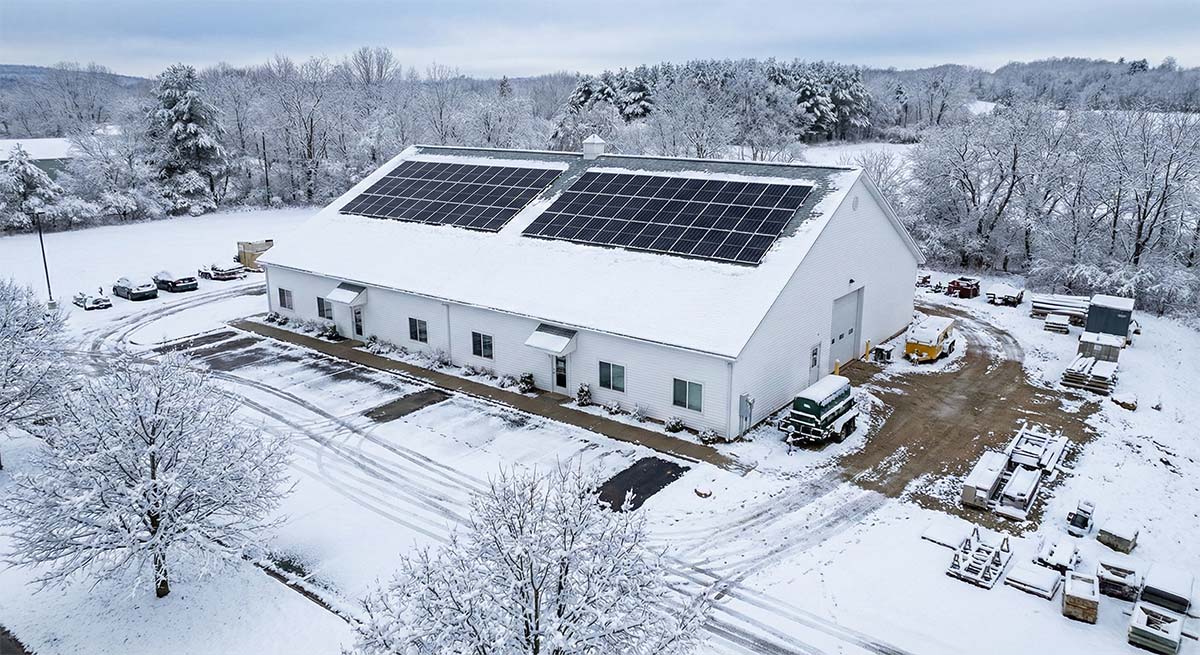
Cold air is actually good for solar panels; they operate more efficiently at lower temperatures than they do on hot summer days. The two things that cut production in a winter like this are shorter days and snow physically covering the modules.Here’s what that looks like in practice:
-
During and right after a heavy storm, output can drop close to zero if panels stay buried, especially on shallow‑pitch roofs.
-
Once the sun comes out and panels start to clear, you can see some of the best individual days of the year—cold, bright, and helped by light reflecting off the snow on the ground.
-
Over a full year in New England, only a relatively small slice of your kWh comes from December through February; spring, summer, and fall do most of the heavy lifting.
So a long, snowy stretch like we’re having now doesn’t mean solar “isn’t working.” It means your array is doing what it was designed to do: take a seasonal breather and then make up the difference when days are longer and roofs are clear.
The key is designing for that reality, not pretending Greenfield has Phoenix weather.
Design Choices That Actually Work on Valley Homes
Roof‑mounted solar that sheds snow
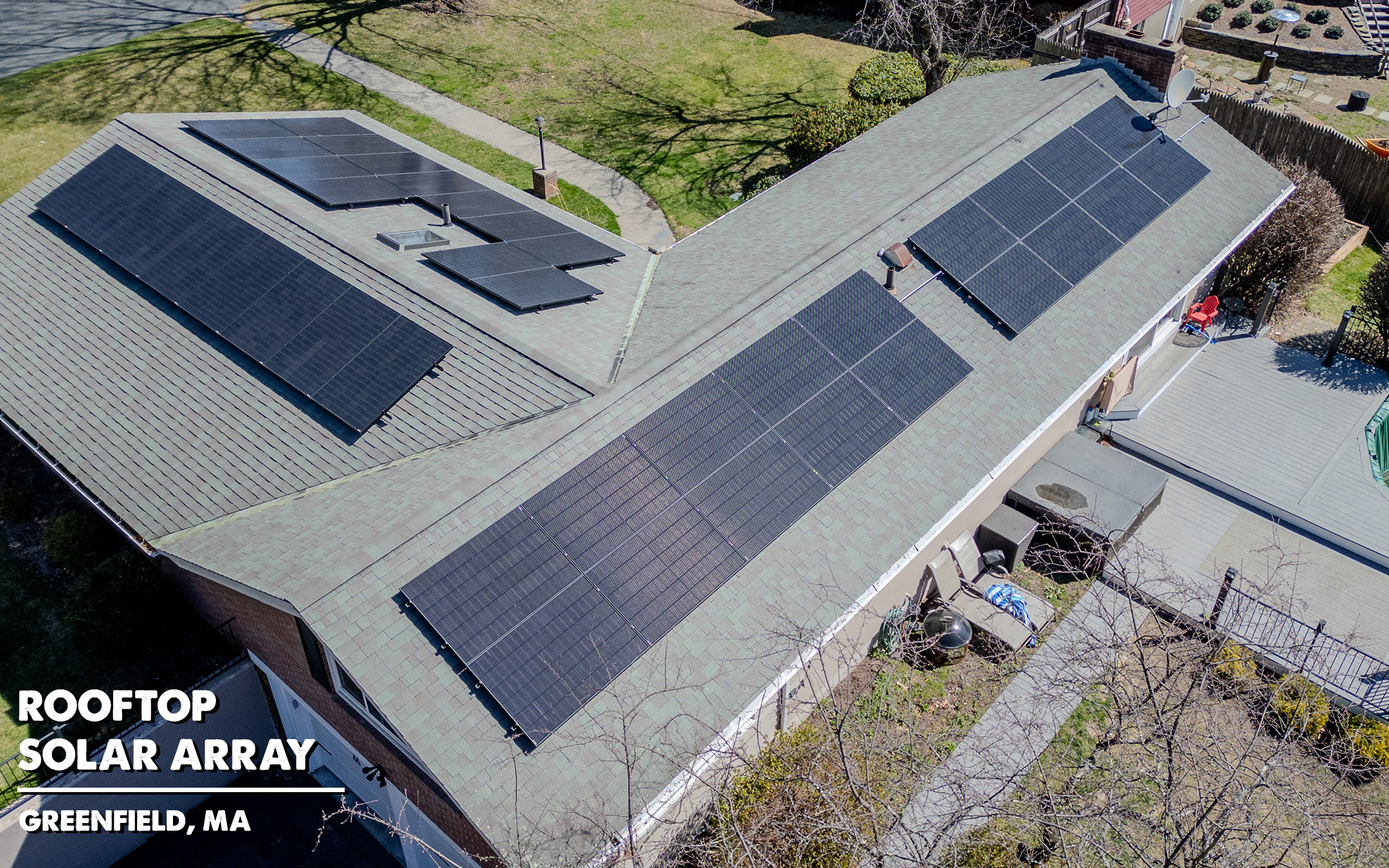
On most Greenfield and Turners Falls homes, we start by looking for one or two clean roof planes that:
-
Face roughly south or southwest.
-
Have a healthy tilt (often 30–35 degrees or more) so snow can slide once the sun hits it.
-
Aren’t chopped up by dormers, hips, or valleys that trap snow and ice.

Steeper, simpler roofs tend to clear themselves faster after storms, which matters in winters with repeated 6–12‑inch hits. Where code and structure allow, we pay attention to racking and row spacing so snow has somewhere to go instead of piling up between panels.
For older roofs, we’ll often:
-
Coordinate re‑roofing before solar so you’re not pulling modules in 5–10 years.
-
Check framing and sheathing to verify snow‑load capacity with both snow and array weight.

When a ground mount or carport makes more sense
Some valley homes will never have a great solar roof. Maybe the best plane faces north toward Poet’s Seat, maybe big street trees throw shade all afternoon, or the roof is simply too small for the system size you need.
In those cases, a well‑designed ground mount or solar carport can outperform a compromised roof system:
-
We can dial in the tilt for winter shedding and annual production instead of accepting the roof pitch.
-
We can place the array in the sunniest part of the property, not just where the house happens to be.
-
We can build foundations below frost depth so posts don’t heave or twist as the soil freezes and thaws.
This is especially attractive on larger lots in Greenfield’s outskirts, in Montague, or in nearby towns like Deerfield, Conway, and Sunderland.
Wiring and electrical work that future‑proofs the home
Because so much of our local housing stock is older, electrical work is often the quiet hero of a good valley solar project.[currentenergy]
That can look like:
-
Upgrading to a modern 200‑amp panel with space for solar, batteries, and future EV chargers.
-
Adding a smart load‑management panel so you can run heat pumps, electric dryers, and chargers without overloading service.
-
Designing the system with a clean path for a future battery, even if you’re not ready to buy one yet.
Those choices don’t just make the solar installation possible; they set you up for the next decade of electrification.
Year‑Round Production and Payback for Franklin County Homes
In Franklin County, typical residential solar systems fall in the 5–10 kW range, with installed costs generally in the mid‑$3 per watt range before incentives. Massachusetts homeowners can stack the federal tax credit with state incentives and net metering, which credit excess solar production against your bill when the system exports to the grid.
Translated into plain terms for a “normal” Greenfield or Turners Falls home:
-
A well‑designed system can offset a large share—or sometimes all—of an average electric bill over the course of a year, even accounting for snow‑heavy winters.
-
With today’s incentives and local power prices, many Franklin County homeowners see simple payback windows measured in years, not decades, especially if they’re offsetting high‑usage homes with electric heat, well pumps, or workshops.
-
Because solar cuts your ongoing utility costs, it can also increase property value; studies and federal guidance suggest home value often rises in proportion to energy‑bill savings.
The main financial mistakes we see locally are:
-
Undersizing systems because a remote or national installer didn’t understand your actual usage and future plans.
-
Overpromising winter production without explaining how snow and short days change the curve in places like Greenfield.
A clear valley‑specific model beats a generic national pitch every time.
When to Add Battery Backup in Greenfield and Turners Falls
On some streets in Greenfield, Turners Falls, and the nearby hilltowns, the question isn’t just “How much will I save?” It’s “Will the lights stay on when the lines are coated in ice or the wind knocks trees across the road?”
Cold winters and heavy snow can stress local grids; storms in New England this season have already tested how utilities manage load and outages. Pairing solar with a battery won’t change how fast the street gets plowed, but it can keep key circuits—heat, well pump, fridge, a few outlets—running when the wider grid is down.
Battery backup makes the most sense here when:
-
You’ve had repeated winter or wind‑storm outages in the last few years.
-
You rely on electric or oil heat that needs electricity to run.
-
You work from home or run critical equipment at the house.
Design‑wise, we size batteries for resilience, not for going completely off‑grid: enough to ride through typical 4–12‑hour outages and stretch longer when you’re careful about what’s running.
How We Design Solar for Your Greenfield or Turners Falls Home
For us, a good residential solar installation in Greenfield or Turners Falls isn’t a kit—it’s a series of practical steps that respect the house, the weather, and the budget.
Here’s how we usually approach it:
-
Start with a site visit and electrical check.
We walk the roof, look at shading from nearby trees and buildings, and open the main panel to see what your electrical system can handle. -
Model real‑world production, not brochure numbers.
We use New England weather data and our own experience to show what your system is likely to do in a cold, snowy climate like this one—not just on a “perfect” sunny year. -
Plan for incentives and interconnection.
We help you navigate Massachusetts incentives, net metering, and your specific utility’s interconnection rules so there are no surprises. -
Design for the whole picture: solar, electrical, and storage.
We’re licensed electricians as well as solar installers, so we think about the panel, the wiring, and any future EV chargers or batteries at the same time, instead of bolting things on later. -
Install with winter in mind.
Racking, wire routing, and clearances are all chosen to perform in heavy snow and cold, not just on a sunny June afternoon.
If you’re in Greenfield, Turners Falls, Deerfield, or a nearby town and you’ve been staring at the snow on your roof wondering if solar still makes sense, the next step is simple: get a design that’s honest about our winters and tailored to your home.
If you want, I can now help you adapt this draft for on‑page SEO (title tag, meta description, internal links to your Greenfield, Montague, Deerfield, and service pages) before you publish.